Written by Kadek Darma
Adding a little extra something to your pet’s dinner bowl can sometimes make a world of difference for their overall well-being. Ginger, a common aromatic rhizome found in most kitchens, is far more than just a culinary staple for your favorite stir-fry recipes.
This humble root has been celebrated for centuries in traditional medicine for its ability to settle stomachs and soothe discomfort. If you are curious about whether your dog or cat can benefit from this spicy addition, you are in the right place to learn how to use it safely.
Key Takeaways
- Ginger is a natural, potent rhizome rich in bioactive compounds like gingerol and shogaol.
- It is widely recognized for its potential to help alleviate nausea and digestive upset in pets.
- You can easily incorporate it into your pet’s routine using fresh, dried, or tea-infused forms.
- Always start with a very small amount to ensure your pet enjoys the flavor and tolerates it well.
- Fresh ginger can be quite pungent, so mixing it into bone broth is often the best approach.
Understanding the Power of Ginger
Native to Southeast Asia, ginger belongs to the same botanical family as turmeric and cardamom. While we usually focus on the gnarled, bumpy rhizome, this plant offers incredible health-supporting properties that reach far beyond its peppery taste.
Research suggests that ginger possesses significant antioxidant and anti-inflammatory activities. These benefits stem from its rich phytochemical profile, which provides a natural boost to your pet’s dietary health.
1. The Chemistry Behind the Benefits
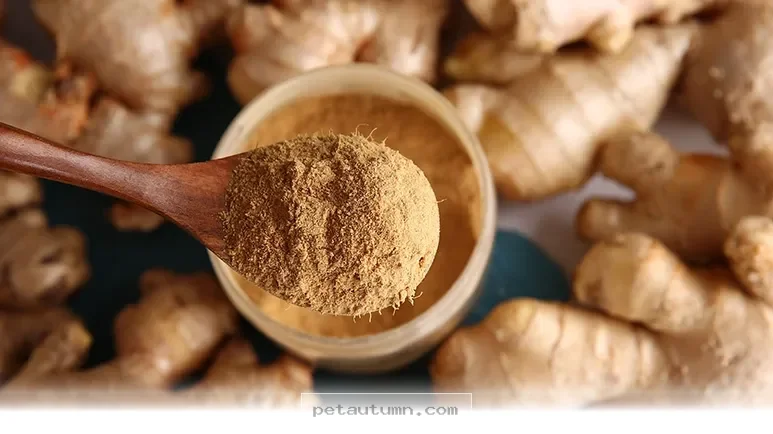
The magic of ginger lies in its polyphenols, specifically gingerols and shogaols. Fresh ginger is packed with gingerols, while the drying process converts these into shogaols, which are equally beneficial.
These compounds are the reason ginger is frequently studied for its potential to support pets with chronic inflammation or digestive issues. You can think of these as the "engine" behind the spice’s legendary reputation.
2. Settling an Upset Tummy
Many pet owners wonder if they can offer ginger when their furry friend is feeling a bit under the weather. Studies have shown that ginger can act as a natural anti-emetic, which may help reduce feelings of nausea.
It functions by targeting specific pathways in the body that trigger the urge to vomit. If your pet occasionally experiences travel sickness or minor tummy grumbles, this simple spice might be a helpful tool in your home care kit.
| Feature | Ginger | Turmeric |
|---|---|---|
| Primary Compound | Gingerol | Curcumin |
| Flavor Profile | Spicy and Pungent | Earthy and Bitter |
| Best Use | Nausea & Digestion | Joint Support |
| Color | Pale Yellow | Bright Orange |
How to Incorporate Ginger Into Your Pet’s Diet
Because ginger has a very distinct, sharp flavor, you cannot simply toss a raw piece into your dog’s bowl and expect them to eat it. Most pets are sensitive to strong, spicy scents, so you must be clever with how you introduce it.
1. Start with Small Portions
Always begin with a tiny "pinch" of ginger to see how your pet reacts to the taste. If they turn their nose up, do not force the issue, as their comfort is the priority.
2. Use the Broth Method
Steeping a few thin slices of fresh ginger in hot, plain bone broth is a fantastic technique. This extracts the beneficial oils into the liquid while mellowing out that intense, spicy kick.
3. Consider Healthy Homemade Treats
You can finely grate a small amount of fresh ginger into your homemade pet treat recipes. When baked into cookies or mixed into a meat-based meal, the flavor becomes much more subtle and palatable.
Tips for Safe Supplementation
- Always remove the skin of the ginger root before grating or slicing.
- Never use pre-packaged ginger powders that contain added sugars or artificial flavorings.
- Keep a close eye on your pet for any signs of digestive changes after their first taste.
- If your pet has underlying health conditions, consult the American Veterinary Medical Association for guidance on safe dietary additions.
The information on petautumn.com is for general informational purposes only and does not constitute veterinary advice. Pet health needs vary by breed, age, and individual condition. Always consult a licensed veterinarian before making decisions about your pet’s health, diet, or medical treatment. Pet Autumn is not affiliated with any veterinary organization, pet food manufacturer, or breeder.
Bringing ginger into your home is a simple, cost-effective way to potentially support your pet’s digestion. Whether you are steeping it in broth or adding a tiny bit to their favorite meal, it is a great way to use natural ingredients to promote comfort.
Remember that every pet is unique, so observe their preferences closely as you experiment. With a little patience and care, you might find that this aromatic spice becomes a helpful staple in your pet’s wellness journey.

Dog care writer at petautumn.com. Visual Communication Design graduate (S.Ds) from Universitas Udayana. Covers dog breeds, behavior, training, and gear reviews. Dog dad to Meepo. Based in Austin, Texas.