Last Updated: April 14, 2026
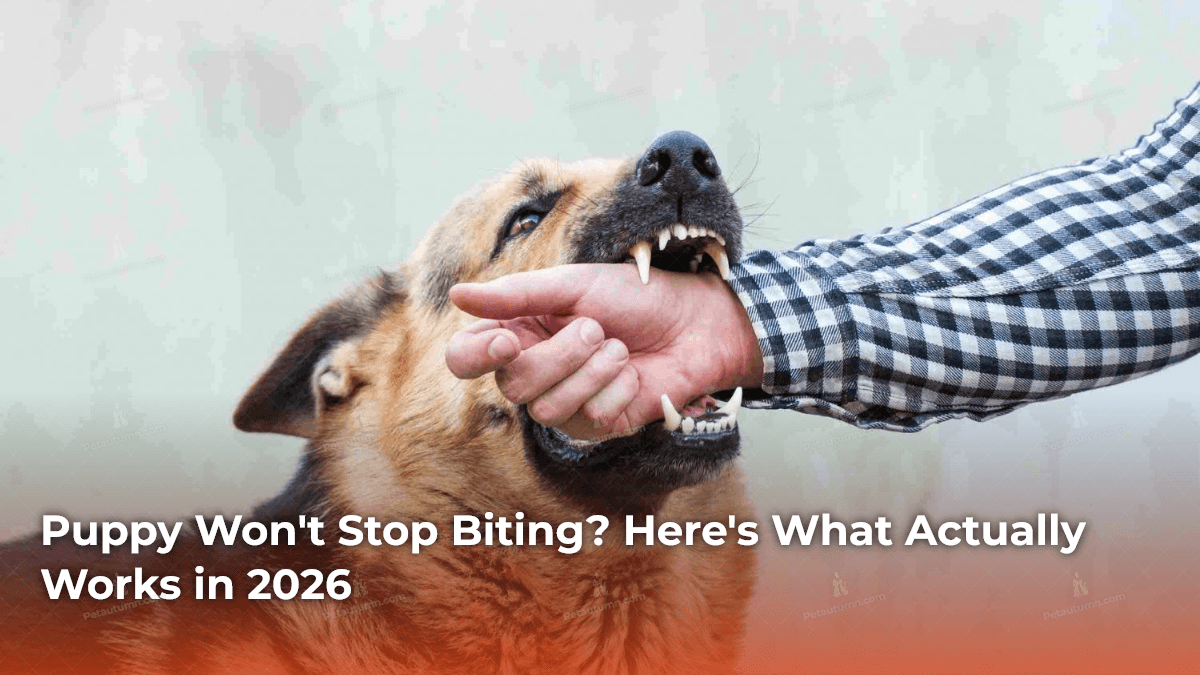
You’ve got a new puppy. Adorable, fluffy, and apparently determined to use your hands as chew toys. Sound familiar?
If your puppy bites everything — your fingers, your ankles, your shoelaces, your patience — you’re not alone. Biting is one of the top concerns new dog owners bring to trainers and vets. Here at petautumn.com, we hear about it constantly. The good news? It’s almost always normal. The even better news? It’s fixable.
This article covers why puppies bite, which training methods actually work (and which ones backfire), what products can help, and the red flags that tell you it’s time to call in a professional.
Key Takeaways
- Puppy biting is completely normal developmental behavior — not a sign of aggression
- Bite inhibition training is the most effective long-term approach, according to the American Kennel Club (AKC)
- Punishment almost always makes biting worse, not better
- Most puppies grow out of the biting phase between 4–6 months of age
- Consistent redirection, timeouts, and chew toys work best when the whole household is on the same page
- Biting that includes growling, stiff posture, or broken skin needs professional evaluation
First, Take a Breath — This Is Completely Normal
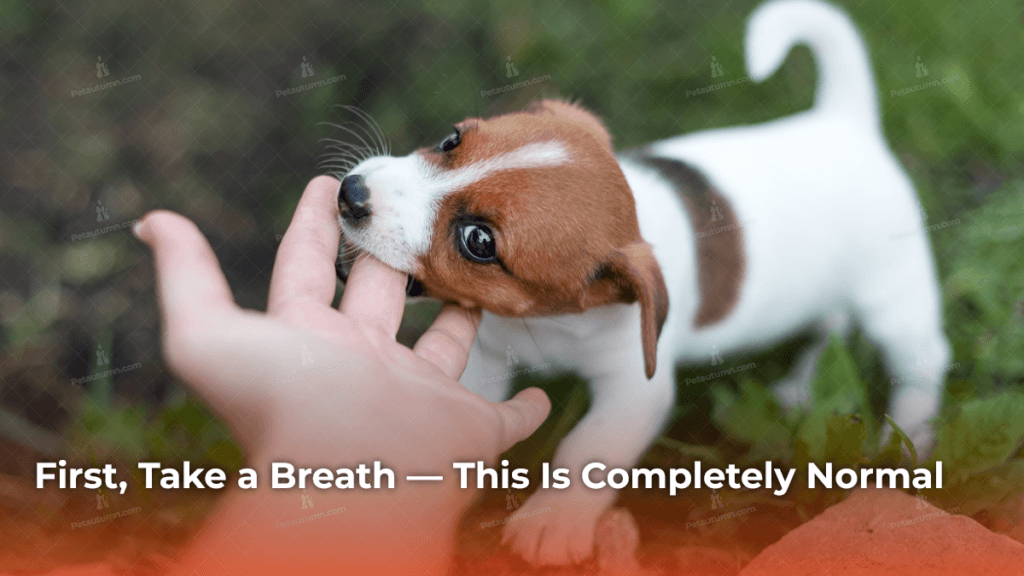
Puppy biting is alarming when you’re new to it. Those tiny teeth are sharp, and the biting can feel relentless. But before you spiral, know this: your puppy isn’t broken, and you didn’t adopt a future problem dog.
Biting is how puppies interact with the world. It’s how they play, how they explore, and how they communicate. Every single puppy does it.
Why Every Puppy Goes Through a Biting Phase
From birth through about 16 weeks, puppies learn almost everything through their mouths. Before they come home with you, they practiced this with their littermates — biting, getting bitten back, and figuring out what’s too rough.
When a puppy bites a sibling too hard, the sibling yelps and stops playing. That feedback teaches the puppy to self-regulate. This is called bite inhibition — and it’s the single most important skill you’ll help your puppy develop.
Here’s the thing: when your puppy joins your household, that learning doesn’t stop. It just shifts. Now you’re the one providing the feedback. And how you respond to biting over the next few months will shape your dog’s mouth manners for life.
The Methods That Actually Work (And the Ones That Don’t)
Not all biting solutions are created equal. Some that look like they’re working actually create bigger problems down the road. Let’s break it down.
Bite Inhibition Training — The Gold Standard
This is where you start. The goal isn’t to stop biting immediately — it’s to teach your puppy how hard is too hard, gradually reducing pressure until biting stops altogether.
Here’s how to do it, step by step:
- Let your puppy play and mouth normally
- The moment they bite down hard, make a high-pitched yelp (“Ouch!”) and go completely limp — stop all movement
- Ignore the puppy for 10–20 seconds, or turn your back
- Resume play. Repeat every time biting gets too hard
- Over time, lower the threshold — yelp even for medium pressure, then soft mouthing
According to the ASPCA, the goal is for your dog to learn that gentle play continues, but hard biting ends the fun. It mirrors exactly what littermates do naturally.
Honestly? This works — but it requires patience. You won’t see dramatic results in two days. Give it two to three weeks of consistent practice.
Timeout Method — How and When to Use It
Timeouts are useful when your puppy is too revved up to respond to the yelp method. Think of it as a “reset” — not a punishment.
How to do it correctly:
- When biting happens, calmly say “Too bad” or “Oops” in a neutral tone — no yelling
- Gently place the puppy in a crate or pen for 30–60 seconds
- Release the puppy calmly — no big fuss, no scolding
- Resume normal interaction
The key word there is calmly. Dramatic reactions (yelling, pushing the puppy away roughly) actually increase arousal and can make biting worse. The AKC recommends using timeouts specifically when a puppy is overtired or overstimulated — not as a default first response.
Also: don’t use the crate as punishment. The crate should be a safe, positive space. A brief timeout is fine, but don’t leave a puppy in there fuming for 20 minutes.
Redirection — The Underrated Tool Most Owners Ignore
Redirection is exactly what it sounds like: when your puppy goes for your hand, give them something appropriate to bite instead.
Keep a chew toy within arm’s reach at all times during play. The moment you feel teeth on skin, swap — calmly place the toy in their mouth. No drama, no scolding. Just a quiet substitution.
Redirection works especially well for teething puppies (roughly 10–16 weeks) because they need to chew. Their gums hurt. Giving them a cold rubber toy isn’t just training — it’s relief.
Pro tip: rotate three or four different toys so they don’t lose novelty. A bored puppy is a bitey puppy.
How Long Does the Biting Phase Last?
This is the question every puppy owner asks. The short answer? Most dogs are through the worst of it by 5–6 months. But the longer answer depends a lot on the individual dog — and how consistently you’re training.
What’s Normal at 8 Weeks vs 16 Weeks vs 6 Months
| Age | Typical Biting Behavior | What to Focus On |
|---|---|---|
| 8–10 weeks | Frequent mouthing, low bite pressure, exploratory | Start bite inhibition early — establish the pattern now |
| 10–16 weeks | Peak teething, biting can be more intense and frequent | Heavy redirection to chew toys, cold rubber helps sore gums |
| 4–5 months | Adult teeth coming in, may spike again briefly | Maintain consistency — don’t relax training during this phase |
| 5–6 months | Biting significantly decreases in most puppies | Reinforce good behavior, continue discouraging any mouthing |
| 6+ months | Should be minimal to none with consistent training | If still biting hard, consult a trainer or vet behaviorist |
Source: American Kennel Club (AKC) — Figures correct as of April 2026
Worth noting: some breeds — particularly herding dogs like Border Collies and Australian Shepherds — have a stronger instinct to mouth and nip. It doesn’t mean something’s wrong. It just means you may need to be a little more consistent, a little longer.
Why Your Puppy Bites You More Than Anyone Else
You’ve noticed it, right? Your puppy nips at you the most, even though the whole family interacts with them equally. It feels personal. And in a way, it is — but not in a bad way.
Puppies bite most intensely with the person they’re most bonded to. That’s you. It also means you’re the one they’re testing for feedback. Think of it as a compliment (a very painful one).
There’s another reason too. If you’ve been the most excited during playtime — the one who laughs, squeals, wiggles your fingers in their face — you’ve accidentally trained your puppy that you’re the best toy in the house. Calm, neutral energy during play goes a long way.
I noticed this with Meepo when he was still new — he’d go straight for my hands but barely touched Ayu’s. Turns out I was the one doing the roughhousing. Once I switched to calm, structured play and swapped to a tug toy, the hand-targeting dropped noticeably within about two weeks.
Products That Can Help (Without Creating Bad Habits)
The right tools make training easier — but they’re meant to support the process, not replace it. No product stops biting on its own. That said, a few are genuinely useful.
KONG Puppy Classic
| Product Overview — KONG Puppy Classic | |
|---|---|
| Price Range | $7.00–$14.00 depending on size (XS to L) |
| Size/Weight | XS (up to 5 lbs) to L (30–65 lbs) — size up from your puppy’s current weight |
| Best For | Teething puppies 8 weeks and up; all breeds |
| Key Features | Soft natural rubber formula designed for puppy teeth; hollow center for treats or peanut butter; can be frozen for teething relief |
| Pros | Durable, vet-recommended, easy to clean, keeps puppies occupied; freezing it extends engagement significantly |
| Cons | Some puppies lose interest quickly without a treat stuffed inside; not indestructible for heavy chewers |
| How to Use | Stuff with peanut butter or wet food, freeze overnight, offer during training as a redirection tool |
| Where to Buy | Amazon, Chewy, PetSmart, Petco — widely available |
Nylabone Puppy Starter Kit
| Product Overview — Nylabone Puppy Starter Kit | |
|---|---|
| Price Range | $10.00–$18.00 |
| Size/Weight | For puppies up to 25 lbs; different kit sizes available |
| Best For | Puppies in active teething phase (10–20 weeks); small to medium breeds |
| Key Features | Multiple textures in one kit; nylon chew provides gum stimulation; flavored options available (chicken, bacon) |
| Pros | Long-lasting compared to rubber toys; variety of textures helps keep interest; good for redirecting persistent biters |
| Cons | Not suitable for heavy chewers (risk of breaking off pieces); some puppies ignore nylon entirely — rubber tends to be more universally accepted |
| How to Use | Offer during active biting moments; rotate with rubber toys to maintain novelty; discard when chewed down significantly |
| Where to Buy | Amazon, Chewy, Walmart, Target |
Snuggle Puppy Behavioral Aid Toy (Smart Pet Love)
| Product Overview — Snuggle Puppy Behavioral Aid | |
|---|---|
| Price Range | $34.00–$40.00 |
| Size/Weight | One size; suitable for most puppy breeds under 40 lbs |
| Best For | Anxious puppies; new arrivals; puppies biting from overstimulation or stress |
| Key Features | Battery-operated heartbeat simulator; removable heat pack; mimics the feeling of a littermate; helps reduce anxiety-driven behavior |
| Pros | Noticeably reduces biting from anxious or overtired puppies; calming effect is real — not just marketing; good for the first few nights and weeks |
| Cons | Pricey for a plush toy; batteries need replacing; some puppies will destroy it quickly; not a standalone biting solution |
| How to Use | Place in crate or sleep area at night; offer during overstimulated biting moments as a calming tool — not a chew toy |
| Where to Buy | Amazon, Chewy, Petco, Buy Buy Baby |
One thing worth saying plainly: no product replaces consistent training. The KONG is excellent — we’ve used it — but if you hand it to your puppy and walk away expecting biting to stop on its own, you’ll be disappointed. These tools work with your training, not instead of it.
If you’re also navigating your puppy’s full health and development schedule, our guide on your dog’s vet visit schedule covers exactly what to expect from puppyhood through senior years.
Red Flags — When Biting Goes Beyond Normal Puppy Behavior
Most puppy biting is textbook normal. But there are situations where it signals something deeper — either a medical issue or a behavioral pattern that needs professional eyes.
Watch for these warning signs:
- Growling, snarling, or snapping outside of normal play — especially with a stiff body or raised hackles
- Biting that breaks skin on a regular basis, not just the occasional accident
- Sudden biting in a puppy that was previously gentle — this can indicate pain or illness
- Biting when you touch specific areas (joints, ears, abdomen) — possible sign of discomfort or injury
- Escalating intensity with no improvement after consistent training for 4–6 weeks
- Freezing, hard staring, or resource guarding during or before a bite
According to the Ohio State University Indoor Pet Initiative, excessive mouthing during physical handling — especially if paired with growling or body stiffening — is not normal puppy play and should be evaluated by a veterinarian or certified trainer.
If you’re seeing these signs, don’t wait it out. Call your vet first to rule out any physical causes, then consider a consultation with a certified professional dog trainer or veterinary behaviorist.
And a quick note for families with young kids: if a puppy is biting children hard and consistently, treat that as a priority. Children move fast and react loudly — both of which can accidentally escalate biting. Supervised interaction only until the biting is fully under control.
Disclaimer: The information on petautumn.com is for general informational purposes only and does not constitute veterinary advice. Pet health needs vary by breed, age, and individual condition. Always consult a licensed veterinarian before making decisions about your pet’s health, diet, or medical treatment. Pet Autumn is not affiliated with any veterinary organization, pet food manufacturer, or breeder. If you notice any of the red flag behaviors described above, contact your vet right away.
You’ve Got This
Puppy biting is one of those phases that feels endless when you’re in it — and completely forgotten once it’s over. The work you put in now, at 8 or 12 or 16 weeks, is exactly what shapes a well-mannered adult dog.
Start with bite inhibition. Add redirection. Be consistent — every single person in the house, every single time. Don’t react dramatically, don’t punish, and don’t give up after three days when it isn’t “fixed” yet. These things take weeks, not hours.
And if you’re ever in doubt about whether what you’re seeing is normal, your vet is always the right first call.
Sources:
- American Kennel Club (AKC)
- ASPCA — Mouthing, Nipping and Biting in Puppies
- Ohio State University Indoor Pet Initiative
Frequently Asked Questions
Have more questions about your dog? Visit petautumn.com for more expert guides.

Dog care writer at petautumn.com. Visual Communication Design graduate (S.Ds) from Universitas Udayana. Covers dog breeds, behavior, training, and gear reviews. Dog dad to Meepo. Based in Austin, Texas.