Written by Ayu Pratiwi
Have you ever walked into a shelter and felt your heart break for the one cat everyone seems to ignore? There is a special kind of sorrow in watching a devoted mother watch her babies find forever homes while she remains behind, waiting for someone to finally see her.
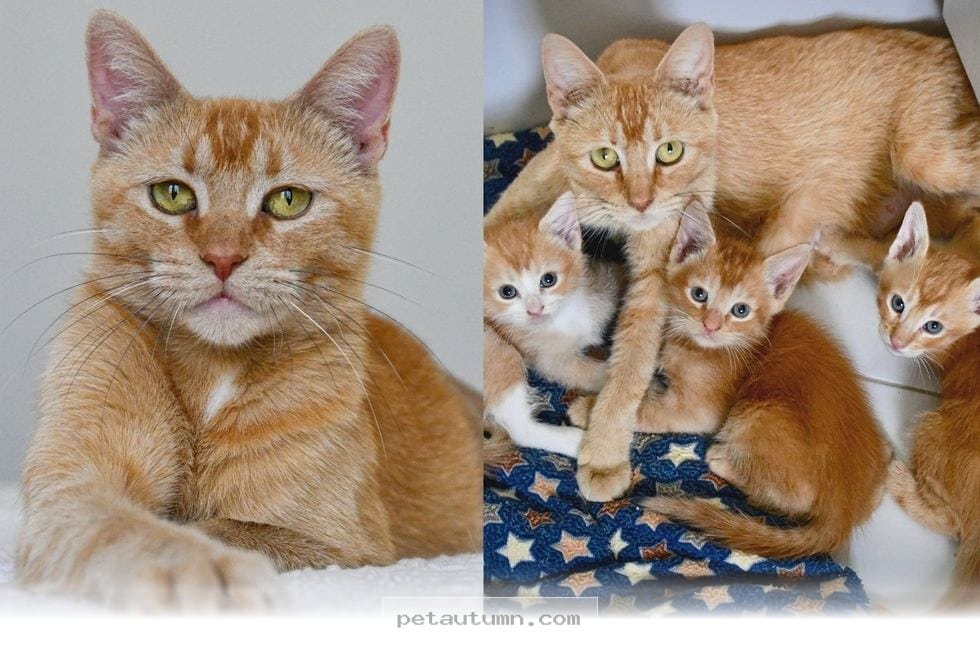
This is exactly the story of a rare female orange cat who poured every ounce of her love into raising three healthy kittens. Even after they were adopted into loving families, this sweet mama cat sat quietly in her kennel, hoping for her own turn to be chosen.
Key Takeaways
- Female orange cats are remarkably rare, as about 80 percent of ginger cats are male.
- Foster parents often observe that mother cats experience a period of adjustment after their kittens leave.
- Adopting a senior or adult cat offers a unique bond, as their personalities are already fully developed.
- Supporting local shelters through fostering or donations helps cats like this mama find their second chance.
The Rarity of the Ginger Queen
Most people are surprised to learn that seeing a female orange cat is a bit like spotting a four-leaf clover. Science tells us that the gene for orange fur is located on the X chromosome, making it much easier for males to inherit the ginger coat.
Because females have two X chromosomes, they need to inherit the orange gene from both parents to achieve that beautiful marmalade look. This makes female ginger cats quite special in the feline world.
Why Orange Cats Stand Out
- Gender distribution: Only about 20 percent of orange tabby cats are female.
- Personality traits: Many owners describe orange cats as exceptionally friendly and social.
- Visual appeal: Their striking patterns make them stand out in any rescue environment.
- Genetic curiosity: Their rarity often draws extra attention from prospective cat owners.
The Emotional Journey of a Foster Mama
When a rescue cat enters a home, she brings a complex history of survival and maternal instinct. Raising a litter of kittens requires immense energy, patience, and protective behavior that changes how a cat interacts with the world.
Once those kittens grow up and move on to their new homes, the mother cat is often left with a confusing silence. Watching her kittens leave can be a stressful time, requiring plenty of extra love and gentle interaction from her caregivers.
Signs Your Foster Cat May Be Adjusting
- Searching behavior: She might check corners or spots where her kittens used to sleep.
- Vocalization: Increased meowing can be a way to communicate her confusion or need for comfort.
- Appetite changes: Some cats lose interest in food briefly while mourning or adjusting to the quiet.
- Seeking companionship: She may become more clingy with her human foster parents during this transition.
Transitioning from a busy nursing environment to a quiet kennel is a major shift that requires immense patience from potential adopters.
Understanding Adoption Realities
When you visit a shelter, the tiny, playful kittens often capture the spotlight immediately. It is easy to see why, but overlooking an adult cat who has already proven her nurturing nature is a missed opportunity for a wonderful companion.
Adult cats usually have a much more predictable temperament than kittens. They are often past the scratching and biting phase, making them perfect for someone looking for a calm, loving housemate.
Comparing Kittens and Adult Cats
| Trait | Kitten | Adult Cat |
|---|---|---|
| Energy Levels | High and unpredictable | Calm and settled |
| Training Needs | Requires litter training | Usually house-trained |
| Supervision | Constant monitoring needed | Can be left alone longer |
| Growth | Surprises regarding size | Full size is known |
How You Can Help Shelter Cats
If you cannot adopt right now, there are still many ways to support these resilient animals. Shelters are often overwhelmed, and your time or resources can be the difference between a cat being overlooked and being adopted.
You might consider volunteering your time to socialize cats or donating supplies that keep them comfortable. Every little bit of effort helps these animals maintain their spirits while they wait for their forever families.
Ways to Support Your Local Rescue
- Foster a cat to help her decompress in a home environment rather than a cage.
- Donate essential items like high-quality cat food or soft bedding.
- Share photos and bios of long-term shelter residents on your personal social media.
- Offer to help with administrative tasks or cleaning to free up staff time.
Supporting a shelter allows you to see the true personality of these cats, which is often hidden behind glass or bars.
The information on petautumn.com is for general informational purposes only and does not constitute veterinary advice. Pet health needs vary by breed, age, and individual condition. Always consult a licensed veterinarian before making decisions about your pet’s health, diet, or medical treatment. Pet Autumn is not affiliated with any veterinary organization, pet food manufacturer, or breeder.
Choosing to adopt an adult cat like this sweet orange mama is a beautiful way to change a life forever. She has given so much to her kittens, and now she is ready to give that same level of devotion to you.
Take the time to visit your local animal shelter and ask about the long-term residents. You might just find the best friend you never knew you were waiting for.

Cat care writer at petautumn.com. English Literature graduate (S.S) from Universitas Udayana. Covers cat breeds, behavior, nutrition, grooming, and health. Cat mom to Luna and Lina. Based in Austin, Texas.