Written by Kadek Darma
Does your heart sink every time you see fireworks on the calendar? You are certainly not alone in this struggle.
Many dogs find the loud, unpredictable booms of a firework show truly terrifying. Watching your best friend tremble or pace can be heartbreaking for any pet owner.
Key Takeaways
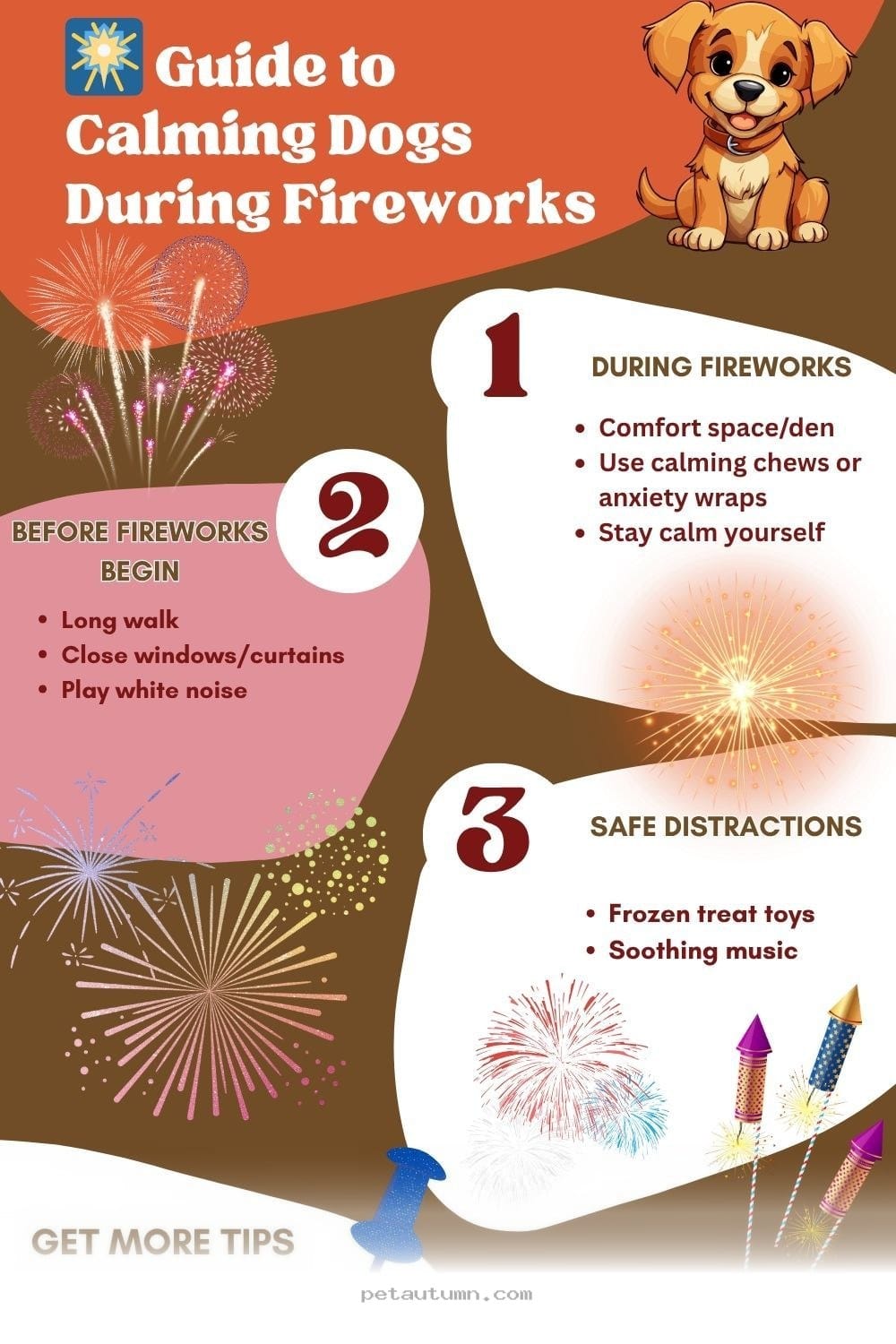
- Create a dedicated safe space where your dog feels secure and hidden from the noise.
- Use white noise machines or calm music to mask the sudden outdoor explosions.
- Keep your windows and curtains closed to block out the flashes of light.
- Exercise your dog earlier in the day to help them burn off excess energy.
- Maintain a calm, relaxed demeanor yourself because your dog mirrors your emotional state.
Preparing Your Home for a Noise-Sensitive Dog
Taking a few proactive steps before the festivities begin can significantly lower your dog’s stress levels.
1. Designate a Soundproof Sanctuary
Choose an interior room without windows, like a laundry room or a walk-in closet. Fill this space with their favorite blanket, a comfortable bed, and a few familiar toys.
2. Utilize Background Noise
You can drown out the sharp cracks of fireworks by playing soothing classical music or white noise. This creates a steady sound environment that helps your dog feel less exposed to the sudden bangs.
3. Close the Curtains
The bright, flickering flashes of light can be just as unsettling as the noise for many dogs. Ensure your blinds are shut tightly to keep your home feeling like a dark, peaceful cave.
4. Secure Your Escape Routes
Anxious dogs may try to bolt if they become overwhelmed by the loud environment. Check that your fence is secure and keep your doors tightly closed throughout the night.
Managing Your Dog During the Event
Once the fireworks start, your primary focus is keeping your companion calm and comfortable.
5. Stick to a Routine
Try to feed your dog and take them for their final potty break well before the fireworks start. Keeping their schedule consistent provides a sense of normalcy during a chaotic evening.
6. Stay Calm Yourself
Your dog is an expert at reading your body language and emotional state. If you act anxious or overly apologetic, your dog might think there is a genuine reason to be afraid.
7. Offer Calming Distractions
Sometimes a high-value treat or a long-lasting chew toy can shift their focus away from the noise. Keep a stash of their favorite snacks handy to reward calm behavior throughout the evening.
8. Consider Compression Wraps
Some pet owners find that snug-fitting vests or wraps provide a comforting sensation for their dogs. These garments apply gentle pressure that can help soothe a nervous animal during stressful events.
9. Skip the Backyard
Avoid taking your dog outside for a bathroom break once the fireworks begin. If you must go out, keep them on a short, secure leash to prevent any sudden flight attempts.
10. Consult Your Veterinarian
If your dog shows extreme signs of distress, it is time to have a professional conversation. According to the American Veterinary Medical Association, there are many behavioral and medical strategies that can assist a pet with noise phobias.
These proactive measures help ensure that your pet stays as relaxed as possible while the neighborhood celebrates.
Understanding Behavioral Signals
Recognizing when your dog is feeling overwhelmed is the first step toward effective management.
Common Signs of Anxiety
- Excessive panting or drooling
- Pacing back and forth
- Constant whining or barking
- Attempting to hide under furniture
- Tucked tail or flattened ears
- Refusal to eat treats
Understanding how different calming methods compare can help you build the best plan for your unique pup.
| Method | Effectiveness | Best For |
|---|---|---|
| White Noise | High | Masking external sounds |
| Safe Space | High | Hiding and security |
| Compression Vest | Moderate | Mild nervousness |
| Forced Exposure | None | Avoid at all costs |
Managing your dog’s environment is the most effective way to help them navigate the holiday season safely.
The information on petautumn.com is for general informational purposes only and does not constitute veterinary advice. Pet health needs vary by breed, age, and individual condition. Always consult a licensed veterinarian before making decisions about your pet’s health, diet, or medical treatment. Pet Autumn is not affiliated with any veterinary organization, pet food manufacturer, or breeder.
Building a consistent plan for your dog takes time, but your efforts will pay off with a happier pet. You can learn more about general pet safety at the ASPCA website.
Remember that patience is the most important tool you have. Your dog depends on you to be their steady anchor during the storm of noise and lights.
Dog care writer at petautumn.com. Visual Communication Design graduate (S.Ds) from Universitas Udayana. Covers dog breeds, behavior, training, and gear reviews. Dog dad to Meepo. Based in Austin, Texas.