Last Updated: May 3, 2026
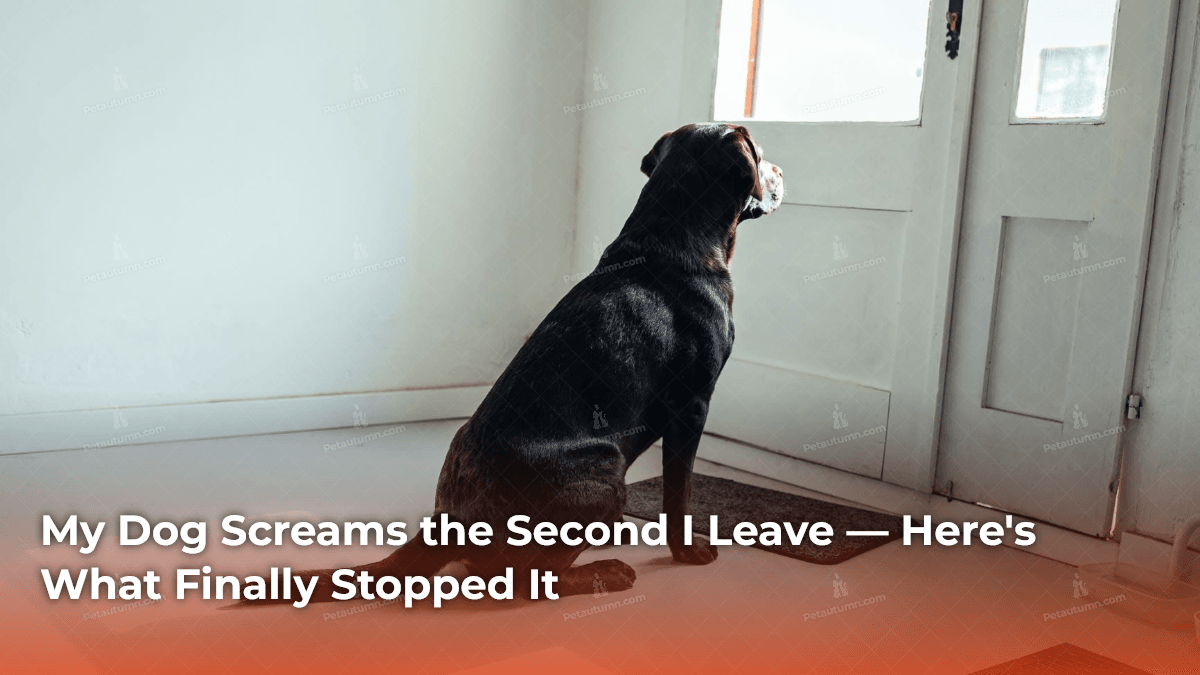
Your neighbor has probably already knocked on your door about it. Or maybe you’ve come home to scratch marks on the front door, a shredded couch cushion, and a dog who greets you like you’ve been missing for three weeks — when it’s actually been four hours. If any of that sounds familiar, your dog might be dealing with separation anxiety. And you’re in very good company.
Separation anxiety is one of the most common behavioral problems reported by US dog owners right now, and it’s been getting measurably worse since 2020. At petautumn.com, we hear about it constantly. The good news is that it’s genuinely treatable. The frustrating part? Most owners are accidentally making it worse — and doing so with completely good intentions.
This article covers what separation anxiety actually looks like, why it develops, and what actually works to fix it. No vague tips. No fluff. Just what the behavioral science supports.
Key Takeaways
- Separation anxiety is distress specifically triggered by being alone — it’s not the same as boredom or bad behavior
- Boredom and anxiety can look nearly identical on the surface but require completely different solutions
- Punishment and the “just ignore it” method are the two most counterproductive things you can try
- Systematic desensitization — practiced consistently over weeks — is the approach with the strongest evidence behind it
- Medication is a legitimate, vet-supervised tool for moderate to severe cases, not something to feel guilty about
What Separation Anxiety Actually Looks Like (vs. Normal Dog Behavior)
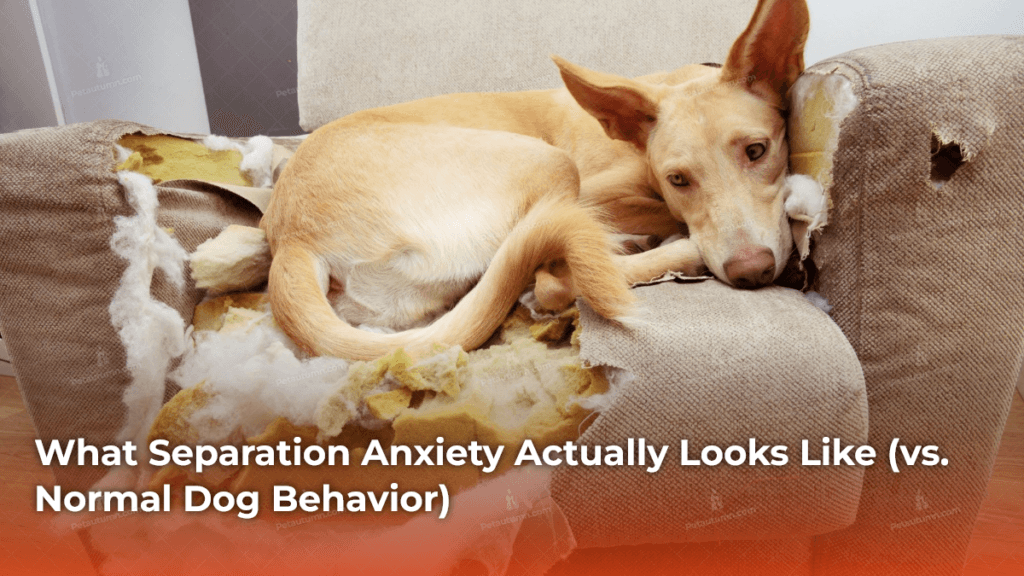
Not every dog who destroys a pillow when you leave has separation anxiety. Some dogs are bored. Some are under-exercised. Some just really like that specific pillow. Separation anxiety is a distinct pattern of distress tied directly to being alone, and knowing the difference matters enormously, because the solutions are completely different.
The classic signs: your dog howls or barks within minutes of your departure. They scratch at doors and windows. They have accidents indoors even though they’re fully house trained. They refuse to eat while you’re gone. Set up a phone or pet camera before you leave and review the first 15 minutes of footage. That footage tells you more than anything else ever could.
Separation Anxiety vs. Boredom — How to Tell the Difference
| Separation Anxiety | Boredom | |
|---|---|---|
| When does it start? | Within the first 5-15 minutes of being alone | After an hour or more of inactivity |
| Is it owner-specific? | Usually yes — distress tied to one or two people | No — happens regardless of who’s home |
| What does the dog do? | Vocalizes, paces, scratches near exits, may self-harm | Gets into things, chews randomly, eventually settles |
| Camera test result | Visible panic response within the first 10 minutes | Calm initially, trouble starts after 60-90 minutes |
| What actually helps | Desensitization training, possibly medication | More exercise, puzzle feeders, enrichment toys |
The camera test is the fastest diagnostic tool you have. Set it up, leave normally, and watch what happens in the first 15 minutes. Distress that starts immediately is anxiety. Trouble that starts an hour in is usually boredom.
Is It Mild, Moderate, or Severe? A Quick Self-Assessment
Severity determines how aggressively you need to intervene. This matters because mild cases often resolve with consistent home training, while severe cases almost always require professional help.
| Severity | What It Looks Like | Typical Next Step |
|---|---|---|
| Mild | Whines or paces for 15-20 minutes, then settles. Minor destruction. | Home desensitization training, enrichment adjustments |
| Moderate | Sustained barking, accidents, destructive chewing. Distress lasts 30+ minutes. | Structured desensitization program, vet consultation |
| Severe | Escape attempts, self-injury, refuses to eat. Full panic response throughout absence. | Veterinary behaviorist, behavioral medication, intensive program |
Most dogs fall somewhere in the mild-to-moderate range. Severe cases are less common but do happen, particularly in rescue dogs with an unknown or difficult history.
Why Dogs Develop Separation Anxiety in the First Place
There’s no single cause. Separation anxiety develops from a mix of genetics, early life experience, and changes in daily routine. Some breeds are naturally more prone to it — Vizslas, Border Collies, and Labrador Retrievers tend to be higher risk. But any dog can develop it under the right conditions. Or the wrong ones.
Pandemic Puppies and the Post-COVID Surge
Here’s a pattern that played out for millions of US households: they adopted a puppy or dog during 2020 or 2021, worked from home, and then returned to the office. Their dog had never experienced a full workday alone. And it showed.
The American Kennel Club documented a significant rise in separation anxiety-related behavior complaints starting in 2022, tied directly to post-pandemic return-to-work transitions. Dogs who spent their critical socialization periods with a human present 24/7 simply never learned that being alone was survivable. Or normal.
This doesn’t mean those dogs are broken. It means they need to learn something they were never taught in the first place.
Rescue Dogs and Attachment Issues
Rescue dogs are disproportionately represented in separation anxiety cases. It makes sense: shelter life is stressful, histories are often unknown, and many rescues have experienced real loss or abandonment before they ever landed in a stable home. When they finally feel safe somewhere, the bond they form can become intensely tight.
Meepo, Kadek’s rescue mix adopted from an Austin shelter back in 2019, was shadowy for months after coming home. He’d follow Kadek from room to room, tense up whenever a bag got packed (ask us how many times that bag got repacked mid-trip). It eased over time with consistency and patience. But those early weeks were a real adjustment on both ends.
The attachment itself isn’t the problem. It becomes one when the dog hasn’t built the resilience to tolerate time apart.
What Doesn’t Work (And Why Most People Try These First)
This is the section most people skim. Don’t skim it. Understanding what makes anxiety worse is just as important as knowing what helps.
Why Punishment Makes It Worse
Coming home to a destroyed couch is infuriating. Completely understandable. But punishing a dog for anxiety-driven behavior is one of the most counterproductive responses possible — and not just because dogs don’t connect punishment to past actions.
Punishment spikes cortisol and stress in dogs. If your dog is already anxious about being alone, adding fear of your return on top of that makes the underlying anxiety worse, not better. The behavior escalates. The same logic applies to yelling at your dog while you’re still home — it creates a negative association with departure cues before you’ve even left.
If you’ve worked through stopping destructive behavior with your dog, you already know that positive reinforcement consistently outperforms punishment-based approaches. Separation anxiety is no different.
The “Just Ignore It” Method — Why It Backfires
A lot of online advice tells owners to ignore anxious behavior completely: arrive home without eye contact, leave without saying goodbye, act like the dog doesn’t exist during departures. The idea is to make comings and goings emotionally neutral.
There’s something valid in the “low-key departures” piece of this. But “just ignoring it” as a full strategy misses the core problem entirely. The dog hasn’t learned that being alone is safe. Ignoring a panicking animal doesn’t teach it that panic is unnecessary. It just leaves the dog to panic alone, with no new information.
The goal isn’t to suppress the emotional response. It’s to change it.
What Actually Works — A Step-by-Step Desensitization Plan
Systematic desensitization is the only intervention with consistent support from behavioral science. It works by exposing your dog to the trigger (being alone) at an intensity below their panic threshold, then gradually extending that exposure over time. Done right, it changes the emotional response at the source.
It takes weeks. There is no shortcut. That’s not pessimism — that’s just how learning works in a nervous system that’s been in survival mode.
Step 1 — Practice Short Departures First
Start with departures so brief they don’t trigger any reaction at all. Pick up your keys and sit back down. Walk to the door, then come back in. Step outside for 30 seconds, then return.
Repeat this until your dog is completely unbothered. Then extend to one minute. Then three. Then five. The goal is to identify your dog’s threshold — the duration at which they start showing stress signs — and work consistently just below it.
This part is tedious. It is also non-negotiable.
Step 2 — Build a Pre-Departure Routine That Doesn’t Trigger Anxiety
Most anxious dogs read departure cues perfectly. The jingle of keys. Shoes going on. A bag being picked up. By the time you actually reach the door, they’re already in a stress spiral — before you’ve even left.
The fix is to desensitize those specific cues separately from actual departures. Pick up your keys constantly throughout the day for no reason. Put your shoes on and watch TV. Grab your bag and sit down. Over time, those cues stop predicting departure and lose their power to trigger anxiety.
- Practice departure cues 10-15 times per day
- Pair cue exposure with something positive (a treat, calm praise)
- Do not use those cues to actually leave during this training phase
Step 3 — Crate Training as a Safe Space (Not a Punishment)
Done correctly, crate training can meaningfully reduce separation anxiety by giving the dog a predictable, defined safe space. The crate needs to be associated entirely with good things: meals, treats, favorite toys, and naps happen there.
A crate is not where you put the dog because you’re leaving and want to limit damage. That’s containment, and it’s fine for practical reasons. But it’s not the same as training the dog to feel genuinely calm and secure there.
Start with the door open. Feed meals inside the crate. Toss treats in randomly throughout the day. Build up to closed-door time gradually, using the same slow extension approach as alone-time training.
When to Call a Vet or Behaviorist
Home training works well for mild to moderate cases. But there’s a clear point where you need professional help, and recognizing that point early saves everyone a lot of unnecessary stress — your dog included.
Your dog’s regular vet visit routine should already include conversations about behavioral health. Don’t wait for a crisis to bring it up at the next appointment.
Signs You’ve Moved Past DIY Territory
- Your dog is injuring themselves trying to escape — broken nails, damaged teeth on crates or door frames
- No measurable improvement after four or more weeks of consistent desensitization work
- Your dog won’t eat, drink, or use the bathroom while alone for any duration whatsoever
- Neighbor complaints are escalating to the point where your housing situation is at risk
- You’ve tried everything you can find and you’re genuinely burned out
At this point, a certified applied animal behaviorist (CAAB) or a board-certified veterinary behaviorist (DACVB) is the right call. Consultations typically run $150-350 per session — if the financial side of extended treatment is a concern, it’s worth reviewing what pet insurance actually covers before you’re in crisis mode.
Board and train programs are another option, but worth approaching carefully here. Separation anxiety specifically requires work in the dog’s home environment to generalize properly. Verify the program’s methodology before committing any money.
Medication Options — What Vets Are Actually Prescribing in 2026
Medication is not a last resort. For moderate to severe separation anxiety, behavioral medication makes the dog accessible to training. Without it, the anxiety level is sometimes too high for meaningful learning to happen at all. That’s not a character flaw in the dog — it’s basic neuroscience.
The two most commonly prescribed options in 2026:
| Medication | Type | Notes |
|---|---|---|
| Fluoxetine (Reconcile) | Daily SSRI | FDA-approved specifically for separation anxiety in dogs. Takes 4-6 weeks for full effect. |
| Clomipramine (Clomicalm) | Daily TCA | Also FDA-approved. Often used alongside behavioral modification protocols. |
| Trazodone | Situational | Used for acute anxiety events rather than daily management. Not a standalone fix. |
The ASPCA recommends that medication for separation anxiety always be paired with a behavioral modification program — not used as a standalone fix. Your vet is the only person who should be making these decisions based on your dog’s specific history, health profile, and severity level.
“The information on petautumn.com is for general informational purposes only and does not constitute veterinary advice. Pet health needs vary by breed, age, and individual condition. Always consult a licensed veterinarian before making decisions about your pet’s health, diet, or medical treatment. Pet Autumn is not affiliated with any veterinary organization, pet food manufacturer, or breeder. If you notice signs of severe distress or self-injury, contact your vet right away.”
Separation anxiety is hard. It’s hard on the dog, and it’s genuinely exhausting for the owner who keeps coming home to evidence of it. But it does respond to the right approach — and “the right approach” is almost always slower and more deliberate than most people want it to be.
Start with the camera test. Figure out what you’re actually dealing with before trying anything else. Then pick one step from the desensitization plan and work it consistently for two weeks before evaluating progress. Most owners try too many things at once and can’t tell what’s working.
If you’re deep in this right now — hang in there. It’s fixable. It just takes more patience than most things in dog ownership.
Sources:
- American Kennel Club (AKC) — Separation Anxiety in Dogs
- ASPCA — Separation Anxiety
- American Veterinary Medical Association (AVMA)
Frequently Asked Questions
Have more questions about your dog’s behavior? Visit petautumn.com for more guides written by real pet owners.

Dog care writer at petautumn.com. Visual Communication Design graduate (S.Ds) from Universitas Udayana. Covers dog breeds, behavior, training, and gear reviews. Dog dad to Meepo. Based in Austin, Texas.