Last Updated: May 3, 2026
You find it at midnight. A litter of Goldendoodles, eight weeks old, three available, $700 each. The website looks polished. The photos are gorgeous. The seller responds in minutes and even calls the puppies by name.
But here’s the thing: that listing might be the start of a very expensive heartbreak.
The online puppy market has become one of the most exploited corners of the internet — and the tactics have gotten sophisticated. The Better Business Bureau’s 2025 Puppy Scam Study Update found that more than 50% of pet scams now start on websites people find through search engines or social media, with the average victim losing $1,293 in 2024. That’s a 34% jump from 2019. At petautumn.com, we went through the data and put together the clearest warning signs that the “breeder” you found is actually running a puppy mill — or something worse.
Key Takeaways
- More than 50% of pet scams originate from websites found through search engines or social media, per the Better Business Bureau’s 2025 update
- The average puppy scam loss hit $1,293 in 2024 — up 34% since 2019
- Refusing an in-person visit is the single strongest red flag in any online puppy listing
- Legitimate breeders provide vet records, health guarantees, and parent documentation before any money changes hands
- The ASPCA documented 680 animal welfare violations at USDA-licensed breeding facilities in 2025, with zero enforcement action taken
Why Online Puppy Scams Are Harder to Spot in 2026
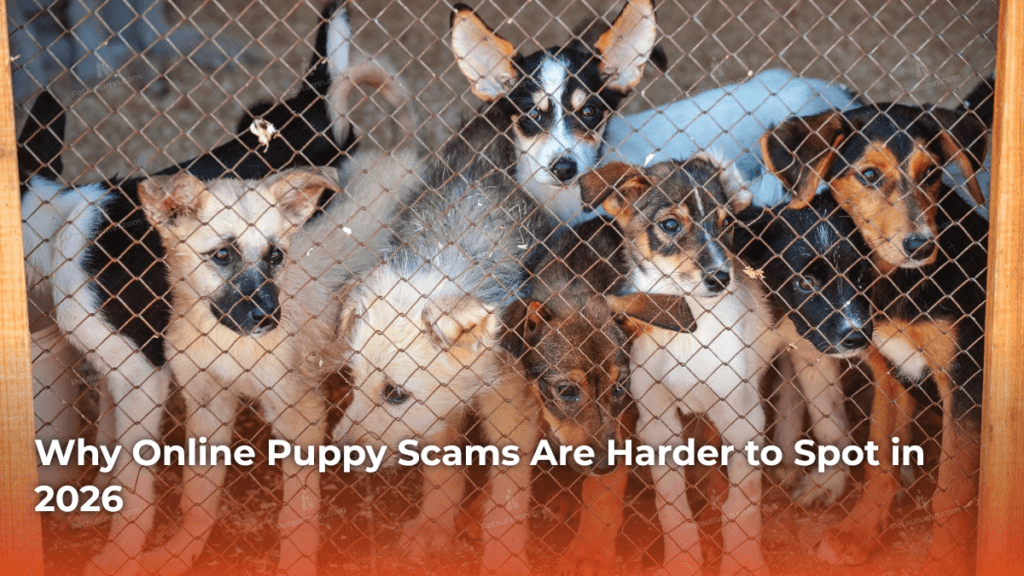
Ten years ago, a sketchy breeder website was easy to clock. Typos everywhere, watermarked stock photos, a Venmo link. Easy pass.
That playbook is long gone. Puppy mill operators and outright scammers have fully upgraded. We’re talking professionally designed websites with SEO-optimized copy, stolen photography from legitimate breeders, functioning social media pages with fabricated reviews, and now, AI-generated video. The BBB’s own investigator warned in their 2025 update that even video calls with a seller are starting to fail as a verification tool. One reported case in 2024 topped $60,000 in total losses.
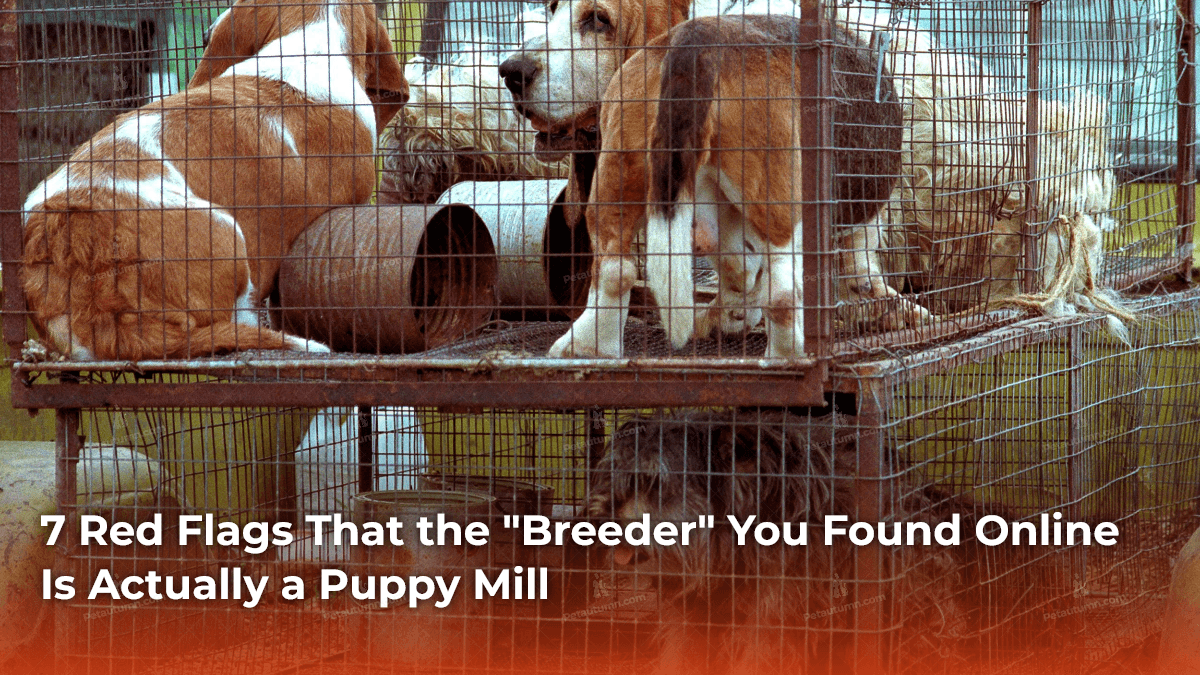
The regulatory side isn’t much help either. The ASPCA’s 2025 annual enforcement report found that federal inspectors documented 680 animal welfare violations at USDA-licensed commercial breeding facilities, yet the USDA pursued zero enforcement actions — not a single fine, and not one license revoked. That means a breeder with a documented history of sick, neglected dogs can still legally advertise puppies online with a USDA license number that looks identical to any responsible breeder’s.
The only real protection you have right now is knowing what to look for before you hit “contact seller.”
The 7 Red Flags You Need to Know
These aren’t technicalities. Any single one of these is worth pausing over. Two or more together? Close the tab and don’t look back.
No In-Person Visit Allowed
This is the biggest one. The clearest one. The one that should end the conversation on its own.
Every reputable breeder will let you visit. They want you to see where the puppies were raised, meet the mother, and verify with your own eyes that the space is clean and humane. When a seller refuses — for any reason — that reason is almost always covering something you’re not supposed to see.
The classic excuses: “we’re too far for visits,” “biosecurity protocols prevent it,” “porch pickup only.” Legitimate breeders with genuine biosecurity concerns still allow scheduled visits with basic precautions. They do not blanket-refuse all in-person contact. If you cannot see the puppy before you pay, that’s not a logistics problem. That’s a red flag.
Multiple Breeds Always “Available”
A dedicated, responsible breeder typically focuses on one breed. Maybe two, if they’re experienced and have the space to do it right. Raising dogs properly — health-testing breeding pairs, socializing litters, managing breed-specific genetics — requires an enormous commitment per breed.
So when you land on a website listing Golden Retrievers, French Bulldogs, Bernedoodles, Mini Dachshunds, and Cavapoos, all available this weekend, you’re not looking at a breeder. You’re looking at a factory. High-volume, multi-breed availability is one of the most consistent signatures of a commercial puppy mill operation. The variety looks like options. It’s a warning.
Price Seems Too Good — or Too High
Mills play both sides of the price spectrum, and it’s worth understanding why.
Low prices move puppies fast. A $400 puppy from a breed that normally costs $2,000 creates urgency and stops buyers from asking too many questions. But some mills charge premium prices precisely because a high number reads like quality to buyers who don’t know what to verify. Neither price alone tells you anything meaningful about the dog’s health or how it was raised.
What actually matters is what the price includes. First vet exam? Age-appropriate vaccinations? Deworming? Microchipping? A written breakdown? If a seller gets defensive when you ask what the purchase price covers, that defensiveness is your answer. Once your puppy is home, getting that first vet appointment right matters more than most first-time owners expect.
No Health Guarantee or Vet Records
Responsible breeders health-test their breeding dogs before ever producing a litter. OFA certifications for hips and elbows, cardiac evaluations, breed-specific genetic panels. Then they document it and hand it over without being asked.
A puppy should come with records: proof of vaccinations, a deworming schedule, and at minimum a written health guarantee. These are not optional extras. They are the absolute baseline. A breeder who hands over a puppy with zero paperwork is handing you a medical unknown — and often a vet bill you weren’t budgeting for. Real breeders are proud of their health testing. They’ll offer those records before you even think to ask.
Pushy Sales Tactics and Deposit Pressure
Here’s something that surprises a lot of first-time buyers: reputable breeders often have waitlists.
Because demand from vetted, responsible buyers frequently exceeds available puppies from a single, carefully planned litter. So when a seller pushes urgency — “another family is interested,” “deposit needed by tonight,” “we can only hold him 24 hours” — that’s a sales technique, not a reflection of reality. Mills and scammers depend on fast transactions, because slow buyers ask hard questions. If anyone is pressuring you to commit money before you’ve visited, verified, or even had a night to think, slow down deliberately. Legitimate breeders are never that desperate for your deposit.
Photos Look Stock or Stolen
This check takes about 30 seconds and it’s worth doing every single time.
Right-click any puppy photo in the listing and run a reverse image search through Google Images or TinEye. If that same photo appears on five other websites, or on a legitimate breeder’s page in another state, you have your answer. Kadek noticed this pattern years back when he was researching dogs before eventually finding Meepo at the Austin shelter — the sketchy “breeders” he’d found online all had the same suspiciously perfect studio shots, while the actual shelter’s photos were candid, imperfect, and obviously real. Photo theft has been around forever because most buyers never think to check.
A listing that only shows studio-quality shots with no candid images of the actual home, yard, or kennel space is worth questioning. Real breeders take real photos. Cluttered, imperfect, genuine. That’s what you want to see.
Shipping a Puppy Without Meeting You
Some legitimate breeders do ship puppies, particularly for rare breeds where geographic distance is unavoidable. But it should come after verification — not instead of it.
The red flag is when shipping is proposed as the only option from the first message, before any real conversation, before records are shared, before anything has been verified. Watch especially for post-deposit fees that start stacking up: crate charges, “puppy insurance,” temperature regulation fees. According to the BBB, extra fees appearing after a deposit — especially for crates, insurance, or emergency vet care — are the clearest signal a scam is underway. One 2024 case involved a buyer losing over $4,000 in accumulated fees for a puppy that never existed. If you’re getting a puppy for the first time, knowing what to expect in those first weeks, including why puppies bite and how to stop it, will save you real stress once they’re home.
How to Verify a Breeder Before You Pay
Knowing the red flags is half the job. The other half is knowing what a legitimate breeder actually looks like — and what questions to ask.
Start with the AKC Marketplace, which lists registered breeders who have agreed to follow the AKC’s Breeder Code of Ethics. Not every good breeder is AKC-registered, but it’s a reliable starting point. Breed-specific parent clubs affiliated with the AKC for each recognized breed often maintain their own referral lists and health testing standards that go beyond the minimum. The ASPCA also recommends prioritizing adoption from shelters and rescues, noting that more than 2.9 million dogs entered US shelters in 2024 alone.
Here’s a quick reference for what good answers look like versus red flags:
| Question to Ask | What a Reputable Breeder Says | Red Flag Response |
|---|---|---|
| Can I visit the puppies in person? | Yes, we schedule weekend visits. | No visits allowed / porch pickup only. |
| Can I meet the mother? | Of course, she’s here with the litter. | Mom isn’t available / was returned. |
| What health testing have the parents had? | OFA hips, elbows, genetic panel — I’ll send records. | They’re healthy, no issues (no paperwork). |
| What vaccinations has the puppy received? | First DHPP at 8 weeks, vet records included. | All caught up (no records provided). |
| Do you have a health guarantee? | Yes, written 2-year guarantee for genetic conditions. | All sales final, no guarantee. |
| Will you ask me questions about my home? | Absolutely — we need to know the puppy is a good match. | No questions, just asks how you’d like to pay. |
Source: AKC Breeder Code of Ethics guidelines. Figures accurate as of May 2026.
That last row is honestly the clearest signal of all. A breeder who interviews you is a breeder who cares where their puppies go. A breeder who only asks how you’d like to pay doesn’t. Once your puppy is home and settled, making sure you have the right foundation in place, starting with nutrition, is worth prioritizing early. This roundup of vet-recommended puppy foods in 2026 covers what most vets actually suggest for the first year.
“The information on petautumn.com is for general informational purposes only and does not constitute veterinary advice. Pet health needs vary by breed, age, and individual condition. Always consult a licensed veterinarian before making decisions about your pet’s health, diet, or medical treatment. Pet Autumn is not affiliated with any veterinary organization, pet food manufacturer, or breeder.”
The puppy in that late-night listing might be real. Or it might be a photo lifted from a breeder in Wisconsin, selling a dog raised in conditions you’d never want to picture. The difference between those two outcomes comes down to about 20 minutes of due diligence before you pay a single dollar.
Use the checklist. Ask for documentation. Insist on visiting in person. If something feels off, trust that instinct. There will always be another puppy from a better source — and you’ll be genuinely glad you waited.
Kadek brought Meepo home from the Austin shelter in 2019 after walking away from two online listings with too many red flags to ignore. Meepo’s around 8 now, still loves fetch, still eats the occasional mouthful of grass, and is still one of the best decisions he’s ever made. (The shelter photos were candid, imperfect, and 100% real, by the way. Just saying.)
Sources
- Better Business Bureau — 2025 Puppy Scam Study Update
- ASPCA — 2025 Puppy Mill Cruelty Enforcement Report
- Humane World for Animals — Horrible Hundred 2026 Report
Frequently Asked Questions
Have more questions about responsible dog ownership? Visit petautumn.com for more guides written by real pet parents.

Dog care writer at petautumn.com. Visual Communication Design graduate (S.Ds) from Universitas Udayana. Covers dog breeds, behavior, training, and gear reviews. Dog dad to Meepo. Based in Austin, Texas.