Last Updated: April 24, 2026
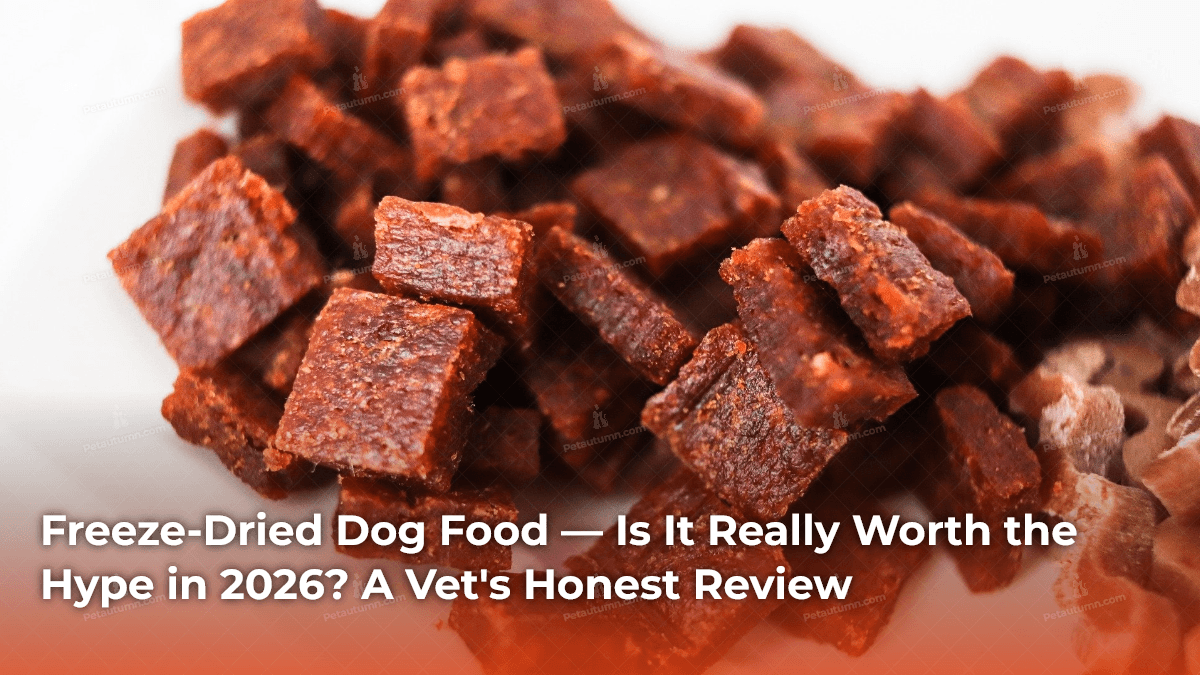
The first time I saw a bag of freeze-dried dog food at my local Austin pet store, the price made me actually laugh out loud. A 14-ounce bag. Seventy-five dollars. For what looked like dried-up meat crumbles.
That was three years ago. Today, freeze-dried dog food is one of the fastest-growing categories in the US pet food industry — and the hype has only gotten louder. Raw-food purists swear by it. Kibble loyalists roll their eyes. Meanwhile, most dog owners visiting petautumn.com just want a straight answer: is this stuff actually worth the money?
Short answer? It depends. Long answer? Buckle in — because what marketing teams tell you and what veterinarians actually recommend in 2026 are two very different conversations.
Key Takeaways
- Freeze-dried dog food is raw meat with 98-99% moisture removed through sublimation — not cooked, not sterilized.
- Claims of 97% nutrient retention are largely accurate, but freeze-drying does NOT kill Salmonella, E. coli, or Listeria.
- Feeding a 50-lb dog freeze-dried as a full meal costs around $14.73 per day on average — roughly 10-15x more than premium kibble.
- Most vets recommend it as a topper, not a standalone diet, especially in homes with children, seniors, or immunocompromised people.
- Always pick brands that explicitly meet AAFCO “complete and balanced” standards and use HPP (high-pressure processing).
What Freeze-Dried Dog Food Actually Is (and Isn’t)
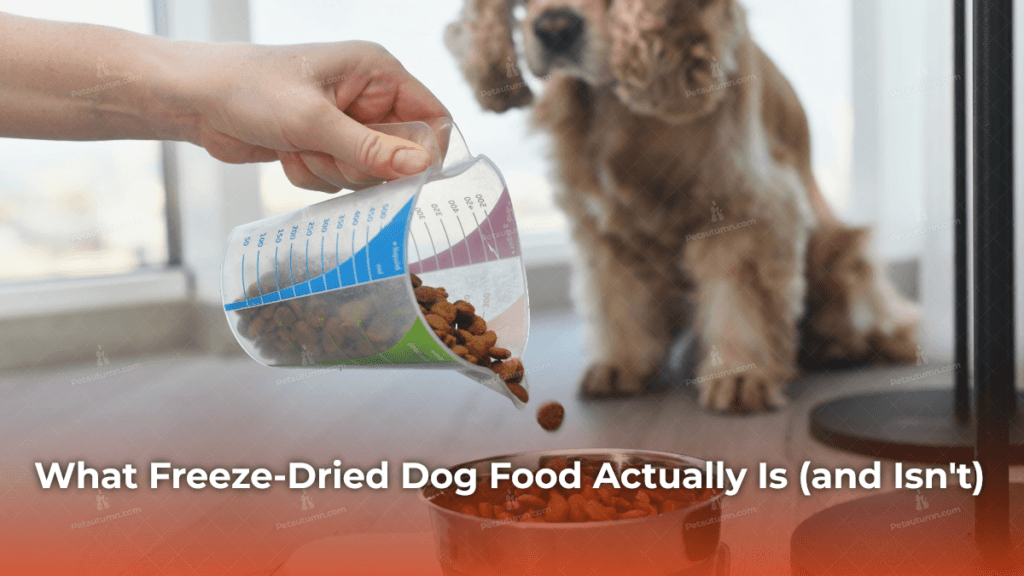
Let’s clear up the biggest misconception right now. Freeze-dried is raw. It’s not a type of kibble. It’s not “dried dog food.” It’s raw meat, organs, bones, and sometimes vegetables that have had almost all the water sucked out using a process called sublimation.
Once you add water back, it basically becomes raw meat again. That’s the whole point.
The Sublimation Process — Why It’s Not Just “Fancy Kibble”
Sublimation sounds like something out of a chemistry class, because it is. The raw food gets flash-frozen to around -40°F, then placed in a vacuum chamber where low pressure and gentle heat turn ice directly into vapor — skipping the liquid stage entirely.
The result? Around 98-99% of the moisture is gone. Nutrients, enzymes, and even the natural shape of the meat stay largely intact. Kibble, by comparison, gets cooked at high temperatures (think 200-300°F+) which destroys a lot of what was originally in there.
Worth noting: freeze-drying is expensive because the equipment is expensive. That’s not marketing fluff — it’s just physics.
Freeze-Dried vs Dehydrated vs Air-Dried — A Quick Breakdown
These three terms get mixed up constantly at the pet store. They’re not interchangeable, and the differences actually matter for safety and nutrition.
| Method | Temperature | Moisture Removed | Still Raw? |
|---|---|---|---|
| Freeze-Dried | Below freezing (vacuum) | 98-99% | Yes |
| Dehydrated | Warm air (~120-140°F) | ~90% | Mostly raw |
| Air-Dried | Low heat (~140-180°F) | ~80% | Partially cooked |
Figures based on industry manufacturing standards, accurate as of April 2026.
The Promised Benefits — What the Marketing Tells You
If you’ve seen the Instagram ads, you already know the pitch. Glossy coat. Better digestion. Fewer allergies. Healthier teeth. Longer life. More zoomies.
Some of this is real. Some of it is marketing gloss. Let’s separate the two.
Nutrient Retention Claims (up to 97%)
This claim actually holds up pretty well. Multiple peer-reviewed studies confirm that sublimation preserves heat-sensitive nutrients — like vitamins B and C, enzymes, and omega-3 fatty acids — far better than kibble extrusion.
But here’s what most marketing leaves out. Nutrient retention isn’t the same as nutritional completeness. A food can retain 97% of what it started with and still be missing key things your dog needs. Always check for the AAFCO statement on the bag. More on that in a minute.
Palatability and Shelf Life
This one’s legit. Dogs go bananas for freeze-dried food. The smell intensifies when rehydrated, and the texture mimics fresh meat.
Shelf life is also genuinely impressive — most brands stay good for 12-24 months unopened, no refrigeration needed. And if you travel with your dog, the weight-to-calorie ratio beats pretty much every other raw option out there.
What Vets Actually Say in 2026
This is where the conversation gets real. Most mainstream veterinary organizations — including the American Veterinary Medical Association — do not recommend raw diets for dogs, freeze-dried included. The reasons aren’t nutritional. They’re about pathogens.
The Salmonella and Listeria Problem
Here’s the thing most freeze-dried brands don’t put on the front of the bag. Freeze-drying does not kill bacteria.
Cold temperatures preserve pathogens like Salmonella, E. coli, and Listeria rather than destroying them. The AVMA’s official policy on raw meat diets warns that contaminated products can make both pets and humans sick. In 2025 alone, the FDA logged thirteen pet food recalls totaling roughly 166,071 pounds — Salmonella was responsible for the vast majority of that poundage.
And no, your dog’s “stronger stomach” doesn’t make them immune. They can carry and shed pathogens in their stool while still looking perfectly healthy. That’s how it spreads to humans.
HPP (High-Pressure Processing) — Helpful, Not Foolproof
Some brands now use HPP as an extra safety step — pressurizing the food at cold temperatures to reduce bacterial loads. It works reasonably well for Salmonella, E. coli, and most Listeria strains.
But HPP has a blind spot: Clostridium botulinum spores. Pressure doesn’t touch them. Rare? Yes. Serious? Absolutely — especially for humans in the household.
If safety matters to you, HPP-treated brands are the safer pick in this category. Just don’t confuse “safer” with “sterile.”
AAFCO “Complete and Balanced” — Read the Label
This might be the single most important sentence in this article. Not all freeze-dried dog food is actually food.
Many products are labeled as toppers or meal mixers — meant to supplement a balanced diet, not replace it. If a bag doesn’t say “complete and balanced” per AAFCO nutrient profiles, it’s technically a treat or topper. Feeding it as a standalone diet long-term can cause real nutritional deficiencies. The same label-literacy rules apply here as in our breakdown of what premium pet food really means in 2026 — the marketing front says one thing, the AAFCO statement on the back tells you the truth.
The Real Cost — A Side-by-Side Breakdown
Okay, let’s talk money. Because for most owners, this is the make-or-break factor.
A 50-lb dog on a full freeze-dried diet costs around $14.73 per day on average in 2026. That’s about $442 a month. Or $5,305 a year. For one dog.
| Dog Weight | Freeze-Dried (Full Diet) | Premium Kibble | As a Topper Only |
|---|---|---|---|
| 20 lbs | ~$6-8/day | ~$0.80/day | ~$1.50/day |
| 42 lbs (like Meepo) | ~$12-14/day | ~$1.40/day | ~$2.50/day |
| 50 lbs | ~$14.73/day | ~$1.80/day | ~$3/day |
| 75 lbs | ~$22-26/day | ~$2.50/day | ~$4/day |
Figures correct as of April 2026, based on average US retail prices from Chewy, Petco, and manufacturer-direct pricing.
Real talk: feeding a large dog freeze-dried full-time is a luxury-car-payment-level commitment. Using it as a topper is where most owners get real value — you keep the palatability and nutrient boost without the financial hemorrhage.
Who Should Feed Freeze-Dried (and Who Shouldn’t)
Nutrition isn’t one-size-fits-all. Here’s the honest breakdown based on 2026 vet guidance.
Great Fit — Picky Eaters, Travelers, Topper Users
Freeze-dried works brilliantly for:
- Picky eaters. The aroma and flavor are hard for most dogs to resist.
- Frequent travelers. Lightweight, shelf-stable, no refrigeration required.
- Kibble feeders wanting an upgrade. Sprinkle a small amount on top — nutrition boost without blowing the budget.
- Dogs recovering from illness (only with vet approval) — palatability can encourage eating when appetite is low.
When we first offered some freeze-dried pieces to Meepo as a topper, he went from politely eating his kibble to full tail-wagging mealtime excitement within a week. But we still feed his regular vet-recommended puppy and adult food as his main diet — just with a spoonful of freeze-dried on top most days.
Skip It — Homes with Infants, Elderly, or Immunocompromised
Not every home is a good fit. Skip freeze-dried if your household includes:
- Infants or children under 5
- Elderly family members
- Anyone immunocompromised (chemotherapy, autoimmune conditions, etc.)
- Dogs with pancreatitis or severe kidney disease (high protein and fat can worsen these)
The risk isn’t theoretical. Bacteria can transfer from the food, the bowl, your dog’s mouth, or your dog’s stool to vulnerable people. Not worth it. And while we’re on the subject of food safety, our list of 30 foods that are poisonous to dogs pairs well with this read — most owners don’t realize how many kitchen staples are genuinely dangerous.
How to Switch Safely — 8-Day Transition
If you’ve weighed the pros and cons and decided to go for it, don’t just dump a bag of freeze-dried in the bowl tomorrow morning. Sudden food changes cause GI upset in almost every dog. Transition gradually instead.
- Days 1-2: 80% old food + 20% freeze-dried
- Days 3-4: 60% old food + 40% freeze-dried
- Days 5-6: 40% old food + 60% freeze-dried
- Day 7: 20% old food + 80% freeze-dried
- Day 8: 100% freeze-dried (or whatever final ratio you’ve settled on)
A few safety rules to stick to:
- Rehydrate with cool or lukewarm water — never hot, because heat denatures the very nutrients you just paid for.
- Rehydrated food should sit out no longer than 2 hours. Dry, up to 12 hours.
- Wash bowls, utensils, and any surfaces the food touched with hot soapy water after every meal.
- Monitor stool — loose stool during transition is normal, persistent diarrhea isn’t. If it doesn’t resolve within 48 hours, call your vet. Worth knowing: your dog’s regular vet visit schedule is the right context to bring up any long-term diet change.
The information on petautumn.com is for general informational purposes only and does not constitute veterinary advice. Pet health needs vary by breed, age, and individual condition. Always consult a licensed veterinarian before making decisions about your pet’s health, diet, or medical treatment. Pet Autumn is not affiliated with any veterinary organization, pet food manufacturer, or breeder.
Every dog is different. A vet can help determine the best diet for your pet.
Bottom Line — Is It Worth It?
Honest answer? For most owners, freeze-dried dog food is worth it as a topper — not as a full diet. The nutritional benefits are real, dogs love it, and the shelf-stable convenience is genuinely useful. But the full-meal price tag is brutal, and the pathogen risk is a dealbreaker for homes with vulnerable members.
If you’re switching for health reasons, talk to your vet first and pick a brand with AAFCO compliance, HPP treatment, and transparent sourcing. If you’re switching for the Instagram aesthetic, your dog will probably be just as happy (and equally healthy) on a quality kibble with the occasional freeze-dried topper.
Still weighing your premium food options? Compare it head-to-head with fresh food in our Ollie vs The Farmer’s Dog review. Your dog doesn’t care about the marketing. They care about the bowl showing up full.
Fact-checked by: Kadek Darma
Sources
- American Veterinary Medical Association (AVMA) — Raw or Undercooked Animal-Source Protein Policy
- Association of American Feed Control Officials (AAFCO) — Pet Food Labels and Consumer Info
- PetMD — Freeze-Dried Dog Food: The Pros and Cons
Frequently Asked Questions
1 Is freeze-dried dog food safe to feed every day?
2 Do I have to rehydrate freeze-dried dog food before serving?
3 How long does freeze-dried dog food last once opened?
4 Is freeze-dried better than fresh dog food like Ollie or The Farmer’s Dog?
5 Can puppies eat freeze-dried dog food?

Dog care writer at petautumn.com. Visual Communication Design graduate (S.Ds) from Universitas Udayana. Covers dog breeds, behavior, training, and gear reviews. Dog dad to Meepo. Based in Austin, Texas.