Last Updated: April 24, 2026
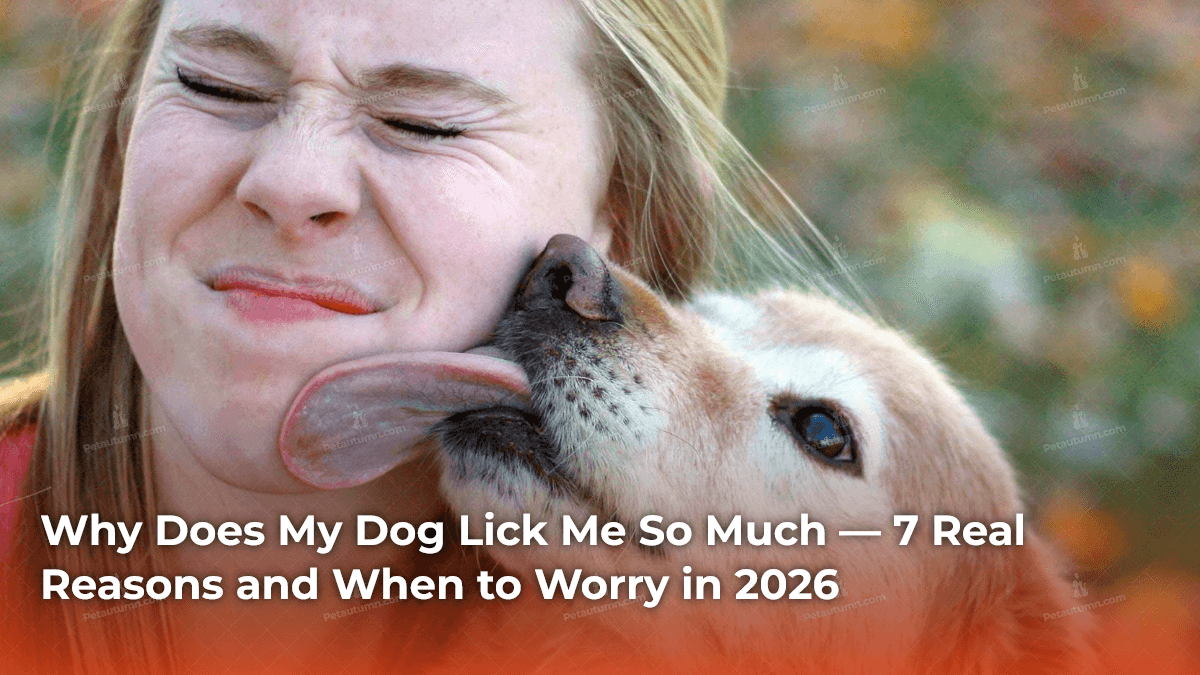
Meepo has a ritual. Every morning, the second I sit down with my coffee, he climbs onto the couch, locks eyes with me for about three seconds, and then starts licking my hand like it’s seasoned steak.
If your dog does something similar — or worse, can’t seem to stop — you’re not alone. “Why does my dog lick me so much” is one of the most-Googled dog behavior questions in the US every month, and the honest answer isn’t a single sentence. At petautumn.com, we treat licking as a puzzle with a few usual suspects, plus a handful of red flags most owners miss.
Here’s what’s actually going on, what vets look for first, and when you should stop laughing and pick up the phone.
Key Takeaways
- Most dog licking is normal — a mix of affection, scent, taste, and learned attention-seeking.
- Dogs release endorphins when they lick, which is why the behavior feels self-soothing to them.
- Sudden or excessive licking can signal stress, pain, allergies, or GI issues.
- Red flags to watch: raw spots, obsessive single-paw licking, surface licking, or a sharp behavior change.
- You can reduce licking through redirection and enrichment — never punishment.
The Short Answer — What Licking Usually Means
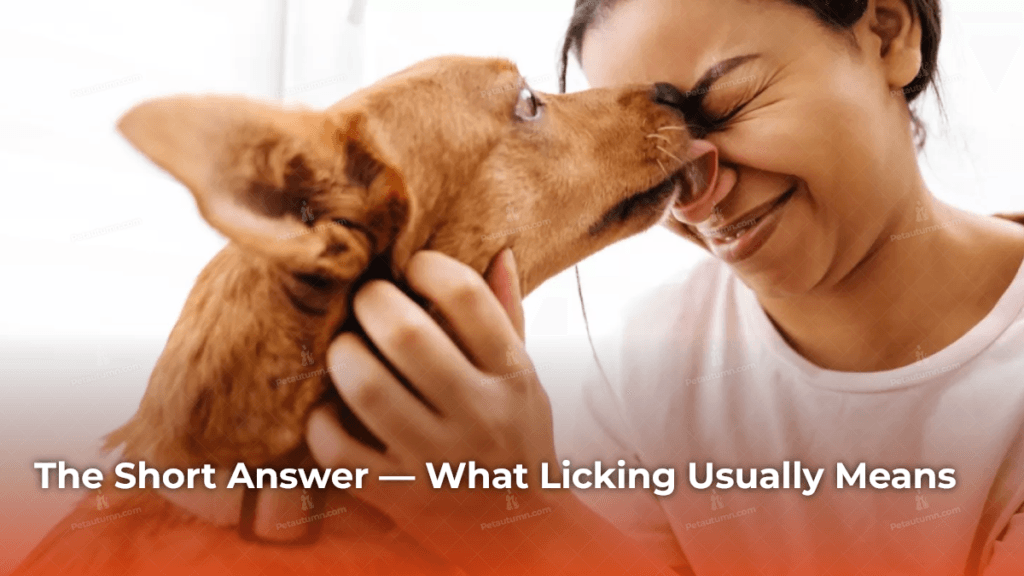
Dogs lick for three big reasons: connection, information, and comfort. Puppies are licked by their mothers from day one, and that behavior stays wired into adulthood as bonding, greeting, and self-soothing.
Licking triggers the release of endorphins in dogs, creating a calming, pleasurable effect — much like a stress-reliever. That’s also why some dogs escalate it when they’re anxious, bored, or in pain.
So is it affection? Often, yes. But “often” isn’t “always” — and that’s the part most listicles skip.
7 Real Reasons Your Dog Licks You So Much
1. Affection and Pack Bonding
The roots go back to puppyhood. Mother dogs lick their pups to groom, soothe, and stimulate them, and the behavior sticks.
According to Dr. Mary Burch, certified applied animal behaviorist, licking can be a sign of affection and may give a dog a feeling of security and comfort, just as the dog had when licked by its mother in the litter. In plain English — your dog might genuinely be saying hello.
2. You Taste Interesting (Salt, Lotion, Leftover Food)
Humans are salty. Literally.
After a workout, after dishes, after a bowl of chips — your skin carries traces of everything your dog’s nose finds interesting. Humans have slightly salty skin, especially after sweating during exercise, so those licks might be more about seeking salt than giving affection.
Quick warning. Some human products are dangerous for dogs to ingest — psoriasis creams, certain essential oils, and medicated lotions top that list. If you’ve applied anything medicated, keep your dog off your skin and check our breakdown of foods and substances that are poisonous to dogs for context.
3. Attention-Seeking — You Probably Reinforced It
Here’s the uncomfortable truth. If your dog licks you and you laugh, pet them, or even say their name — congratulations, you just trained them to do it again.
Dogs are relentless pattern-learners. Meepo figured out early that licking my wrist while I’m typing earns at least a head scratch. That’s a deal he’s not willing to walk away from.
4. Stress Relief and Self-Soothing
Licking is how dogs pacify themselves. The endorphin release we mentioned earlier? It works like a built-in calming tool — somewhere between a deep breath and a stress ball.
That’s why nervous dogs lick more at the vet, during thunderstorms, or when the vacuum comes out. (Ask Meepo. He’s still not over the vacuum.)
5. Communication — “I’m Hungry” or “Hello”
Wild canids lick the faces of returning pack members as a greeting — and, historically, to encourage regurgitation of food. Your dog isn’t trying to make you throw up lunch, thankfully, but the instinct hasn’t fully disappeared.
Post-work face licks usually mean “welcome home.” Pre-meal hand licks? Usually “feed me, please, right now.”
6. Empathy Response When You’re Upset
This one surprises people. A 2012 study in Animal Cognition asked owners to fake-cry in front of their dogs, and most dogs responded by approaching, nuzzling, and licking them — significantly more than when the same owners hummed or talked neutrally.
Is it pure empathy? Debatable. But it functions like comfort-giving, and honestly, we’ll take it.
7. Compulsive Habit or Early Anxiety Signal
Here’s where the tone shifts. When licking becomes constant, targeted, or paired with a checked-out look in your dog’s eyes, it can cross into compulsive territory.
Compulsive licking in dogs looks a lot like OCD in humans — repetitive, self-directed, and hard to interrupt. It can develop from chronic anxiety, boredom, or an untreated medical problem. This is the category where you stop guessing and call your vet.
When Licking Crosses Into “Should I Worry?” Territory
Quick rule of thumb — if the licking is new, intense, or causing damage, don’t wait it out.
4 Red Flags Vets Look For First
- Raw spots, pink skin, or hair loss on paws, legs, or belly from repeated licking.
- Single-paw obsession — especially if sudden. This often points to a cut, splinter, insect bite, or infection.
- Licking surfaces like floors, walls, or furniture. A 2012 study in the Journal of Veterinary Behavior linked Excessive Licking of Surfaces (ELS) to underlying GI disorders in roughly 14 of the 19 dogs studied.
- Sudden behavior change — a dog that never licked much suddenly licking nonstop is a flag, not a quirk.
The Difference Between Cute and Compulsive
A simple comparison makes it easier to tell where your dog lands.
| Signal | Normal Licking | Concerning Licking |
|---|---|---|
| Frequency | Brief, situational (greetings, post-meal) | Constant, hard to interrupt |
| Target | You, a toy, brief self-grooming | One spot obsessively, or surfaces like floors |
| Body language | Loose, relaxed, wagging tail | Tense, zoned-out, pinned ears |
| Skin condition | Normal | Redness, bald patches, open sores |
| Response to redirection | Stops easily with a toy or cue | Returns to licking within seconds |
Source: AKC (2026), Journal of Veterinary Behavior (2012). Figures correct as of April 2026.
How to Curb Excessive Licking Without Punishing Your Dog
You can train licking down without turning your dog into a nervous wreck. The rule is simple — replace the behavior, don’t shame it.
Redirect, Don’t Scold
Yelling or pushing your dog away often makes the habit worse. Why? To your dog, any reaction is still attention.
A better approach — when the licking starts, stand up, walk away for 10 to 15 seconds, then return calmly. Reward the quiet moments, not the licky ones. If you’re working with a puppy who treats everything as a chew toy, our guide on stopping puppy biting uses the same redirection framework.
Enrichment That Actually Reduces Licking
Bored dogs lick. Tired, mentally-stimulated dogs don’t. Try these, in order:
- One extra walk per day — even 15 minutes shifts behavior.
- Puzzle feeders instead of a regular bowl. Slows eating and drains mental energy.
- Lick mats with a thin smear of plain yogurt or pumpkin. Gives the licking urge a legal outlet.
- Rotate chew toys weekly. Novelty matters more than quantity.
- Short training sessions — five minutes of “sit, down, touch” burns more energy than most owners expect.
Real talk? The lick mat alone cut Meepo’s random arm-licking by about half within two weeks. Worth every cent of the $8.
When to Call Your Vet
Call your vet if the licking is causing skin damage, started suddenly, targets one spot or surfaces repeatedly, or is paired with vomiting, loss of appetite, scratching, or a visible limp. These patterns point to allergies, GI upset, pain, or anxiety disorders — all treatable, and all easier to fix early.
Senior dogs that suddenly become “lickers” also deserve a closer look. Cognitive decline and dental pain are common culprits, and neither shows up as obvious weight loss or limping. A routine exam — the kind we break down in our guide to the complete dog vet visit schedule — usually catches the cause fast.
You can also find more context on licking behavior and social signaling from the American Kennel Club’s expert advice on why dogs lick people, updated March 2026.
The information on petautumn.com is for general informational purposes only and does not constitute veterinary advice. Pet health needs vary by breed, age, and individual condition. Always consult a licensed veterinarian before making decisions about your pet’s health, diet, or medical treatment. Pet Autumn is not affiliated with any veterinary organization, pet food manufacturer, or breeder. If you notice these symptoms, contact your vet right away.
Final Thoughts
Most dogs lick because they love you, you taste like breakfast, or they figured out the trick works. That’s the boring truth behind the most-searched dog behavior question of the year.
The part that matters is catching the exceptions early — the raw spots, the obsessive patterns, the sudden shifts. If your gut says something’s off, trust it and book a vet visit. Dogs rarely “lick for no reason,” even when the reason isn’t obvious yet.
Meepo’s still licking my wrist as I finish this sentence. Some things are just who they are.
Sources
- American Kennel Club — Why Does My Dog Lick Me? (updated March 3, 2026)
- AKC — Why Does My Dog Lick Chew Paws (Dr. Jerry Klein, updated April 1, 2026)
- Bécuwe-Bonnet, V. et al. (2012). “Gastrointestinal disorders in dogs with excessive licking of surfaces.” Journal of Veterinary Behavior, 7(4), 194–204.
Frequently Asked Questions

Dog care writer at petautumn.com. Visual Communication Design graduate (S.Ds) from Universitas Udayana. Covers dog breeds, behavior, training, and gear reviews. Dog dad to Meepo. Based in Austin, Texas.