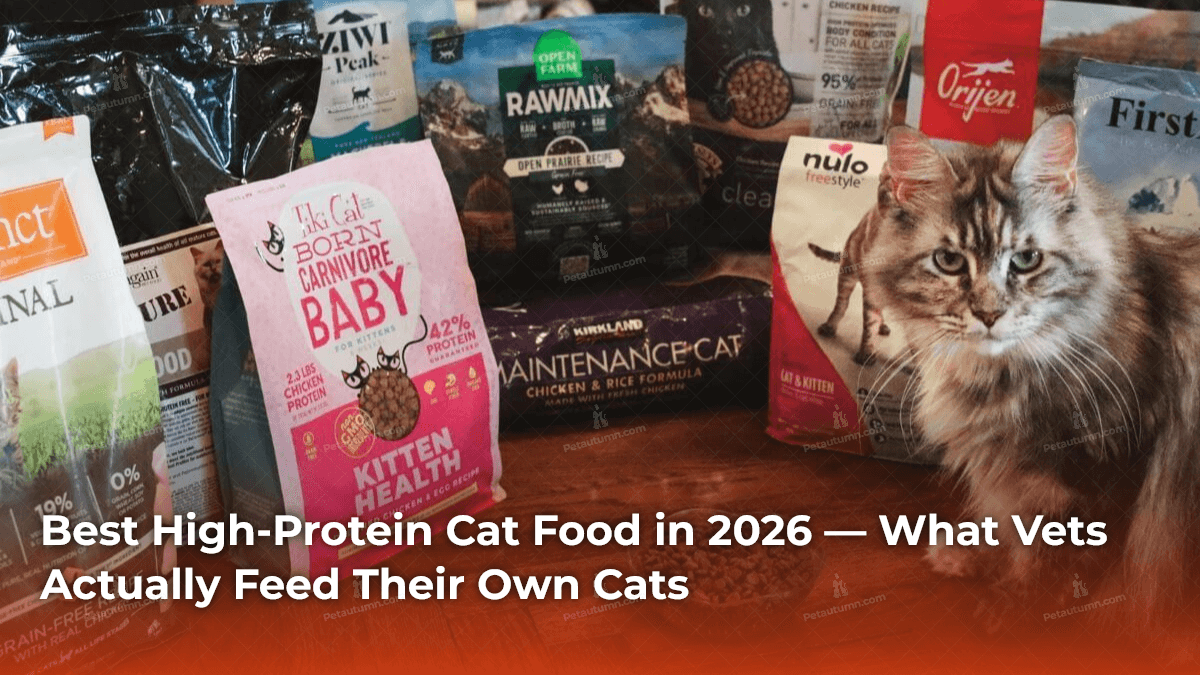
Last Updated: April 24, 2026
Walk down the cat food aisle and you’ll see “high protein” stamped on just about everything. Some of those claims are real. Most are marketing.
Here’s what most cat owners don’t realize — cats are obligate carnivores, which means their bodies are literally built to run on meat. Plants can’t replace animal protein for them, no matter how the label spins it. And according to the Association of American Feed Control Officials, the minimum crude protein for adult cat food is only 26% on a dry matter basis — a floor, not a goal. Many vets (and plenty of cat parents who’ve done their homework) aim much higher. If you’ve been searching petautumn.com for honest answers about cat nutrition, this guide breaks down what actually matters.
Real talk? I’ve spent years feeding Luna and Lina, reading labels until my eyes crossed, and asking our vet every question I could think of. What follows is the distilled version — the seven high-protein cat foods vets genuinely recommend in 2026, why protein percentages on the front of the bag are almost always misleading, and when high-protein is actually the wrong choice for your cat.
Key Takeaways
- Cats are obligate carnivores — they need animal protein, not plant protein fillers.
- AAFCO’s minimum is 26% crude protein (dry matter basis) for adult cats, but many cats thrive on 40%+.
- “High protein” on a wet food label can be deceiving. Always compare on a dry matter basis.
- Cats with kidney disease may need less protein, not more. Always check with your vet first.
- The top vet-backed brands in 2026 include Tiki Cat, ORIJEN, Purina Pro Plan, Hill’s Science Diet, and Royal Canin.
Why Protein Matters So Much for Cats (And Why It’s Not Optional)
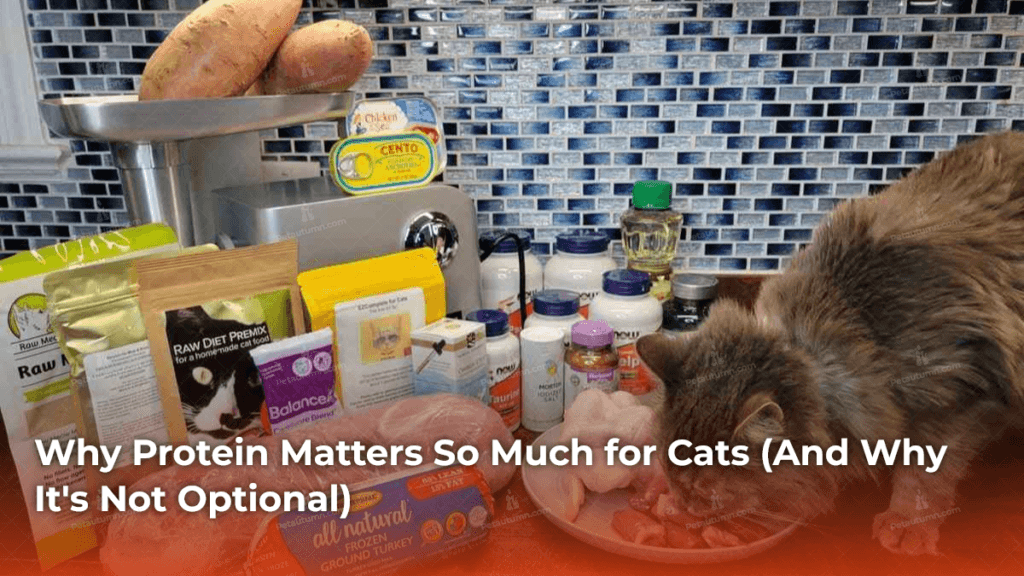
Protein isn’t just one nutrient for cats. It’s the foundation of their entire metabolism.
The Obligate Carnivore Reality
Dogs can get by on a more flexible diet. Cats can’t. Their bodies evolved to metabolize protein and fat as primary fuel — not carbs. They also can’t produce certain amino acids on their own, most famously taurine. A taurine deficiency can cause heart failure and blindness, which is why every quality cat food adds it back in.
Cats need preformed vitamin A (from animal tissue), arachidonic acid, and specific amino acids like arginine and methionine. Plants simply don’t deliver these in a usable form. That’s not opinion — it’s biology.
AAFCO Minimums vs What Cats Actually Thrive On
AAFCO sets 26% crude protein (dry matter basis) as the minimum for adult maintenance. For kittens, it’s 30%. These are floors, not optimal targets. Research suggests senior cats and neutered males may do better closer to 40% protein on a dry matter basis, especially for preserving lean muscle as they age.
Here’s the thing — muscle loss in older cats is a real problem, and protein is what prevents it. The Cornell Feline Health Center has noted that feline obesity affects a huge share of the pet cat population, and well-formulated high-protein diets often help cats maintain lean mass while shedding fat. Still, more protein isn’t automatically better for every cat. Quality, digestibility, and your cat’s health status all matter.
What “High-Protein” Really Means on a Cat Food Label
Marketing departments love the phrase. Nutritionists are more careful with it.
Dry Matter Basis — The Only Number That Counts
Wet food is mostly water — usually 75-80% of it. Dry food is 10-12% moisture. So when you see “10% crude protein” on a wet food can and “36% crude protein” on a dry food bag, the wet food might actually be higher in protein once you remove the water.
To compare fairly, divide the protein percentage by the dry matter (100% minus moisture). A wet food with 10% protein and 78% moisture = 10 ÷ 22 = roughly 45% protein on a dry matter basis. Suddenly it looks very different, right? This is the calculation every serious cat parent learns sooner or later.
Animal Protein vs Plant Protein (Spoiler — They’re Not Equal)
A food can hit 40% crude protein using pea protein, corn gluten meal, and potato protein. Technically high-protein. Nutritionally? Not great for cats. Plant proteins lack certain amino acids and aren’t as bioavailable to felines.
Quality cat food lists named animal proteins first — deboned chicken, turkey meal, salmon — not vague “meat by-products” or plant fillers as the dominant protein source. If you remember one rule from this article, let it be that one.
7 High-Protein Cat Foods Vets Actually Recommend in 2026
These picks prioritize animal-based protein, AAFCO compliance, and real vet backing. No pay-to-play rankings. Just what actually works.
Best Overall Dry — ORIJEN Original Cat
Luna turned her nose up at this for about a week before she realized what she was missing. Now she hovers by the bowl every morning. The freeze-dried liver coating is the secret weapon — cats go genuinely nuts for it. (Lina, meanwhile, ignored it entirely for three days out of pure spite. She came around.)
Best Overall Wet — Tiki Cat Born Carnivore High Protein
Best Budget Pick — Purina ONE True Instinct High Protein
Honestly? This is the one I reach for when the budget is tight. It’s not the absolute cleanest formula on the list — but it delivers real high-protein nutrition at a fraction of ORIJEN’s price.
Best Vet-Backed Classic — Purina Pro Plan Complete Essentials
Best Grain-Free Wet — Blue Buffalo Wilderness
Best for Indoor Cats — Hill’s Science Diet Adult Indoor
A note — this one trades some protein for weight-management benefits. For a sedentary indoor cat (like Lina when she’s not sprinting around at 3 AM doing her famous kneading routine), that tradeoff is often worth it.
Best for Kittens — Royal Canin Kitten Instinctive
Protein Comparison Table (Dry Matter Basis)
Comparing wet and dry foods gets easier on a dry matter basis. Here’s how our seven picks stack up.
| Product | Type | Protein (DM Basis) | Best For |
|---|---|---|---|
| Tiki Cat Born Carnivore | Baked Dry | ~47% | All life stages |
| Royal Canin Kitten Instinctive (wet) | Wet Pouch | ~50%+ | Kittens |
| Blue Buffalo Wilderness (wet) | Wet Can | ~45% | Grain-sensitive adults |
| Purina ONE True Instinct | Dry Kibble | ~42% | Budget-conscious owners |
| ORIJEN Original Cat | Dry Kibble | ~44% | Premium all life stages |
| Purina Pro Plan Complete Essentials | Dry Kibble | ~44% | Vet-recommended mainstream |
| Hill’s Science Diet Adult Indoor | Dry Kibble | ~35% | Less active indoor cats |
Source: Manufacturer guaranteed analysis, AAFCO nutrient profiles. Figures correct as of April 2026. Dry matter values are approximate calculations.
When High-Protein Is Actually the Wrong Choice
More protein isn’t always better. Here’s when to pump the brakes.
Kidney Disease and Protein Myths
Cats with chronic kidney disease have historically been put on low-protein diets, though newer research suggests protein quality and phosphorus control may matter more than raw protein percentage. Either way, this isn’t a DIY decision. If your cat has been diagnosed with kidney issues, your vet will recommend a specific prescription diet.
Don’t self-prescribe a low-protein diet because you read something online. And don’t keep your cat on ultra-high-protein food if the vet says otherwise.
Senior Cats — It’s More Nuanced Than You Think
Here’s where it gets counterintuitive. Healthy senior cats often need more protein than younger adults, not less, to preserve lean muscle mass. The old advice of “cut back on protein as they age” is outdated for cats without kidney problems.
Senior cats with no underlying disease generally thrive on 40%+ dry matter protein. But seniors with kidney disease, liver issues, or certain cancers may need a completely different plan. Always check with your vet before making the switch.
How to Transition Your Cat to a Higher-Protein Diet
Cats have sensitive stomachs — and long memories about food they don’t like. Go slow.
- Days 1-3: 75% old food, 25% new food.
- Days 4-6: 50% old, 50% new.
- Days 7-9: 25% old, 75% new.
- Day 10+: 100% new food.
If your cat develops diarrhea, vomiting, or refuses to eat, slow down the transition or contact your vet. Some cats need a full two weeks. Lina took exactly four days. Luna needed nine. Every cat is different.
Higher protein can also mean more bathroom odor during the switch (not kidding — be ready for it). This usually settles once the body adjusts.
Red Flags on “High-Protein” Labels (Marketing Tricks to Ignore)
A few things that should raise your eyebrow:
- “High protein” with no percentage listed on the front. Always check the guaranteed analysis.
- Plant proteins in the first five ingredients. Pea protein, corn gluten meal, and potato protein pad the protein number without delivering feline-appropriate nutrition.
- Vague meat terms. “Meat meal” or “animal protein” without a named species is a warning sign.
- No AAFCO statement. If the label doesn’t say “formulated to meet AAFCO nutrient profiles” or “feeding trials using AAFCO procedures substantiate…”, skip it.
- Claims that sound too good to be true. “Human-grade,” “ancestral,” “biologically appropriate” — these are marketing terms, not regulated standards.
The premium label game is real, and it’s bigger than most cat parents realize.
The information on petautumn.com is for general informational purposes only and does not constitute veterinary advice. Pet health needs vary by breed, age, and individual condition. Always consult a licensed veterinarian before making decisions about your pet’s health, diet, or medical treatment. Pet Autumn is not affiliated with any veterinary organization, pet food manufacturer, or breeder.
Every cat is different. A vet can help determine the best diet for your pet.
Bottom Line
The best high-protein cat food for your cat depends on life stage, activity level, and any underlying health conditions. For most healthy adults, ORIJEN Original, Tiki Cat Born Carnivore, and Purina Pro Plan are solid bets. Budget-conscious parents should look hard at Purina ONE True Instinct. Kittens do great on Royal Canin Instinctive.
Start by flipping the bag over. Read the guaranteed analysis. Check for the AAFCO statement. If the first ingredient is a named animal protein and the protein percentage clears 38% on a dry matter basis, you’re probably in good territory.
Then — and this part matters more than any list — watch your cat. Are they maintaining a healthy weight? Shiny coat? Normal energy? Good poop? (Yes, poop matters.) Those are the real signs your food is working. The internet ranking doesn’t feed your cat. You do.
Sources
- Association of American Feed Control Officials (AAFCO) — Cat Food Nutrient Profiles
- FDA — Complete and Balanced Pet Food
- Cornell Feline Health Center — Feline Nutrition
Frequently Asked Questions

Cat care writer at petautumn.com. English Literature graduate (S.S) from Universitas Udayana. Covers cat breeds, behavior, nutrition, grooming, and health. Cat mom to Luna and Lina. Based in Austin, Texas.