Written by Ayu Pratiwi
Have you ever tried balancing on one leg for more than a few seconds? You likely found it requires intense concentration, wobbling, and a fair amount of effort to keep from tipping over.
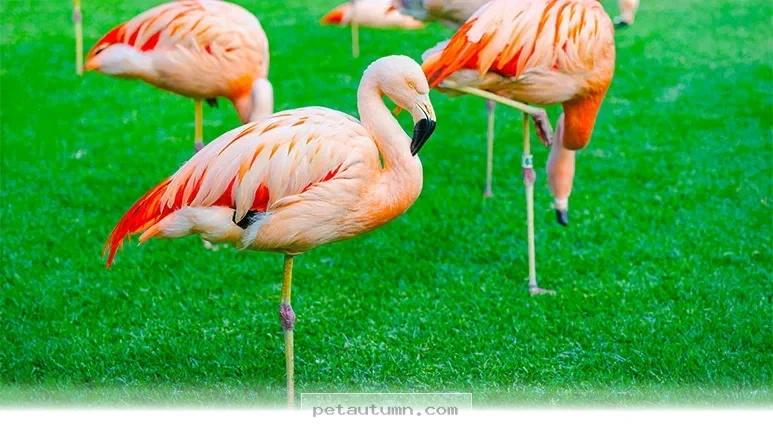
Flamingos, however, seem to have mastered this skill with ease. They spend vast amounts of time standing on one leg, even while they are fast asleep or busy grooming their feathers.
Key Takeaways
- Flamingos utilize a "passively engaged gravitational stay apparatus" to support their weight with minimal muscular effort.
- Research shows that even deceased flamingos can maintain a balanced, one-legged pose without any external support.
- The one-legged stance may also serve as a thermoregulation method to help conserve body heat in water.
- Flamingos exhibit unique social behaviors, including shared parental duties and a preference for monogamous partnerships.
The Physics of the Flamingo Stance
For years, scientists debated why these elegant birds favor such an unusual posture. Some researchers initially proposed that standing on one leg helped reduce muscle fatigue, while others believed it was a clever way to keep the body warm.
Because birds lose heat rapidly through their unfeathered legs and feet, standing on one leg reduces the surface area exposed to cool water. This theory suggests that tucking one limb against the body is a practical, biological strategy for maintaining core temperature.
1. Saving Energy Through Anatomy
Beyond thermoregulation, newer research suggests that the secret lies in the bird’s unique skeletal structure. Experts have identified a "passive gravitational stay mechanism" that allows the flamingo to lock its joints into place.
When a flamingo tucks one leg up, its remaining leg shifts directly beneath its center of gravity. This specific alignment engages the bird’s joints in a way that requires almost zero muscular activation to remain upright.
2. A Passive Balance Mechanism
The most surprising discovery came from studies involving both live and deceased birds. Researchers found that even when the muscles were no longer active, the flamingos could still stand perfectly balanced on one leg.
This proved that the stance is not a feat of strength or extreme focus. Instead, it is a brilliant example of anatomical engineering that keeps the bird stable while it rests.
| Feature | One-Legged Stance | Two-Legged Stance |
|---|---|---|
| Energy Expenditure | Very Low (Passive) | Higher (Active) |
| Primary Use | Resting & Sleeping | Walking & Feeding |
| Stability | Highly Stable | Requires Adjustment |
3. Feeding and Social Habits
While their standing posture is fascinating, their lifestyle is equally unique. Flamingos are filter feeders, often ducking their beaks into shallow water to trap tiny crustaceans and algae.
Their specialized beaks and tongues act like a pump to filter out mud while keeping the nutrients. Interestingly, both parents take an active role in raising their chicks, sharing incubation duties and defending the nest from others.
The information on petautumn.com is for general informational purposes only and does not constitute veterinary advice. Pet health needs vary by breed, age, and individual condition. Always consult a licensed veterinarian before making decisions about your pet’s health, diet, or medical treatment. Pet Autumn is not affiliated with any veterinary organization, pet food manufacturer, or breeder.
Understanding these birds gives us a deeper appreciation for the complex adaptations found in nature. Whether they are conserving heat or simply resting their muscles, flamingos have evolved the perfect way to survive in their environment.
The next time you see these vibrant birds at a zoo or on a nature documentary, you will know exactly why they look so comfortable. Their ability to find balance, even while standing on a single limb, is truly a marvel of the animal kingdom.
You can learn more about avian behaviors and biology through resources provided by the Cornell Lab of Ornithology. Always look to professional avian experts if you want to expand your knowledge of specialized species.

Dog care writer at petautumn.com. Visual Communication Design graduate (S.Ds) from Universitas Udayana. Covers dog breeds, behavior, training, and gear reviews. Dog dad to Meepo. Based in Austin, Texas.