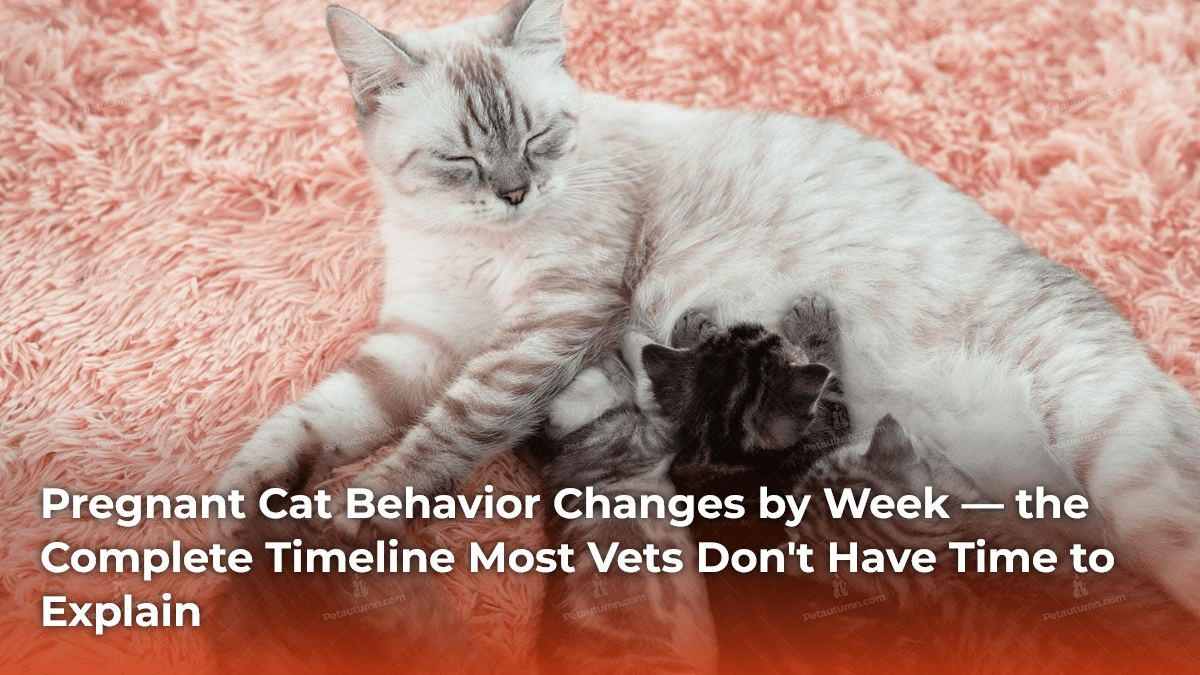
Last Updated: May 1, 2026
One day she’s perfectly normal, napping on the fridge, knocking things off the counter, demanding breakfast at 6 AM. The next, she’s pushing herself into the back of a closet and turning down food she loves. If that sounds familiar, there is a real chance your cat is pregnant, and the changes you are seeing are only going to get more noticeable from here.
The frustrating part is that early signs are genuinely subtle. Most cat owners miss weeks one and two entirely, which is completely understandable. At petautumn.com, we put together a week-by-week breakdown of every behavioral shift to expect so you are not caught off guard when things escalate.
Cat gestation runs approximately 63 to 67 days. That is about nine weeks total, and each one tells a different story.
Key Takeaways:
- Cat pregnancy lasts approximately 63-67 days, divided into roughly nine weeks
- Behavioral changes often appear before any visible physical signs
- Nesting behavior typically begins around week 5 and intensifies significantly as labor approaches
- Appetite increases from week 4 onward; transitioning to kitten food at that stage is widely recommended by vets
- A sudden temperature drop combined with restlessness is the clearest signal that labor is within 24 hours
How Long Is a Cat Pregnant? (The Short Answer)
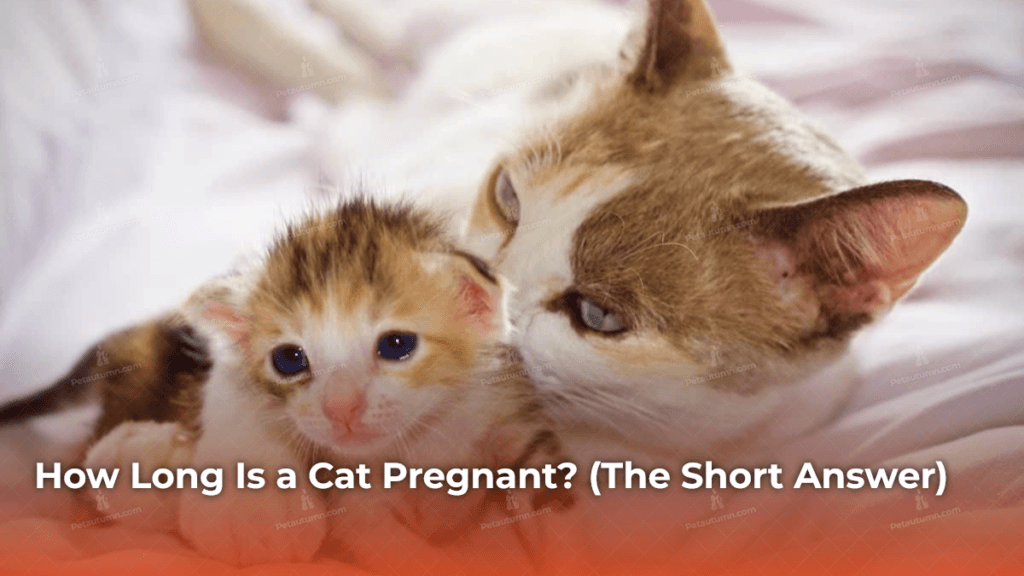
Roughly 63 to 67 days. About nine weeks. Some cats deliver a few days early; others go slightly longer. Gestation is fairly consistent across domestic cat breeds, which makes a week-by-week timeline reasonably predictable for most cats.
One thing worth knowing early: cats can become pregnant as young as four months old. If you have an unspayed female with any outdoor access at all, pregnancy can happen much faster than most owners expect. According to the American Veterinary Medical Association (AVMA), spaying before the first heat cycle is the most reliable prevention method available.
Weeks 1 and 2 — Fertilization and First Changes
Behavioral signs at this stage
Nothing. That is the honest answer. Weeks one and two are the invisible phase. Your cat will eat normally, sleep normally, and play normally. The embryos are still implanting, and there is nothing behaviorally dramatic happening yet.
Some cats show very faint mood shifts, slightly more affectionate or slightly more withdrawn. But these changes are subtle enough to attribute to a dozen other things: a new smell in the house, a change in your schedule, a passing mood. Do not stress if this window passed completely unnoticed.
Physical signs that may (or may not) appear
Physical changes are equally hard to detect at this stage. The nipples may begin looking slightly pinker and more prominent, a change sometimes called “pinking up,” but this is subtle enough to miss, especially on long-haired cats. No visible belly growth. No weight change. The first two weeks are essentially undetectable without a vet visit.
Weeks 3 and 4 — The Shift Begins
Appetite changes
Around week three, many pregnant cats go through a brief period of nausea. She might eat less than usual, lose interest in food she normally loves, or occasionally vomit. Yes, morning sickness is a real thing in cats (not just a human complaint). This phase typically resolves by week four.
Once it does, appetite swings in the other direction. From week four onward, she will start eating noticeably more as the nutritional demands of developing kittens ramp up. Most vets recommend transitioning to a high-quality kitten food at this point. Kitten food is calorie-dense and nutritionally suited for both pregnancy and nursing. Our guide to 7 vet-approved cat food brands covers several options that work well here.
Mood and affection shifts
Week three and four are when personality changes become genuinely noticeable. Some cats turn unexpectedly affectionate, following you from room to room, seeking physical contact, headbutting everything in sight. Others become more withdrawn and less interested in interaction than usual. Both are normal. Hormones are making most of the decisions right now.
Ayu still remembers noticing this exact dynamic at the Austin shelter the day she and Kadek went to adopt Luna back in 2020. A pregnant tabby in the intake area, apparently standoffish for weeks prior, had started pressing against the cage bars for human contact by her fourth week of pregnancy. The shelter coordinator called it the “week three personality flip.” It is one of the more reliable early clues for owners who do not yet know what they are looking at.
Weeks 5 and 6 — Mid-Pregnancy Behavior
Nesting instinct starts
Week five is where things become visibly different. The nesting instinct kicks in. She will start investigating quiet, enclosed spaces: inside closets, under beds, behind furniture. She might drag a blanket or a piece of your clothing to a chosen corner. She is searching for the safest possible spot to deliver, and that search starts now, not at week nine.
The kneading behavior you might recognize from your cat’s normal routine can increase during this phase too. Comfort-seeking and nest preparation tend to overlap right around this time.
This is a good moment to set up a dedicated nesting box in a quiet room. A low cardboard box lined with soft, washable towels works perfectly. Do not force her to use it. Place it in her exploration zone and let her investigate on her own terms.
Slowing down and sleeping more
By week five, her belly is becoming visible and her center of gravity is shifting. Long play sessions get shorter. Jumping to high surfaces happens less often. Sleep increases, sometimes significantly. That is completely normal. Building kittens takes real energy.
The table below gives a quick overview of what to expect and what to do at each stage of pregnancy:
| Week | Key Behavior Changes | Recommended Action |
|---|---|---|
| Weeks 1-2 | Nearly no observable changes; faint mood shifts possible | Observe; schedule vet visit if pregnancy is suspected |
| Weeks 3-4 | Brief nausea, appetite shifts, mood and affection changes | Transition to kitten food; confirm pregnancy via vet ultrasound |
| Weeks 5-6 | Nesting begins, slowing down, more sleep, visible belly | Set up nesting box; reduce access to high surfaces |
| Weeks 7-8 | Nesting intensifies, vocalization changes, possible territorial behavior | Minimize stress; manage other pets’ access; monitor closely |
| Week 9 | Restlessness, food refusal, heavy nesting, pre-labor signals | Stay available; have vet contact ready; do not relocate nesting spot |
Source: Cornell Feline Health Center. Week ranges are general guidelines; individual cats vary.
Weeks 7 and 8 — The Final Stretch
Nesting intensifies
If she was casually investigating the nesting box in week five, she is fully committed to it by week seven. Rearranging bedding repeatedly. Pawing at towels. Returning to the same corner multiple times a day. This is completely normal and a clear signal that instinct has taken full control.
Do not move the nesting box at this stage. Even relocating it a few feet can reset her comfort level and cause genuine stress. If she has claimed an unplanned spot (a laundry basket, the back of a closet shelf), try placing a piece of worn clothing in the dedicated box. The familiar scent usually redirects her without a fight.
Interaction with household members changes
Week seven and eight also shift how she relates to the people and animals in the household. Some cats become protective of the nesting area, hissing or swatting if approached. Others go through a calm, noticeably affectionate phase right before labor. Both are within normal range.
If you have other pets, managing their access carefully during this stretch matters. Pregnant cats in late pregnancy can become territorial in ways they never showed before. For households navigating a cat and dog together, these 7 steps for introducing your cat to a dog without stress has practical guidance that applies directly to late-pregnancy household management.
Week 9 — The Homestretch Before Labor
Pre-labor behavioral signs
Week nine is the most behaviorally active point in the entire pregnancy. She will seem genuinely restless, unable to settle. Pacing from the nesting box to a different spot, then back. That repetitive pacing pattern is one of the most reliable pre-labor signals most owners notice first.
Other signs to watch for in the final days:
- Refusing food completely (typically 12 to 24 hours before labor begins)
- Excessive grooming of the abdomen and genital area
- Low, rhythmic vocalizations that sound different from her normal meow
- Seeking unusual isolation, or the opposite: wanting to stay close to you constantly
- Visible abdominal contractions once active labor begins
When to start monitoring closely
Start paying close attention from day 60 onward. You do not need to hover constantly. Too much interference can stress her and disrupt the labor process. But being nearby and reachable genuinely matters in this window.
Keep your vet’s phone number accessible, along with an emergency vet contact for after-hours situations. Know the warning signs that require immediate intervention: active labor lasting more than an hour without a kitten appearing, a kitten visibly stuck in the birth canal, or your cat showing extreme distress or collapse. If pet insurance for cats is not already on your radar, pregnancy complications are exactly the kind of unexpected expense a solid plan is designed to cover.
The One Behavioral Signal That Means Labor Is Hours Away
Temperature drop. A cat’s normal rectal temperature sits between 100.5 and 102.5 degrees Fahrenheit. In the 12 to 24 hours before labor, it drops below 100 degrees. Right after that drop, behavioral restlessness spikes hard. She will pace more urgently, may pant lightly, and will focus almost entirely on the nesting area.
If you have been monitoring her temperature in the final week (a standard digital thermometer works fine, yes, that kind), the behavioral shift following a temperature drop is the clearest possible signal that delivery is happening today. Give her space. Stay calm. The ASPCA recommends having a vet on call for first-time feline deliveries, and that holds true for any pregnancy, not just complicated ones.
“The information on petautumn.com is for general informational purposes only and does not constitute veterinary advice. Pet health needs vary by breed, age, and individual condition. Always consult a licensed veterinarian before making decisions about your pet’s health, diet, or medical treatment. Pet Autumn is not affiliated with any veterinary organization, pet food manufacturer, or breeder.”
If you notice prolonged labor, unusual discharge, or signs of significant distress in your pregnant cat, contact your vet right away.
Nine weeks is a short timeline once you are living through it. The behavioral shifts build on each other logically: the quiet of weeks one and two, the hormonal changes of three and four, the nesting of five through eight, and the urgent signals of week nine. Once you know the pattern, nothing comes as a surprise.
The goal is not to manage her pregnancy for her. Cats have been doing this without human involvement for a very long time. Your job is to stay informed, keep stress low, and know when to call for help.
After the kittens arrive, a whole new set of behavioral changes begins. But that is a different article for another day.
Sources:

Cat care writer at petautumn.com. English Literature graduate (S.S) from Universitas Udayana. Covers cat breeds, behavior, nutrition, grooming, and health. Cat mom to Luna and Lina. Based in Austin, Texas.