Last Updated: April 17, 2026
Your cat has been scratching the same spot on her neck for three weeks straight. You’ve checked for fleas — nothing. You’ve tried a new shampoo — still itching. Sound familiar?
Food allergies in cats are one of the most misunderstood (and misdiagnosed) conditions in feline health. At petautumn.com, we see this question come up constantly: could my cat’s skin issues actually be caused by something in her food bowl? The answer, sometimes, is yes — but there’s a lot to unpack before you start swapping kibble.
This article covers what cat food allergies actually are, which symptoms to look for, what’s causing them, and — most importantly — what your vet will actually do about it.
Key Takeaways
- Food allergies in cats are rare — estimated to affect only about 1% of the overall cat population — but they can cause persistent, year-round itching and skin lesions.
- The most common allergens are animal proteins: chicken, fish, and beef top the list.
- The only reliable way to diagnose a food allergy is an 8- to 12-week hypoallergenic elimination diet trial — no shortcuts.
- Commercial allergy tests (blood, saliva, hair) have not been proven accurate and are not recommended by veterinary dermatologists.
- Long-term management means lifelong dietary changes tailored to your individual cat.
What Is a Food Allergy in Cats?
How the Immune System Overreacts to Food Proteins
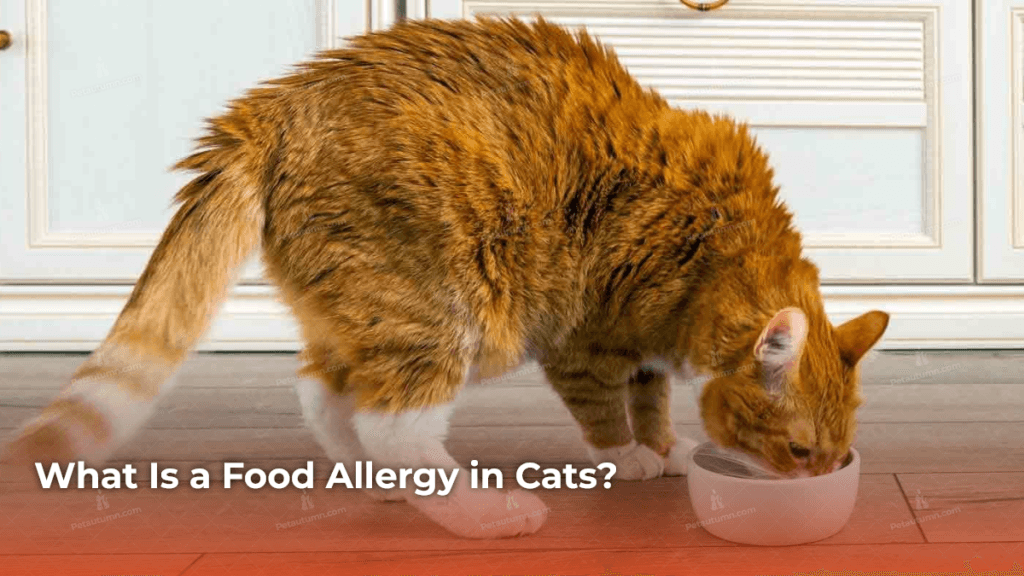
A food allergy happens when your cat’s immune system mistakenly identifies a harmless food protein as a threat. The immune system builds antibodies against that protein — and every time your cat eats it again, the body mounts an inflammatory response. That response is what causes the itching, skin lesions, and occasional stomach upset you’re seeing.
Here’s the part that confuses most cat owners: your cat has to have eaten that ingredient before for an allergy to develop. The immune system doesn’t overreact on first exposure. It takes repeated contact over time for sensitivity to build up, which is why a cat can eat the same food for years and then seemingly develop an allergy out of nowhere. It’s not random — it’s cumulative.
How Rare Are Cat Food Allergies? The Numbers Might Surprise You
Genuinely rare. Studies suggest food allergies affect roughly 1% of all cats. Among cats that are noticeably itchy, the number climbs to around 15%. But in cats showing both skin and gastrointestinal symptoms simultaneously, up to 42% may have a food allergy as the underlying cause, according to published veterinary research.
So while it’s not the most common diagnosis, it’s not something you can dismiss either — especially if your cat’s symptoms are persistent and don’t improve with flea treatment.
Common Symptoms of Cat Food Allergies
Skin Symptoms — The Most Frequent Warning Sign
The single most telling sign of a food allergy in cats is non-seasonal itching. Unlike environmental allergies (pollen, dust, mold), food allergy symptoms don’t follow the seasons — they’re consistent year-round. The head and neck are the most commonly affected areas, though itching can show up anywhere on the body.
Other skin symptoms to watch for:
- Constant scratching, licking, or biting at the skin
- Overgrooming — bald patches from repeated licking
- Miliary dermatitis — small, crusty bumps that feel like grains of sand under the fur
- Redness or papules (small raised bumps)
- Raised circular plaques or nodules
- Self-induced sores or ulcerations from scratching
Lina, one of Ayu’s two rescue cats, developed a persistent patch of hair loss behind her ear that turned out to be a skin reaction — not a food allergy in her case, but it’s exactly the kind of thing that sends you down that diagnostic rabbit hole. If you’re seeing something similar, it’s worth a vet visit sooner rather than later.
Gastrointestinal Symptoms — What to Watch For
GI symptoms are less common in food-allergic cats than skin symptoms, but they do happen. About 18% of cats with food allergies show digestive signs alongside — or instead of — skin issues. These include:
- Intermittent vomiting (not hairball-related)
- Soft stools or diarrhea that recurs without another clear cause
- Increased frequency of defecation
The tricky part is that chronic vomiting and soft stools can point to a dozen different conditions — inflammatory bowel disease, pancreatitis, parasites, and others. A food allergy is one item on that list. Your vet will need to rule out other causes before landing on a food allergy diagnosis.
Now that you know what a food allergy looks like, let’s talk about what’s actually causing it.
What Causes Food Allergies in Cats?
The Top Protein Allergens
Almost all known food allergies in cats are triggered by animal proteins — not grains, not fillers, not artificial colors. Proteins.
| Allergen | Frequency | Notes |
|---|---|---|
| Fish | Very Common | Reported in up to 42% of food-allergic cats in US studies |
| Chicken | Very Common | Found in nearly every commercial cat food — constant exposure increases risk |
| Beef | Common | Frequent ingredient in wet food and treats |
| Dairy | Moderate | Common in commercial diets, casein is the usual trigger protein |
| Egg | Moderate | Often found as a secondary ingredient |
| Lamb, Rabbit, Barley | Less Common | Rare, but documented in some food-allergic cats |
Source: Published veterinary research, PMC/NCBI. Figures reflect data from US-based studies.
Notice anything? Chicken and fish are two of the most common ingredients in commercial cat food sold in the United States. That’s not a coincidence — frequent, repeated exposure to the same protein is exactly what builds immune sensitivity over time. If your cat has eaten chicken-based food their entire life, chicken is one of the first proteins to suspect.
Why Age and Breed Can Play a Role
Food allergies can develop at any age — kittens, adults, and seniors alike. That said, most diagnosed cases occur in cats over one year old, simply because the immune sensitization process takes time.
Breed predisposition is still being studied, but there is some evidence that Siamese cats and Siamese-cross breeds may be more prone to developing food allergies than other breeds. No definitive genetic link has been confirmed yet, but it’s worth knowing if you have a Siamese at home.
Diagnosing a Food Allergy — The Only Method That Actually Works
Step 1 — The Hypoallergenic Diet Trial
There’s no blood test, no saliva test, no hair analysis that can reliably diagnose a food allergy in cats. The only method that actually works is a strict elimination diet trial — and it takes 8 to 12 weeks minimum.
Here’s how it works:
- Your vet selects a hypoallergenic diet — either a novel protein (one your cat has never eaten before) or a hydrolyzed protein diet (where the proteins are broken down so small the immune system can’t react to them).
- Your cat eats only that food for 8 to 12 weeks. Nothing else. No treats, no flavored medications, no table scraps — not even a bite of your other cat’s food.
- You monitor for improvement. Most cats begin showing visible improvement in skin symptoms somewhere between weeks two and eight, though some take the full 12 weeks.
The strict part is real. Even a single “cheat” treat can trigger a reaction and reset the clock. This is genuinely the hardest part for most cat owners — especially in multi-cat households where it’s nearly impossible to guarantee one cat isn’t sneaking the other’s food. (Ask us how we know.)
For the trial diet, your vet will likely recommend a veterinary prescription formula rather than an over-the-counter option. Prescription diets have strict manufacturing controls that prevent cross-contamination — a duck-based OTC food, for example, may be made on the same equipment as a chicken formula, which can still trigger a reaction in a chicken-allergic cat.
You can read more about how premium and veterinary-grade pet foods differ in our article on what premium pet food actually means in 2026.
Step 2 — The Challenge Phase (Reintroduction)
Once symptoms have significantly improved, the next step is reintroduction — feeding your cat their original diet again for 10 to 14 days.
This might sound counterintuitive. But it’s actually what confirms the diagnosis. If symptoms come back after reintroducing the old food, that’s your confirmation. It’s called a positive challenge, and it means food allergy is almost certainly the cause.
Many owners skip the challenge phase — understandably, they don’t want to watch their cat suffer again. That’s a valid call to make. But without it, the diagnosis technically remains “suspected” rather than confirmed. Your vet can walk you through the tradeoffs.
Why Commercial Allergy Tests Are Unreliable
This one comes up a lot, so let’s be direct: blood tests, saliva panels, and hair analysis kits marketed for cat food allergies are not clinically validated. Published veterinary research — including studies cited by the MSPCA-Angell veterinary center — consistently shows these tests have low repeatability and poor accuracy.
That doesn’t mean they’re always completely useless for every purpose, but they cannot replace an elimination diet trial for diagnosing food allergies. Save your money and do the trial properly.
Treatment and Long-Term Management
Veterinary Prescription Diets
Once a food allergy is confirmed, treatment is dietary — for life. Your cat needs to stay on a food that doesn’t contain their trigger ingredient.
Your vet will typically recommend one of two categories of prescription diets:
- Hydrolyzed protein diets — proteins are broken into amino acids too small to trigger an immune response
- Novel protein diets — single-source proteins your cat has never been exposed to, such as venison, duck, or alligator
These diets require veterinary authorization, which is a feature, not a bug — it means they’re manufactured to a higher standard than anything you’ll find on a standard store shelf.
Novel Protein vs. Hydrolyzed Protein — Which Is Right for Your Cat?
The right choice depends on your cat’s diet history and how extensive their sensitivities are.
| Diet Type | How It Works | Best For | Drawback |
|---|---|---|---|
| Novel Protein | Uses a protein source the cat has never eaten | Cats with limited exposure history; cats that won’t accept hydrolyzed texture | Requires a thorough diet history; fewer novel proteins available over time |
| Hydrolyzed Protein | Proteins broken down too small to trigger immune response | Cats with extensive food histories; cats with multiple sensitivities | Some cats dislike the texture; slightly more expensive |
Source: Veterinary Clinics of North America, PMC/NCBI clinical reviews.
Honestly, palatability is a real issue here. Some cats will flat-out refuse hydrolyzed diets. Luna, one of Ayu’s cats, is notoriously picky about texture — the kind of cat who’ll sniff a new food, stare at you with maximum disappointment, and walk away. If your cat is the same way, a novel protein diet with a more familiar texture might be the easier path. Talk it through with your vet.
Over-the-Counter Options — When They Work and When They Don’t
In some situations, your vet may recommend a single-source protein OTC diet from a reputable manufacturer — but only under specific conditions.
The main concern with OTC diets is cross-contamination. A “salmon only” kibble made in the same facility as chicken-based products may contain trace chicken proteins. For mildly sensitive cats, this may not matter. For severely allergic cats, it can trigger a full flare-up.
OTC options can be appropriate for long-term maintenance (after the trial confirms the diagnosis and identifies a safe protein), but they’re generally not suitable for the diagnostic trial itself. Prescription formulas give you cleaner data.
Managing Flare-Ups During the Transition
The 8-to-12-week trial period is uncomfortable for cats who are already itchy and miserable. The old food is still clearing their system, and the new diet needs time to take effect. Your vet may prescribe low-dose corticosteroids (such as prednisolone) for short-term itch relief during this window.
Any secondary bacterial or yeast skin infections that developed from excessive scratching will also need treatment — typically antibiotics or antifungals, as directed by your vet. These are common, so don’t be surprised if your vet finds one during the exam.
One more thing worth noting: some food-allergic cats also have concurrent environmental allergies (atopy) or flea allergies. Managing one doesn’t automatically resolve the other. If your cat’s symptoms improve but don’t fully disappear on the elimination diet, let your vet know — it may mean there’s more than one allergy in play.
For a broader look at how food allergies can intersect with toxic ingredient exposure, our article on human foods that are surprisingly toxic to cats is worth a read.
A note from petautumn.com: “The information on petautumn.com is for general informational purposes only and does not constitute veterinary advice. Pet health needs vary by breed, age, and individual condition. Always consult a licensed veterinarian before making decisions about your pet’s health, diet, or medical treatment. Pet Autumn is not affiliated with any veterinary organization, pet food manufacturer, or breeder.”
If your cat is showing persistent itching, skin lesions, or recurring digestive symptoms, contact your vet right away. Every cat is different — what works for one may not work for another. A vet can help determine the best diet for your pet.
Cat food allergies are manageable — but they require patience, consistency, and the right diagnosis. If you suspect your cat has a food allergy, skip the OTC allergy kits and go straight to your vet. An elimination diet trial is the only method that actually tells you what’s going on.
The good news? Once you identify the trigger and find a diet your cat tolerates, most food-allergic cats do very well long-term. Stable diet, reduced inflammation, a much happier cat — and probably a much more peaceful relationship with your vacuum cleaner. (Unrelated, but still a win.)
If you’re also evaluating your cat’s overall nutrition while managing allergies, our guide to vet-approved cat food brands in 2026 covers the broader landscape of quality options on the market.
Sources
- PMC/NCBI — Food Allergy in the Cat: A Diagnosis by Elimination
- MSPCA-Angell Veterinary Center — Making the Most of the Diet Trial as a Diagnostic Test
- Cornell University College of Veterinary Medicine — Feline Health Topics
Frequently Asked Questions

Cat care writer at petautumn.com. English Literature graduate (S.S) from Universitas Udayana. Covers cat breeds, behavior, nutrition, grooming, and health. Cat mom to Luna and Lina. Based in Austin, Texas.