Written by Kadek Darma
Crocodiles stand out as some of the most fascinating ambush predators on our planet. They possess a patient, calculated nature that allows them to remain motionless for hours until the perfect moment to strike arrives.
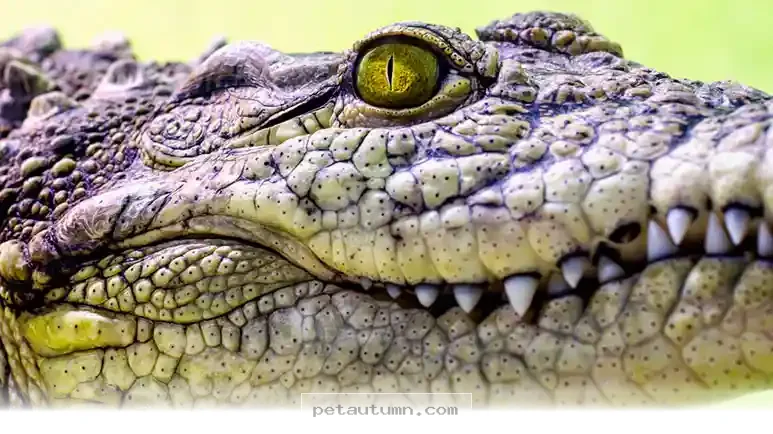
While they may not chase prey across vast distances like some land predators, their ability to launch a surprise attack with incredible speed is unmatched. Their secret weapon for this hunting style is actually hidden in plain sight: their highly specialized eyes.
Key Takeaways
- Crocodiles feature a horizontal streak of fovea, which allows for high-resolution scanning of the shoreline without moving their heads.
- Their vision is adapted to specific lighting, with freshwater species showing higher sensitivity to red light wavelengths.
- While their overall visual precision is lower than that of humans, their unique retinal structure provides a massive advantage for horizontal horizon tracking.
- Beyond individual vision, research suggests crocodiles may utilize coordinated hunting behaviors to secure their meals.
The Science Behind the Ambush Stare
When you watch a crocodile floating in the water, you are seeing a masterclass in camouflage and patience. They blend seamlessly into their surroundings, waiting for an unsuspecting animal to wander too close to the water’s edge.
This hunting strategy relies entirely on their ability to perceive movement along the horizon. Scientists have discovered that their retinas contain a unique horizontal streak of receptors known as the fovea.
Understanding Crocodile Vision Mechanics
- The Foveal Streak: Unlike humans, who have a small circular fovea that requires us to move our eyes to focus, crocodiles have a wide band of clarity.
- Horizon Scanning: This horizontal band allows the crocodile to maintain a high-resolution view of the entire shoreline.
- Minimal Movement: Because their vision covers such a wide horizontal range, they do not need to turn their heads, which helps them stay undetected.
- Low-Light Capabilities: These predators often hunt during transition times, such as dawn or dusk, where their eyes excel at detecting movement in dim conditions.
While humans generally perceive the world with higher sharpness, the crocodile’s anatomy is purpose-built for their specific lifestyle. They do not need to read or identify fine details; they need to detect the slightest shift in their peripheral horizon.
| Feature | Human Vision | Crocodile Vision |
|---|---|---|
| Focus Type | Circular Fovea | Horizontal Foveal Streak |
| Primary Goal | Detailed Recognition | Motion Detection |
| Habitat Adaptation | Generalist | Light-specific (Fresh vs. Salt) |
| Scanning Method | Constant Eye/Head Movement | Stationary Horizon Monitoring |
Environmental Adaptations and Light Sensitivity
The visual prowess of a crocodile does not end with their ability to scan the shore. Their eyes are also finely tuned to the specific water quality and lighting conditions of their natural habitats.
Research indicates that crocodiles living in freshwater environments are more sensitive to redder wavelengths of light. This is a direct adaptation to the murky, light-filtering nature of rivers and swampy inland waters.
How Habitat Impacts Their Sight
- Freshwater Habitats: These areas often contain more organic matter, shifting the light spectrum toward the red end of the scale.
- Saltwater Habitats: These environments typically allow for more blue light penetration, and saltwater species have adjusted their sensitivity accordingly.
- The Underwater Mystery: Even though crocodiles struggle to focus perfectly underwater, their light sensitivity suggests they use vision more than previously suspected.
- Behavioral Links: Ongoing studies from sources like the Cornell Lab of Ornithology continue to explore how these reptilian visual systems influence their daily survival.
It is truly impressive how evolution has shaped these animals to thrive in such specific conditions. Whether they are lurking in a clear saltwater bay or a dense freshwater marsh, their eyes are calibrated to give them the upper hand.
Coordinated Hunting Efforts
For a long time, researchers believed that crocodiles were strictly solitary hunters. However, newer observations suggest that they might be more social and collaborative than we once assumed.
By analyzing historical records and modern field observations, experts have identified potential instances of teamwork among these reptiles. They have been seen positioning themselves in groups to corral prey, effectively increasing their success rate.
Observed Hunting Behaviors
- Blocking Routes: Some individuals position themselves to block the escape paths of fish or other aquatic prey.
- Coordinated Timing: Observations show groups waiting for specific environmental triggers before moving toward the target.
- Communication: While not vocal in the way mammals are, they seem to use subtle physical cues to signal the start of a collective movement.
- Shared Effort: By working together, they can manage much larger prey items than a single crocodile could typically handle alone.
This level of intelligence challenges the traditional view of reptiles as purely instinctual, non-social creatures. As we continue to study their behavior, we gain a deeper appreciation for their complex lives.
The information on petautumn.com is for general informational purposes only and does not constitute veterinary advice. Pet health needs vary by breed, age, and individual condition. Always consult a licensed veterinarian before making decisions about your pet’s health, diet, or medical treatment. Pet Autumn is not affiliated with any veterinary organization, pet food manufacturer, or breeder.
The more we learn about these ancient predators, the more we realize how perfectly they are adapted to their environments. Their vision, while different from our own, is a highly refined tool that has kept their species successful for millions of years.
Understanding these biological wonders reminds us of the incredible diversity found in the natural world. If you find yourself near their habitat, remember to observe from a safe distance and respect the specialized traits that make them such efficient survivors.
Dog care writer at petautumn.com. Visual Communication Design graduate (S.Ds) from Universitas Udayana. Covers dog breeds, behavior, training, and gear reviews. Dog dad to Meepo. Based in Austin, Texas.