Written by Kadek Darma
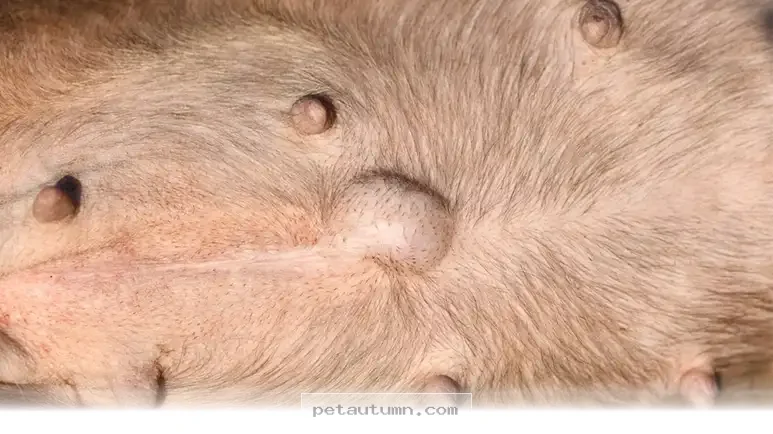
That soft little lump on your puppy’s belly often appears during the most relaxing moments of the day. You are scratching their tummy, they roll over with pure delight, and you suddenly feel a small, squishy protrusion right near their rib cage.
While discovering a lump on your new best friend might trigger an immediate sense of worry, there is usually no reason to panic. This common sight is often just an umbilical hernia, a minor quirk of puppyhood that many dogs experience.
Key Takeaways
- What it is: An umbilical hernia is a small opening in the abdominal wall where the umbilical cord once attached.
- Genetic link: These often run in family lines and are frequently inherited traits rather than signs of injury.
- Watch the size: Small, reducible lumps are often harmless, but larger ones require professional monitoring.
- When to act: If the lump becomes firm, painful, or hot, it needs an immediate veterinary evaluation.
Understanding Your Puppy’s Belly Button
Every puppy is born with an umbilical cord, meaning every dog actually has a belly button. In a healthy, fully developed dog, this area is flat and tucked neatly under their fur along the midline of the abdomen.
When the umbilical ring—the small opening in the abdominal muscles—fails to close completely after birth, a tiny gap remains. Through this gap, a small amount of abdominal fat or tissue can push against the skin, creating that characteristic soft bulge.
1. Why Hernias Occur
Most umbilical hernias are considered congenital, meaning the puppy is born with a predisposition toward them. Because these often run in families, you might find that multiple puppies in a litter share the same little "outie" belly button.
While genetics is the primary driver, trauma can occasionally cause a hernia if the umbilical cord is removed too aggressively. Regardless of the cause, identifying the nature of the lump is the first step in managing your puppy’s health.
| Hernia Type | Description | Risk Level |
|---|---|---|
| Reducible | Tissue can be gently pushed back into the abdomen. | Low |
| Non-Reducible | Tissue remains firm and cannot be pushed back. | Moderate |
| Strangulated | Blood supply to the tissue is cut off. | Emergency |
Understanding these differences helps you communicate effectively with your veterinarian during your puppy’s routine wellness exams.
2. Recognizing the Symptoms
Spotting a hernia is usually quite simple because they are typically soft and painless to the touch. You might notice the bulge fluctuates in size depending on whether your puppy is standing, playing, or resting.
Keep an eye out for these specific signs that warrant a closer look:
- A soft, squishy bump located on the midline of the abdomen.
- The bulge becomes more prominent when your puppy barks or strains.
- Skin over the area appears normal without redness or hair loss.
- The puppy shows no signs of discomfort when you gently touch the area.
3. Monitoring and Next Steps
If you notice a lump, do not try to press or manipulate it forcefully, as this can cause unnecessary discomfort. Instead, make a note of the size and consistency, then bring it up during your next scheduled veterinary visit.
Many small umbilical hernias close on their own by the time a puppy reaches three or four months of age. If your vet recommends surgical repair, it is often performed at the same time as a spay or neuter procedure.
The information on petautumn.com is for general informational purposes only and does not constitute veterinary advice. Pet health needs vary by breed, age, and individual condition. Always consult a licensed veterinarian before making decisions about your pet’s health, diet, or medical treatment. Pet Autumn is not affiliated with any veterinary organization, pet food manufacturer, or breeder.
While the prospect of surgery might sound daunting, keep in mind that many veterinarians consider this a routine fix. If the hernia is small and remains reducible, your vet may simply suggest a "wait and see" approach while your puppy continues to grow.
By staying observant and keeping your vet informed, you ensure that even the smallest health quirks are managed with care. Enjoy those belly rubs and keep cherishing these early months of your puppy’s life.

Dog care writer at petautumn.com. Visual Communication Design graduate (S.Ds) from Universitas Udayana. Covers dog breeds, behavior, training, and gear reviews. Dog dad to Meepo. Based in Austin, Texas.