Last Updated: April 6, 2026
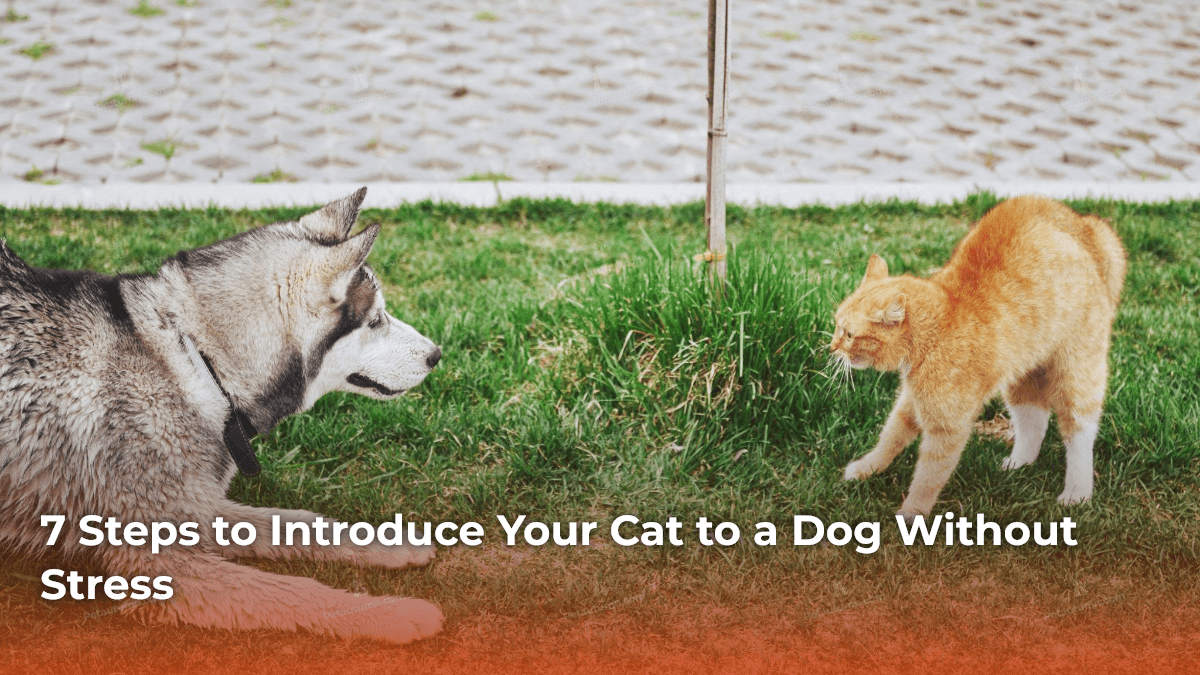
You just adopted a cat. Your dog is waiting at home. And somewhere in the back of your mind, you’re picturing a cartoon-style chase scene through your living room.
Fair enough. When Ayu and I brought Luna and Lina home in 2020, Meepo — our 42-lb rescue — practically vibrated with excitement the second he caught their scent under the door. Not exactly the chill energy we were going for. But here’s the good news — dogs and cats can absolutely learn to share a home. The ASPCA and most veterinary behaviorists agree that a slow, structured introduction makes all the difference. We followed a step-by-step process, and within six weeks, Meepo and Luna were coexisting peacefully (Lina took a little longer — she does things on her own schedule). Here at petautumn.com, we break down the exact process below.
The trick isn’t speed. It’s patience.
Key Takeaways:
- Set up a dog-free sanctuary room before your new cat arrives — this is non-negotiable
- Use scent swapping and door-feeding to build familiarity before any visual contact
- Always keep your dog on a leash during the first face-to-face meeting
- The full process can take anywhere from two weeks to several months
- If your dog has strong prey drive, work with a certified trainer before moving past the visual contact stage
Step 1 — Prepare a Sanctuary Room Before Day One
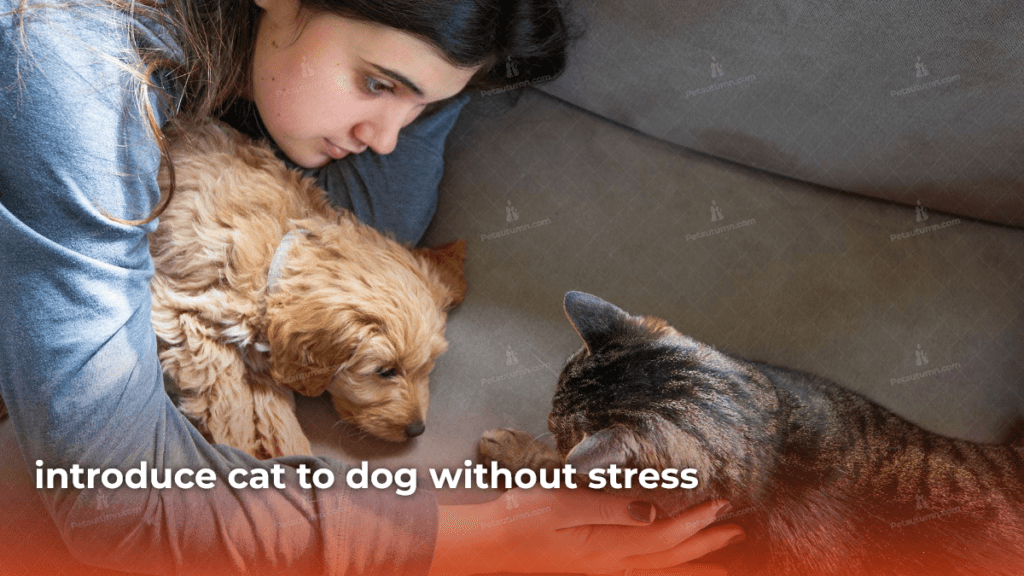
Before your new cat sets a paw in the house, you need a safe zone. One room. Door that closes. Zero dog access.
Stock it with a litter box, scratching post, food, water, and a couple of hiding spots — a cardboard box on its side works perfectly. Cats feel safer in enclosed spaces, especially in a new environment. Cat-proof the room too: tie up electrical cords, remove toxic plants, and stash anything fragile.
Short on space? A bathroom or home office is fine. The size doesn’t matter. The security does.
Step 2 — Let Scent Do the Talking
Dogs have roughly 300 million scent receptors. Cats have about 200 million. You? Around six million. Point is — your pets will “meet” through smell long before they ever see each other.
Swap their bedding. Take a blanket your dog has slept on and place it near the cat’s food bowl. Do the same in reverse. You can also rub a cloth on one pet’s cheeks and leave it with the other animal.
Low-tech? Absolutely. Effective? Very. After a few days, both pets start associating that unfamiliar scent with their own safe space — and that’s exactly what you want.
Step 3 — Feed on Opposite Sides of a Closed Door
Now you’re building positive associations. Feed both pets at the same time, on opposite sides of a closed door.
Start with the food bowls several feet from the door. Each day, slide them a few inches closer. The goal: both animals eating calmly, right next to each other, with just a door between them. They hear each other. They smell each other. And they’re pairing that experience with something great — food.
If either pet refuses to eat or backs away from the door, move the bowls back. You’re working on their timeline, not yours.
Step 4 — Introduce Visual Contact With a Baby Gate
Once door-feeding is drama-free, swap the closed door for a tall baby gate. Make sure the cat can’t squeeze through or jump over it.
Keep sessions short — five minutes max at first. Let them see each other while eating or getting treats. If your dog gets stiff, stares hard, or starts lunging, calmly redirect with a “sit” command and a treat. If your cat hisses or retreats, let them go. That’s a normal response.
What you’re looking for: loose body language on both sides. Occasional glances — not locked stares. Curiosity without intensity.
Sometimes even your dog’s stress might show up in unexpected ways, like eating grass more than usual or pacing. Keep an eye out for those subtle signals.
Step 5 — First Face-to-Face Meeting on Leash
This is the moment everyone’s nervous about. And honestly? It’s where most people move too fast.
Choose a neutral room — not the cat’s sanctuary, not the dog’s usual hangout. Keep your dog on a loose leash. Let the cat enter and leave on their own terms. Do not hold either animal. A restrained cat will scratch, and a restrained dog may redirect that frustration.
Two people in the room is ideal — one watching each animal. Reward your dog generously for calm behavior. Sitting quietly while a cat sniffs the perimeter? That’s a big deal. Treat it like one.
First session: under 10 minutes. End before anyone gets stressed.
Step 6 — Supervised Off-Leash Time
After several calm leash meetings, let the dog off-leash — but leave the leash attached, dragging on the floor. If your dog gets too excited, step on the leash. It’s faster and calmer than grabbing the dog, which can spike everyone’s anxiety.
Stay in the room. Stay boring. Keep treats nearby.
Real talk: “getting along” doesn’t always mean cuddling on the couch. Meepo and Luna basically pretend each other don’t exist, and that’s a perfectly successful outcome. Peaceful indifference counts.
Step 7 — Full Access With Escape Routes
Gradual freedom. That’s the goal here.
Once both pets are consistently relaxed during supervised sessions, start giving them more shared time. But always — always — make sure your cat has vertical escape routes. Cat trees, high shelves, and furniture they’re allowed on give them an exit your dog can’t follow.
A baby gate with a cat-sized opening also lets the cat access rooms the dog can’t. Worth every penny.
And here’s my honest take — don’t leave them unsupervised until you’re fully confident. For us, that was about six weeks. For some families, it’s several months. Neither timeline is wrong.
Body Language Cheat Sheet — Dog vs. Cat Signals
Knowing what to look for can prevent a bad situation before it starts. Here’s a quick reference:
| Signal | Dog | Cat |
|---|---|---|
| Relaxed / Good | Loose body, soft eyes, play bow, wagging tail | Slow blink, upright tail, relaxed ears, kneading |
| Cautious | Stiff posture, whale eye, mouth closed | Ears flat, crouching low, tail tucked |
| Stressed / Warning | Hard stare, rigid tail, growling, lunging | Hissing, arched back, puffed tail, swatting |
| Danger — Separate Now | Fixated stalking posture, snapping | Screaming, biting, full aggression |
If you spot anything in the yellow or red zones, calmly separate the animals and go back one step. Never punish growling or hissing — those are your pets telling you something before it escalates. You want them to keep communicating, not go silent and then snap.
Curious about what your cat’s eye contact really means? Check out what those cat stares are actually saying — some of it might surprise you.
Puppies Meeting Cats (and Kittens Meeting Dogs)
Kittens and puppies add a whole extra layer.
Kittens have basically zero fear. Sounds adorable until a dog with prey drive spots a tiny creature sprinting across the floor. Never leave a kitten unsupervised with a dog — even a friendly one. One playful paw from a large dog can seriously injure a kitten.
Puppies, on the flip side, think everything is a game. A puppy chasing a cat isn’t always aggressive, but your cat doesn’t know that. Use baby gates and leashes to manage every interaction until the puppy has reliable “sit,” “stay,” and “leave it” commands. As the AKC notes, socialization windows matter — early positive experiences shape long-term behavior.
When the Introduction Isn’t Going Well
Some pairings click fast. Others take months. And some just don’t work — that’s worth being honest about.
If your dog fixates on the cat with a hard stare, stiff body, and won’t respond to their name, try the “Look at That” (LAT) technique. The concept: your dog looks at the cat, then looks back at you for a treat. Over time, ignoring the cat becomes more rewarding than staring at it. Start at whatever distance your dog can still listen to you — that’s their threshold — and gradually decrease it.
But if your dog shows stalking behavior, lunges repeatedly, or has a documented history of high prey drive with small animals, call a certified professional dog trainer or veterinary behaviorist. Safety comes first. Always.
One more thing people miss: some dogs are fine with cats indoors but fixate on them outside. Different environment, different rules in the dog’s brain. Test every new context separately.
“The information on petautumn.com is for general informational purposes only and does not constitute veterinary advice. Pet health needs vary by breed, age, and individual condition. Always consult a licensed veterinarian before making decisions about your pet’s health, diet, or medical treatment. Pet Autumn is not affiliated with any veterinary organization, pet food manufacturer, or breeder.”
Your Multi-Pet Household Is Closer Than You Think
Introducing a cat to a dog isn’t about crossing your fingers and hoping for the best. It’s a process — separation, scent swapping, door-feeding, visual contact, leashed meetings, supervised time, and finally, freedom with escape routes.
Go slow. Trust the timeline. And if you get stuck, a professional trainer is always a smart move.
Your dog and cat don’t need to be best friends. Peaceful coexistence? That’s the real win.
Sources:
Frequently Asked Questions
Looking for more pet care tips and breed guides? Visit petautumn.com for more.

Kadek Darma, S.Ds is a dog care writer at petautumn.com specializing in dog breeds, behavior, training, and product reviews for dog owners across the United States. A graduate of Visual Communication Design from Universitas Udayana in Bali, Kadek relocated to Austin, Texas in 2019 with his partner Ayu Pratiwi. Shortly after arriving, he adopted Meepo — a mixed breed shelter dog who was days away from being euthanized. That experience sparked a deep passion for canine welfare and responsible pet ownership. Kadek brings a practical, hands-on perspective to every article, drawing from real-world experience raising Meepo in an apartment setting, navigating the US veterinary system, and testing countless dog products firsthand. His coverage spans breed guides, obedience training, nutrition, gear reviews, and outdoor activities with dogs — always grounded in reputable sources including the American Kennel Club (AKC), ASPCA, and the American Veterinary Medical Association (AVMA).