Last Updated: April 5, 2026
You’re eating dinner. You glance up. And there she is — your cat, sitting perfectly still, staring at you like she’s trying to read your soul.
Creepy? A little. But here’s the thing — your cat isn’t broken, and she’s definitely not plotting your downfall (probably). Cats stare because it’s one of the few tools they have to communicate with you. They can’t text. They can’t wave. So they lock eyes and hope you get the message. Here at Pet Autumn, we get this question a lot, and the answer is almost always simpler than people expect.
Whether your cat is staring because she’s hungry, affectionate, scared, or about to swat your ankle — the eyes tell the story. You just need to know how to read them.
Key Takeaways
- Staring is one of the primary ways cats communicate with their owners
- The six most common reasons include attention, hunger, play, affection, fear, and aggression
- A slow blink is a sign of trust — and yes, you can slow blink back
- Always read the full body (ears, tail, pupils, posture) before deciding how to respond
- Sudden or unusual staring paired with behavior changes warrants a vet visit
Why Do Cats Stare? (It’s Not What You Think)
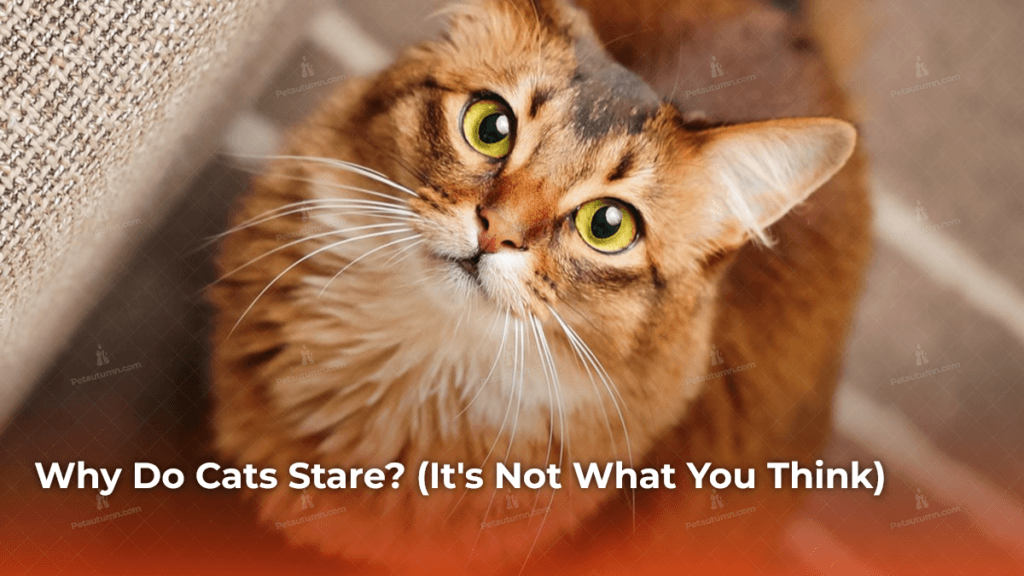
Here’s a common misconception — people assume cats stare because they’re being dominant or confrontational. That’s actually more of a dog thing.
Cats are solitary hunters by nature. They don’t rely on eye contact the way pack animals do. But living with humans has changed the game. Over time, domestic cats have figured out that staring works. You look, they look back, and suddenly they’ve got your attention. According to the ASPCA, cats have adapted their communication behaviors specifically for human interaction — meowing being another example.
So no, your cat isn’t trying to intimidate you. She’s talking.
6 Reasons Your Cat Is Staring at You
Not all stares are created equal. The reason behind the gaze depends on context, timing, and what the rest of your cat’s body is doing.
1. Your Cat Wants Attention
Some cats have mastered the art of the guilt stare. They sit, they lock eyes, they wait. Once you finally look back, the performance begins — a slow blink, a soft meow, maybe a dramatic flop onto their side.
Lina does this constantly. She’ll park herself on the coffee table, stare at me until I make eye contact, and then immediately roll over for belly rubs. Every. Single. Time. It’s manipulative and it works.
2. It’s Dinnertime (and They’re Not Subtle About It)
If your cat stares at you in the kitchen, you already know what’s happening. It’s food o’clock.
Cats are creatures of routine. They know when mealtime is, and they’ll remind you — first with the stare, then with the meow, and eventually by leading you to the food bowl like you’ve never fed them before in their life. Some cats also stare while you’re eating, hoping for a handout. Don’t fall for it — most human food isn’t safe for cats anyway.
3. Your Cat Is Inviting You to Play
This one looks different from the others. Your cat crouches low, pupils wide, tail swishing side to side. Then — boom. She sprints toward you, swats your foot, and disappears behind the couch.
That crouch-and-stare combo is play solicitation. Your cat wants you to grab a wand toy or toss a crinkle ball. If you notice this stare, take the hint. A 10-to-15-minute play session can burn off that energy and prevent the 3 AM zoomies (ask me how I know).
4. The Slow Blink — Your Cat Is Saying “I Love You”
This is the one every cat owner should know about. If your cat looks at you and slowly — deliberately — closes and opens her eyes, that’s affection. Pure and simple.
Behaviorists sometimes call this a “cat kiss.” The Cornell Feline Health Center notes that a cat slow-blinking at you is showing trust. She feels safe enough around you to close her eyes. That’s a big deal for a prey-aware animal.
Luna is a champion slow blinker. She does it from the top of the fridge — her favorite spot — right before she falls asleep. Honestly? It never gets old.
Pro tip: try slow blinking back. Seriously. Research suggests cats respond positively when humans return the gesture.
5. Your Cat Is Scared or Anxious
Not every stare is a happy one. If your cat is staring with dilated pupils, ears flattened sideways or back, body low to the ground, and fur standing up — she’s not feeling affectionate. She’s afraid.
Cats stare at whatever is scaring them to keep track of the threat. Maybe you dropped something loud. Maybe a stranger walked in. Maybe the vacuum came out (a universal pet enemy — dogs hate them too).
Signs of a fear stare include:
- Dilated pupils
- Ears pulled flat or sideways
- Body crouched low
- Fur raised along the back (piloerection)
- Tail tucked or puffed
If you see this, back off. Give your cat space and let her retreat to a safe spot on her own terms.
6. A Hard Stare Means “Back Off”
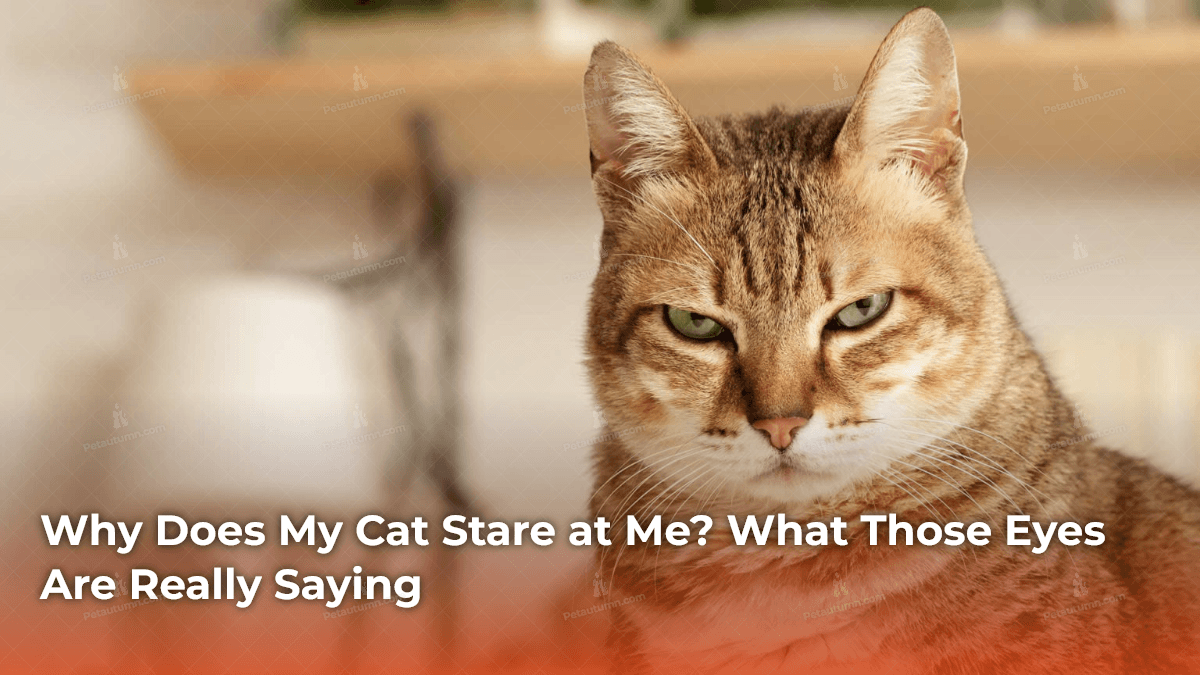
This is the one you don’t want to ignore. A hard, unblinking stare paired with stiff posture, puffed-up fur, and a low growl is a warning. Your cat is telling you — or another pet — to back away before things escalate.
The key difference between a fear stare and an aggression stare? Body tension. A scared cat wants to flee. An aggressive cat is preparing to fight.
If you’re on the receiving end of this stare, don’t make direct eye contact. Avert your gaze slowly, stay still, and increase the distance between you and the cat. Tossing a toy to the other side of the room can help redirect the energy.
How To Read Your Cat’s Body Language While They Stare
The stare alone doesn’t tell the full story. You need to read the whole picture — eyes, ears, tail, and posture together.
| Body Signal | What It Means |
|---|---|
| Slow blinking, relaxed ears, loose body | Affection — your cat loves you |
| Wide eyes, ears forward, tail up | Curiosity or attention-seeking |
| Dilated pupils, ears flat, body crouched | Fear or anxiety — give space |
| Hard unblinking stare, stiff body, fur raised | Aggression — back away slowly |
| Crouched low, pupils wide, tail swishing | Play mode — grab a toy |
Worth noting — every cat is different. Luna slow blinks constantly but rarely stares for food. Lina? She’ll stare holes through you at 5:58 PM if dinner is at 6. Same household, completely different communication styles.
What To Do When Your Cat Stares at You
Your response depends entirely on what the body language is telling you.
If the stare is relaxed — soft eyes, loose posture, maybe a slow blink — go ahead and interact. Pet them, talk to them, or slow blink back. This is bonding time.
If your cat is crouching with wide pupils and a swishing tail, she wants to play. Grab a wand toy or a feather teaser and give her 10 to 15 minutes of active play. This is especially important for indoor cats who don’t get to hunt.
If the stare comes with flattened ears, a puffed tail, or growling — do not approach. Avert your eyes, stay calm, and move away slowly. Give your cat at least five feet of space. Once things settle, you can try redirecting with a toy tossed across the room.
And if your cat stares at you from the kitchen at mealtime? Well. You know what to do.
When Should You Call the Vet?
Most cat staring is completely normal. But there are a few situations where a vet visit is warranted.
If your cat has suddenly started staring more than usual — especially combined with disorientation, bumping into things, or changes in appetite — it could indicate a medical issue. In older cats, increased staring or a fixed gaze can sometimes be a sign of vision loss, cognitive decline, or hypertension.
Watch for these red flags alongside staring:
- Walking into walls or furniture
- Sudden change in eating or litter box habits
- Excessive vocalization (especially at night)
- Apparent confusion or disorientation
If you notice any combination of these, call your vet. Better to rule something out early than to catch it late.
“The information on petautumn.com is for general informational purposes only and does not constitute veterinary advice. Pet health needs vary by breed, age, and individual condition. Always consult a licensed veterinarian before making decisions about your pet’s health, diet, or medical treatment. Pet Autumn is not affiliated with any veterinary organization, pet food manufacturer, or breeder.”
The Short Version
Your cat’s stare is a conversation — you just need to learn the language. Most of the time, it’s something simple: food, attention, play, or a slow-blink “I love you.” Occasionally, it’s a warning. And rarely, it’s a sign that something medical needs checking.
Next time your cat locks eyes with you, don’t look away. Read the ears, check the tail, and respond accordingly. You might be surprised how much your cat is actually saying.
And if all else fails, try slow blinking back. It works. Trust us on that one.
Sources:
Frequently Asked Questions
Have more questions about your cat’s behavior? Visit petautumn.com for more tips and guides.

Cat care writer at petautumn.com. English Literature graduate (S.S) from Universitas Udayana. Covers cat breeds, behavior, nutrition, grooming, and health. Cat mom to Luna and Lina. Based in Austin, Texas.