Written by Ayu Pratiwi
Have you ever wondered what your cat is thinking when they stare intensely at a closed door or a cabinet? For some feline geniuses, the world is not just a home but a series of complex puzzles waiting to be solved.
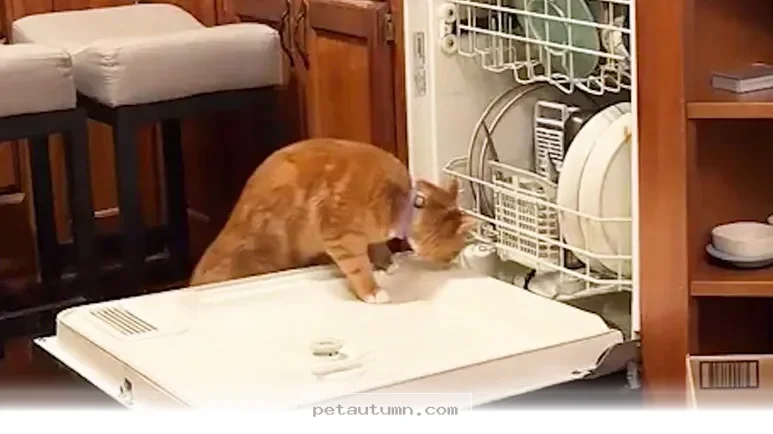
Rumpus, a particularly clever cat, turned his curiosity into a long-term mission to master his family’s dishwasher. After years of dedicated observation, he finally figured out how to unlock it, proving that our feline friends are far more observant than we often give them credit for.
- Cats are natural problem solvers who enjoy mental stimulation.
- Persistent behaviors often signal a high level of intelligence and boredom.
- Environmental enrichment can help channel a cat’s curiosity into constructive play.
- Safety proofing is essential for households with "escape artist" or "lock-picking" pets.
Understanding Feline Intelligence and Curiosity
Cats are hardwired to be observant hunters, a trait that translates well to navigating a modern home. When a cat like Rumpus focuses on a specific appliance, they are likely studying the mechanics of how it opens and closes.
Your cat is constantly learning from your daily habits and routines. They recognize the sound of the dishwasher latch or the click of a button, eventually connecting those actions to the reward of exploring a new space.
Why Your Cat Might Be a "Lock-Picker"
It can be surprising to find your cat opening cabinets or doors, but this behavior usually stems from their natural instinct to explore territory. A bored cat will often seek out new ways to entertain themselves, especially if they are highly intelligent.
- Boredom: They lack enough physical or mental engagement.
- Territorial Instincts: They want to know what is hidden inside every corner of their space.
- Motivation: Sometimes the "prize"—like a warm spot or a hidden toy—is worth the effort.
- Observation: They have watched you operate the lock hundreds of times.
Comparing Typical Cat Behaviors
| Behavior Type | Motivation | Risk Level | Recommended Action |
|---|---|---|---|
| Opening Drawers | Curiosity | Low | Use child-proof latches |
| Manipulating Latches | Intelligence | Medium | Provide complex puzzle toys |
| Scaling Cabinets | Hunting Instinct | Medium | Offer vertical climbing space |
| Investigating Appliances | Heat/Smell | High | Keep doors secured at all times |
Keeping Your Clever Cat Safe
While it is adorable to watch your cat solve a puzzle, some household items pose significant risks. Appliances like dishwashers contain sharp objects, detergents, and heavy racks that can harm a curious pet.
Taking proactive steps ensures your cat stays safe while they satisfy their need for intellectual challenge. You can provide safer alternatives that satisfy their brain without putting their health in danger.
1. Identify Risky Areas
Walk through your home and look at your space from your cat’s perspective. If there is a cabinet, fridge, or dishwasher that could be dangerous, it needs a secondary lock.
2. Use Reliable Locks
Standard child-safety locks are often the most effective tools for keeping pets out of forbidden zones. Choose high-quality adhesive or screw-in latches that are sturdy enough to withstand a determined paw.
3. Provide Mental Enrichment
If your cat is trying to crack codes, they need a job to do. Invest in high-quality puzzle feeders, food-dispensing balls, or interactive toys that require problem-solving skills to unlock a treat.
4. Create Safe Exploration Zones
Sometimes cats just want to be involved in what you are doing. Set up a cat tree or a cozy perch in the kitchen so they can observe your routine from a safe distance without needing to investigate the machinery themselves.
5. Monitor Their Progress
Keep an eye on how your cat interacts with their environment. If you notice them obsessing over a specific area, redirect their attention immediately with a more appropriate activity.
The information on petautumn.com is for general informational purposes only and does not constitute veterinary advice. Pet health needs vary by breed, age, and individual condition. Always consult a licensed veterinarian before making decisions about your pet’s health, diet, or medical treatment. Pet Autumn is not affiliated with any veterinary organization, pet food manufacturer, or breeder.
Watching a pet display such persistence is a reminder of how deep their bond with us really is. They learn our habits because they are always watching, looking for ways to interact with the world we share.
While Rumpus may have cracked the code to his dishwasher, it is up to us to ensure that our homes remain a safe, engaging space for these brilliant creatures. Keep their minds busy with puzzles, and they might just leave your appliances alone.

Dog care writer at petautumn.com. Visual Communication Design graduate (S.Ds) from Universitas Udayana. Covers dog breeds, behavior, training, and gear reviews. Dog dad to Meepo. Based in Austin, Texas.