Written by Kadek Darma
You likely recognize exactly what your dog is trying to tell you just by gazing into her soulful eyes or observing the rhythmic wagging of her tail. Have you ever wished your canine companion could actually use words to explain exactly what she needs?
Technology known as FIDO, which stands for Facilitating Interactions for Dogs with Occupations, is turning that dream into a reality. This specialized wearable gear helps working dogs communicate critical information to their human handlers in real time.
Key Takeaways
- FIDO stands for Facilitating Interactions for Dogs with Occupations and aims to bridge the communication gap between working dogs and their handlers.
- The system uses wearable sensors integrated into a dog’s vest, which can be activated by nudging, biting, or tugging.
- Dogs can trigger pre-recorded messages or digital alerts for medical emergencies, fires, or search-and-rescue findings.
- Training is remarkably fast, with some dogs learning to use the system in under 30 seconds.
- The primary focus remains on supporting service, police, and rescue animals rather than general companion pets.
How Wearable Tech Empowers Working Dogs
FIDO is an ongoing research project based at Georgia Tech’s Animal Computer Interaction Lab. It was founded by associate professor Melody Moore Jackson, Ph.D., to help service dogs and search-and-rescue teams share complex data.
While working dogs already provide life-saving alerts, they are often limited in how much detail they can convey. This wearable technology adds a layer of precision that can be the difference between a successful rescue and a missed opportunity.
1. The Mechanics of Canine Communication
The FIDO team integrates sensors directly into a dog’s harness or vest. These sensors are designed to be intuitive, requiring simple physical gestures that dogs naturally perform.
- Tugging: Using a gentle pull on a cord to trigger a specific alert.
- Nosing: Tapping a sensor with the nose to initiate a digital signal.
- Biting: A light, intentional nip on a sensor to send a message.
2. Real-World Applications for Service Dogs
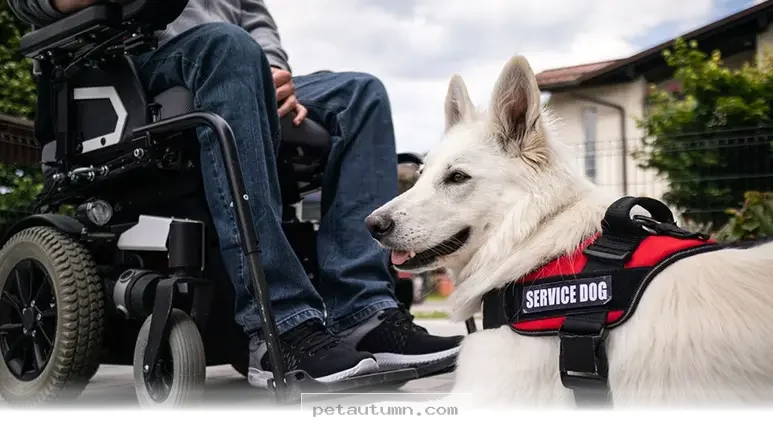
Imagine your dog being able to send a text message to a family member during a medical emergency. The FIDO system can be programmed to dial emergency services or transmit GPS coordinates to a handler.
This is particularly helpful for individuals with mobility issues or those prone to sudden health crises. The dog effectively becomes a bridge to the outside world when its human is unable to reach a phone.
3. Efficiency in Training
You might worry that such advanced technology would be difficult for a dog to master. Surprisingly, the research suggests that dogs pick up these interactions with incredible speed and enthusiasm.
| Feature | FIDO System | Traditional Training |
|---|---|---|
| Response Speed | Very High | Moderate |
| Data Precision | Specific Messages | General Cues |
| Complexity | High | Low |
| Integration | Wearable Vest | Verbal/Hand Commands |
Table: Comparison of FIDO Technology vs. Traditional Training Methods.
Why This Technology Matters for Public Safety
Beyond personal service, this technology is a game-changer for police and search-and-rescue operations. Dogs are often the first to locate individuals in disaster zones, but they cannot currently describe what they have found.
A vest equipped with sensors allows a dog to signal specific information to rescuers. For example, a dog could indicate whether a trapped individual is stable or if a structural hazard is present.
Advantages and Cautions
When considering the implementation of wearable tech for working animals, it is helpful to look at the overall impact.
- Pros
- Allows for nuanced, specific communication in high-stakes environments.
- Provides a hands-free way for dogs to summon help.
- Reduces the need for the dog to leave a victim to find a handler.
- Cons/Cautions
- Requires consistent, specialized training for the dog.
- Technology requires maintenance, such as battery charging and sensor cleaning.
- Current focus is limited to professional working dogs.
Future Possibilities for Our Pets
Dr. Jackson and her partner, Thad Starner, Ph.D., maintain a focus on working dogs that require these tools for their daily tasks. While many pet owners are eager for a "translator" for their own dogs, it remains unclear if a consumer version will ever reach the general market.
Some other organizations have attempted to create "translation" devices for pets in the past. However, many of these projects have struggled to move from concept to reality, often leaving pet owners disappointed.
FIDO remains the gold standard for legitimate, research-backed animal-computer interaction. By focusing on the unique cognitive abilities of dogs, researchers are proving that our furry friends are capable of far more than we once imagined.
The information on petautumn.com is for general informational purposes only and does not constitute veterinary advice. Pet health needs vary by breed, age, and individual condition. Always consult a licensed veterinarian before making decisions about your pet’s health, diet, or medical treatment. Pet Autumn is not affiliated with any veterinary organization, pet food manufacturer, or breeder.
As we look toward the future, it is clear that the bond between humans and dogs is evolving alongside our technology. While you might not be buying a high-tech communication vest for your own pup anytime soon, the progress made by the FIDO team is truly inspiring.
Whether your dog is a working professional or a cherished member of your household, observing her behavior remains the best way to understand her needs. Keep watching those ears, tails, and eyes, and you will continue to have a wonderful, non-verbal conversation every single day.

Cat care writer at petautumn.com. English Literature graduate (S.S) from Universitas Udayana. Covers cat breeds, behavior, nutrition, grooming, and health. Cat mom to Luna and Lina. Based in Austin, Texas.