Written by Ayu Pratiwi
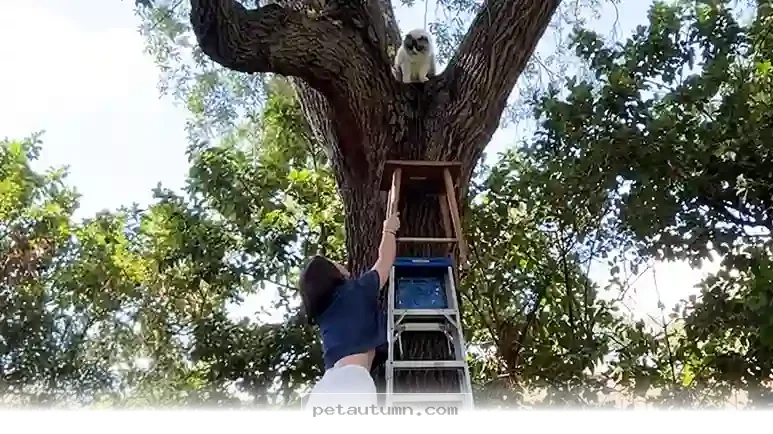
We have all seen those dramatic photos of a cat perched precariously on a high tree branch. While it might look like a funny scene from a cartoon, finding your own feline friend stranded up there is a genuinely stressful experience.
Most of the time, our curious companions climb up with ease but realize that coming down is an entirely different challenge. Their claws are designed for upward movement, making a head-first descent feel impossible to their natural instincts.
Key Takeaways
- Patience is your best tool, as many cats eventually find their own way down.
- Avoid shouting or climbing after them, as this often scares the cat higher.
- Keep pets and loud noises away from the base of the tree to reduce stress.
- Contact local professionals if the cat remains stuck for more than 24 hours.
Understanding Why Cats Get Stuck
It is common to wonder why such agile creatures get themselves into these predicaments. The anatomy of a cat’s claws is perfect for gripping bark while climbing upward, but those same curved claws act as a one-way street.
When they try to back down, they cannot easily disengage their grip. This often leads to a standoff where the cat decides staying put is the safest option until they feel brave enough to leap or climb down backward.
When to Intervene vs. Wait
| Scenario | Urgency Level | Recommended Action |
|---|---|---|
| Cat is meowing but calm | Low | Wait and monitor from a distance |
| Severe weather approaching | Medium | Contact local animal control or arborists |
| Cat has been stuck 24+ hours | High | Seek professional rescue assistance |
| Cat is injured or very young | High | Immediate veterinary consultation |
Note: Always prioritize your own safety before attempting to assist a stranded animal.
1. Stay Calm and Observe
The most important step is to keep your own energy calm and collected. If you are frantic, running around, or calling out loudly, you will only add to your cat’s panic.
2. Clear the Area
Cats are often afraid to come down because they feel threatened by the activity below. Move any dogs inside, ask children to step away, and turn off loud equipment like lawnmowers.
3. Use Familiar Scents
Place a bowl of their favorite strong-smelling wet food or treats at the base of the tree. The scent can act as a powerful motivator to help them overcome their fear of descending.
4. Provide a Way Down
Sometimes, a long ladder placed against the tree can provide a more gradual slope for a nervous cat. Ensure the ladder is stable and leave it alone so the cat feels safe using it.
5. Seek Professional Help
If your cat has been stuck for over a day, or if they appear injured, it is time to call for help. Contact your local ASPCA chapter or a professional tree service company.
Tree trimmers often have the necessary safety equipment to reach heights that humans on the ground cannot safely access. You might also reach out to your local fire department, though they are often busy with emergencies, so do not rely on them as your primary option.
What to Avoid During a Rescue
- Never try to climb the tree yourself unless you are a trained professional with proper safety gear.
- Do not spray the cat with water to "encourage" them to move, as this will likely force them to climb higher.
- Avoid using long poles or sticks to poke or prod the cat.
If you are curious about the instincts that drive these climbing behaviors, you can check out the resources provided by the Cornell Feline Health Center to better understand your cat’s natural needs. Managing your expectations during these situations is vital because cats have their own timelines for feeling secure enough to make the move.
The information on petautumn.com is for general informational purposes only and does not constitute veterinary advice. Pet health needs vary by breed, age, and individual condition. Always consult a licensed veterinarian before making decisions about your pet’s health, diet, or medical treatment. Pet Autumn is not affiliated with any veterinary organization, pet food manufacturer, or breeder.
Once your cat is safely back on the ground, give them plenty of space to decompress in a quiet room. They will likely be hungry and tired after their ordeal, so offer them fresh water and a cozy place to nap.
Try not to scold or force them to interact immediately after a rescue. Providing a peaceful environment will help them recover their confidence and return to their usual happy selves in no time.

Cat care writer at petautumn.com. English Literature graduate (S.S) from Universitas Udayana. Covers cat breeds, behavior, nutrition, grooming, and health. Cat mom to Luna and Lina. Based in Austin, Texas.