Written by Ayu Pratiwi
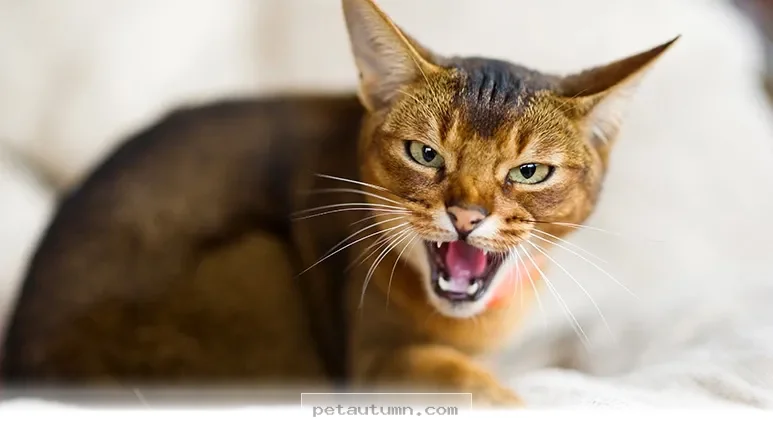
Picture this: you are gently petting your feline companion, who is sitting contentedly in your lap, when suddenly she transforms from a sweet housecat into a hissing, scratching ball of fury. Her eyes become slits, her tail starts twitching, and her ears pin back against her head.
You likely know exactly what happens next, and it is a scene many cat owners dread. While it is easy to feel hurt or surprised, it is important to remember that this behavior is often a form of communication rather than a personal attack.
Key Takeaways
- Aggression is statistically the most common behavior problem reported by cat owners.
- Most owner-directed aggression stems from either overstimulation during petting or redirected play instincts.
- Never use physical punishment, as this will only increase your cat’s fear and hostility.
- Always schedule a veterinary checkup first to rule out medical conditions like hyperthyroidism or hidden pain.
Understanding Feline Aggression
A long-term study following 336 cats revealed that nearly half of all owners cited aggression as their primary behavioral concern. This statistic actually places aggression ahead of inappropriate elimination by a significant margin.
The study highlighted that when cats show aggression toward humans, they target their owners in the vast majority of cases. These outbursts typically occur during specific interactions, most notably when the cat feels overwhelmed or is caught in a high-energy play mode.
Why Cats Lash Out
If you are dealing with a sudden change in your cat’s behavior, it helps to look at the environment and the context of the interaction. Most feline hostility falls into two distinct categories that are easier to manage once you identify the trigger.
1. Petting-Induced Aggression
This usually happens because we miss the subtle signs that our cat has reached her limit. Cats have a lower threshold for touch than humans, and constant petting can quickly lead to sensory overload.
| Signal | What It Means | Action Required |
|---|---|---|
| Tail twitching | Irritation is building | Stop petting immediately |
| Skin rippling | Sensory overload | Give her space |
| Ears flattening | Defensive mood | Back away slowly |
| Dilated pupils | High arousal | Stop interaction |
2. Play-Related Aggression
This is especially common in younger cats or those living in single-cat households. If your cat stalks your ankles or pounces on your hands, she is likely bored and looking for an outlet for her natural hunting instincts.
- Provide variety: Use wand toys or feather teasers to engage her prey drive from a distance.
- Avoid hands: Never use your fingers or feet as toys, as this teaches her that skin is a valid target.
- Consistency: Schedule at least two active play sessions every day to burn off excess energy.
How to Manage Behavioral Outbursts
When a cat shows signs of aggression, your immediate reaction is the most important factor in preventing the behavior from becoming a habit. Harsh words or physical corrections are never effective and can severely damage your bond.
1. Stay Calm and Still
If you are currently petting your cat and she starts to show warning signs, stop all movement immediately. Simply pull your hands away and remain quiet, allowing her the chance to calm down without further stimulation.
2. Disengage Safely
If you are holding your cat when she becomes aggressive, do not hold on tighter, as this will only trigger a stronger defensive response. Gently but firmly lower her to the floor or a nearby piece of furniture and walk away to give her space.
3. Rule Out Medical Issues
Before you assume the problem is strictly behavioral, you should consult your veterinarian. Cats are masters at hiding pain, and conditions like hyperesthesia or arthritis can make them feel defensive and irritable when touched.
The information on petautumn.com is for general informational purposes only and does not constitute veterinary advice. Pet health needs vary by breed, age, and individual condition. Always consult a licensed veterinarian before making decisions about your pet’s health, diet, or medical treatment. Pet Autumn is not affiliated with any veterinary organization, pet food manufacturer, or breeder.
Managing an aggressive cat requires a mix of patience, observation, and a willingness to change your own behavior to better suit your cat’s needs. By learning to read her signals and providing healthy outlets for her energy, you can restore peace to your home.
Remember that progress often takes time and consistency. If you continue to see dangerous levels of aggression, reaching out to a certified feline behaviorist can provide you with a tailored plan to help your cat feel secure and calm once again.

Cat care writer at petautumn.com. English Literature graduate (S.S) from Universitas Udayana. Covers cat breeds, behavior, nutrition, grooming, and health. Cat mom to Luna and Lina. Based in Austin, Texas.