Written by Kadek Darma
Your dog’s or cat’s tail is a fascinating, flexible extension of their spine that serves as a primary tool for communication. While they may seem like simple appendages, they are complex structures packed with nerves, muscles, and blood vessels that help your pet express their inner world.
By learning to decode this unique "tail language," you can gain a deeper understanding of your companion’s emotional state. Whether it is a subtle twitch or a wide wag, these movements offer a window into what your pet is feeling throughout the day.
Key Takeaways
- A tail is an extension of the spine, containing vertebrae, muscles, and nerves.
- Dog tail shapes vary by breed, with some serving specific evolutionary purposes like steering or warmth.
- Cats use tail positions to signal confidence, fear, or agitation.
- Observing tail movement alongside overall body posture provides the most accurate read of your pet’s mood.
Understanding Canine Tail Variety
It often feels like there are as many tail types as there are dog breeds. From the sturdy rudder of a water-loving retriever to the curled warmth-providing tail of a husky, these appendages are perfectly adapted to a dog’s heritage.
You might notice that certain tail shapes are common among specific working groups. For instance, dogs bred for cold climates often possess tails that help them retain heat, while hunting breeds might have tails designed for agility and signaling.
1. Common Dog Tail Types
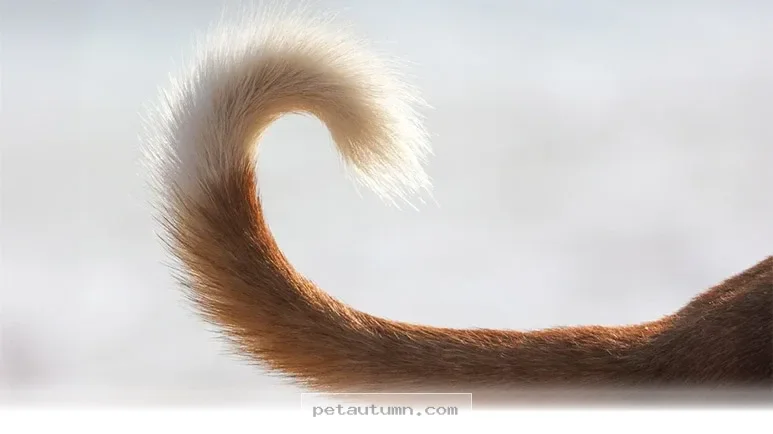
- Sickle/Curled: Seen in Siberian Huskies and Shiba Inus, these curl forward to keep the face warm.
- Otter Tail: Found on Labradors, this thick, rudder-like tail assists with swimming.
- Carrot Tail: A short, thick tail seen on West Highland Terriers.
- Bobbed Tail: Naturally occurring in breeds like the Pembroke Welsh Corgi.
- Corkscrew Tail: The signature look of Pugs and Bulldogs.
Comparing Tail Functionality
| Tail Type | Primary Purpose | Status |
|---|---|---|
| Otter Tail | Water navigation | Efficient |
| Sickle Tail | Heat retention | Adaptive |
| Gay Tail | Signaling | Standard |
As you explore your dog’s lineage, identifying their specific tail shape can offer fun clues about their ancestry.
Decoding Feline Tail Language
While dog tails show massive structural variety, cats are more consistent in their anatomy. However, what they lack in structural diversity, they make up for in expressive, nuanced movement.
If you spend time observing your cat, you will quickly recognize that her tail is rarely still. It acts as a barometer for her mood, constantly shifting to match her environment.
1. Feline Tail Signals
- Held High: Indicates a happy, confident, and friendly cat.
- Puffed Out: A clear sign of fear or an attempt to look larger to a perceived threat.
- Lashing Back and Forth: Often signals that your cat is becoming overstimulated or irritated.
- Tucked Low: Usually a sign of nervousness or feeling submissive.
Learning these signals helps you know when to give your cat space and when she is ready for affection. You can find more behavioral insights through resources like the Cornell Feline Health Center.
Understanding these subtle physical cues strengthens the bond between you and your pet. Always look at the whole picture, including their ears, eyes, and overall posture, to get the full story.
The information on petautumn.com is for general informational purposes only and does not constitute veterinary advice. Pet health needs vary by breed, age, and individual condition. Always consult a licensed veterinarian before making decisions about your pet’s health, diet, or medical treatment. Pet Autumn is not affiliated with any veterinary organization, pet food manufacturer, or breeder.
Paying attention to these small details allows you to respond to your pet’s needs with greater accuracy. Whether it is a wagging tail or a subtle flick, being an observant owner makes all the difference in their comfort and happiness.
We hope this guide helps you feel more connected to your furry friend. Keep watching those tails, as they are often the first part of your pet to say hello when you walk through the door.

Cat care writer at petautumn.com. English Literature graduate (S.S) from Universitas Udayana. Covers cat breeds, behavior, nutrition, grooming, and health. Cat mom to Luna and Lina. Based in Austin, Texas.