Last Updated: May 2, 2026
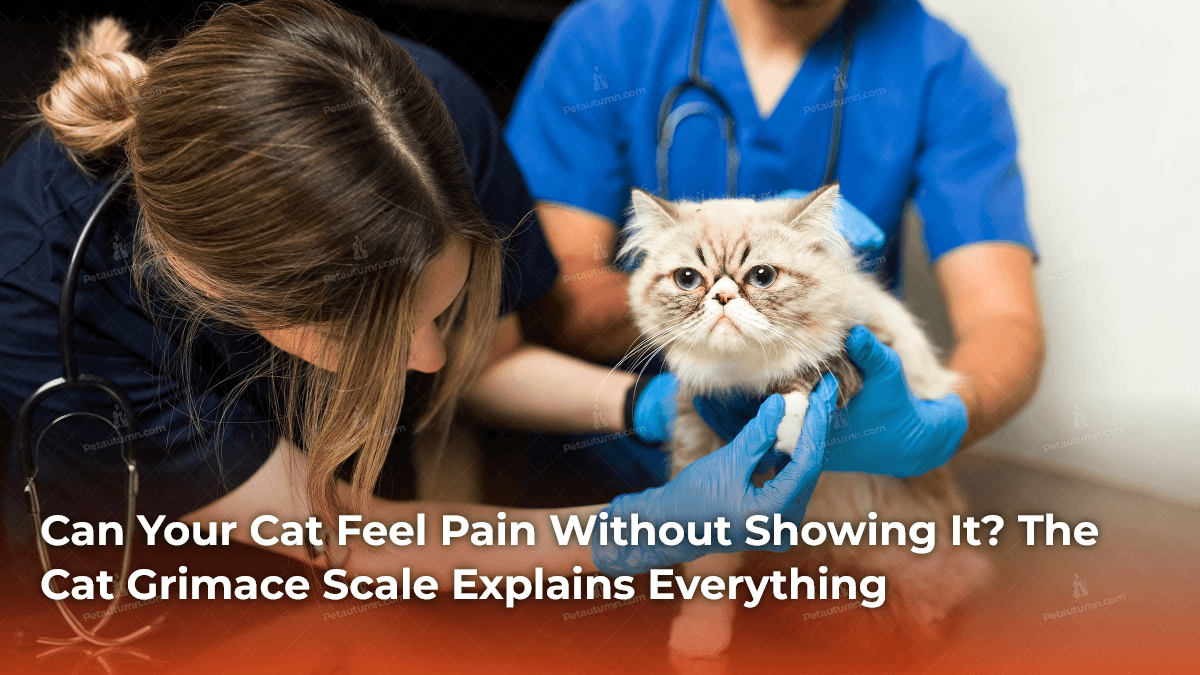
Your cat has been a little off lately. Sleeping more. Eating less. Wants to be left alone. But when you check on her, she doesn’t cry, doesn’t flinch, doesn’t do anything that screams “I’m in pain.” She just looks at you with those half-closed eyes and blinks slowly.
Here’s the thing: that might not be relaxation. It might be a pain face.
Cats are biologically wired to mask discomfort. It’s an inherited survival mechanism from their wild ancestors, where showing weakness could mean becoming prey. The problem is that this instinct doesn’t switch off just because your cat lives indoors and has a dedicated fleece blanket. At petautumn.com, we’ve covered a lot of feline health topics, and the topic of silent pain consistently surprises the most people. The Cat Grimace Scale (CGS) was developed to address exactly this gap, and it’s the most practical tool any cat owner can learn today.
Key Takeaways
- Cats instinctively suppress visible signs of pain, making detection genuinely difficult for owners and sometimes even vets
- The Cat Grimace Scale uses five specific facial cues, called Action Units, to measure acute pain in cats
- Each Action Unit is scored 0 (absent), 1 (moderate), or 2 (obvious), for a maximum total of 10
- A combined score above 4 generally suggests significant pain that warrants a vet call
- The CGS works best for acute pain; chronic pain may require additional behavioral observation
What Is the Cat Grimace Scale and Who Created It?
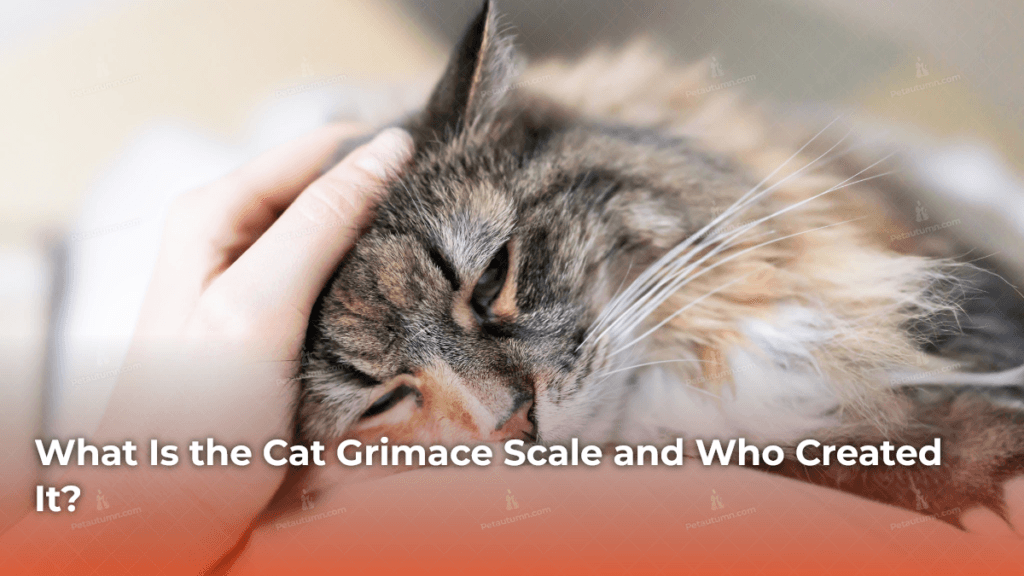
The Cat Grimace Scale was developed by Dr. Paulo Steagall and a team of researchers at the Université de Montréal Faculty of Veterinary Medicine. Their findings were published in 2019 in the peer-reviewed journal PLOS ONE, following years of analyzing facial photographs of cats before and after surgical procedures. Evaluators who had no information about which images were pre- or post-pain were able to score them accurately using the five Action Units the team identified.
That validation process matters. The CGS isn’t based on guesswork or intuition. It’s a clinically tested framework built on the same research methodology that produced similar grimace scales for mice, rabbits, horses, and sheep.
The Science Behind Feline Pain Expression
Mammals share a conserved tendency to express pain through facial muscle tension. The challenge with cats has always been subtlety. Unlike dogs, cats rarely vocalize when hurting, and their baseline resting expressions can look deceptively neutral. The CGS identifies five facial regions where muscular tension consistently activates during confirmed acute pain, giving evaluators something objective to measure rather than relying on gut feeling.
Short version: cats can’t fully control these five facial cues when something hurts. Which means you can read them.
How Vets Use It in Clinical Settings
Post-operative pain management is where the CGS sees the most use right now. Vet teams score a cat before and after pain medication to assess whether the treatment is working. It’s also increasingly common during senior wellness exams, where conditions like feline osteoarthritis or dental disease often go undetected because the cat simply doesn’t display obvious distress.
According to the American Veterinary Medical Association (AVMA), pain assessment is now considered a core component of feline wellness care. The CGS gives clinics a standardized, repeatable method for doing that.
The 5 Facial Action Units You Need to Know
Each Action Unit is scored independently: 0 means it looks completely normal, 1 means it’s subtly altered, and 2 means it’s clearly present. You score all five, then add them together for a total out of 10.
Orbital Tightening (Squinting Eyes)
This one is easy to misread because cats also squint during the slow blink, which is a sign of trust and relaxation. Pain-related orbital tightening looks different. The muscles around the eye appear clenched rather than soft. The brow area may look furrowed. The whole orbital region looks compressed.
Ayu’s cat Luna is a champion slow blinker. But after Luna’s dental procedure last year, the difference between her usual dreamy squint and that tight, clenched look was immediately obvious. Same eyes, completely different muscular quality.
Nose and Cheek Flattening
In a comfortable cat, the muzzle area looks rounded and full. In pain, the cheeks appear sunken and the nose bridge may flatten or narrow. The whole muzzle region loses its “puffed” softness and takes on a tighter, more drawn appearance.
It’s subtle. But once you’ve seen it on a cat you know well, you won’t mistake it again.
Ear Position Changes
Comfortable cats hold their ears upright and angled slightly forward. During pain, the ears rotate outward and flatten, sometimes pointing sideways rather than up. Both ears typically shift simultaneously. (If only one ear is behaving oddly, that’s a separate issue worth investigating with your vet.)
Whisker Changes
Relaxed whiskers fan outward in a natural arc. Under pain, whiskers either pull backward toward the face or bunch forward and downward, losing their spread. The whisker pads themselves may appear raised or gathered. It looks, honestly, like the cat is bracing for something.
Head Position
A pain-free cat holds its head level with or slightly above its shoulders. A cat in pain frequently drops its head low, sometimes tucking it slightly inward. It reads like a subtle slump. Easy to miss if you’re not specifically looking at head-to-shoulder alignment.
How to Score Your Cat at Home, Step by Step
No equipment needed. Just your cat, decent lighting, and a few minutes of quiet observation.
- Let your cat settle somewhere comfortable, without restraining or holding them
- Observe from a natural distance, roughly two to three feet away
- Take a few photos or a short video (yes, even for cats who hate being observed), reviewing them afterward helps catch subtle cues you might miss in real time
- Score each of the five Action Units: 0, 1, or 2
- Add the scores together for a total out of 10
Here’s a quick reference for each unit:
Source: Evangelista et al., 2019. “Facial expressions of pain in cats.” PLOS ONE.
The Université de Montréal also makes a free CGS reference chart available to the public, worth bookmarking before you ever need it.
What a High Grimace Score Actually Means
Scores from 0 to 3 generally indicate mild or no significant pain. Scores from 4 to 6 suggest moderate pain that warrants monitoring and, in most cases, a call to your vet. Scores above 6 are considered severe and need prompt attention.
Honest caveat here: the CGS was validated primarily for acute pain, meaning sudden-onset discomfort like post-surgical recovery. For chronic conditions, like arthritis, dental disease, or kidney-related pain, the facial cues can be more muted. A cat who has lived with long-term pain may have partially adapted, making the score look lower than the actual level of suffering. This is a limitation the researchers themselves acknowledge.
Use the CGS as one tool among several. Pair it with behavioral changes and your knowledge of what’s normal for your specific cat.
Signs of Cat Pain Beyond the Face
Facial cues don’t always tell the whole story. Watch for these behavioral signals too:
- Hiding in unusual spots, or hiding more frequently than normal
- Changes in litter box behavior: avoiding it, straining, or vocalizing while inside
- Reduced grooming leading to a dull or matted coat
- Over-grooming one specific area (almost always indicates localized pain)
- Loss of appetite or noticeably reduced interest in water
- Avoiding jumps they normally make without hesitation
- Growling, hissing, or biting when touched in a specific spot
- Hunched posture or a tucked belly
Lina, the calico, is normally the definition of chaos in Ayu’s apartment. She runs 3 AM laps, knocks things off counters, and treats every surface as a personal challenge. So when Lina suddenly stopped jumping onto the kitchen counter, it was instantly suspicious. A vet visit confirmed a mild joint issue, caught early enough to treat without drama. The behavior change was the first signal, weeks before anything showed on her face.
If you’re also noticing digestive changes alongside other symptoms, it’s worth reading up on cat food allergies and what vets actually recommend, since some pain responses and allergy symptoms can look similar.
When to Call Your Vet Immediately
Some situations don’t need a CGS score. Call your vet right away if your cat:
- Cries or vocalizes in pain, especially if sudden
- Cannot stand or walk steadily
- Is breathing with an open mouth or laboring to breathe
- Has sudden paralysis or weakness in the hind legs
- Vomits repeatedly within a short timeframe
- Refuses food for more than 24 to 48 hours
- Has a visible wound, injury, or is bleeding
Sudden hind leg weakness is a veterinary emergency. It can signal aortic thromboembolism, and response time matters enormously. Don’t wait to score the grimace. Just go.
Pain-related conditions can escalate into serious, expensive treatment territory fast. If you want to be prepared before that happens, our research into the best pet insurance plans for cats in 2026 covers what we actually found after reviewing ten different plans.
“The information on petautumn.com is for general informational purposes only and does not constitute veterinary advice. Pet health needs vary by breed, age, and individual condition. Always consult a licensed veterinarian before making decisions about your pet’s health, diet, or medical treatment. Pet Autumn is not affiliated with any veterinary organization, pet food manufacturer, or breeder.”
If you notice signs of pain in your cat, contact your vet right away.
The Cat Grimace Scale won’t replace your vet. But it gives you a vocabulary for something that’s always been frustratingly vague: the quiet, hidden pain of a cat who’s too instinct-driven to ask for help.
Learn the five Action Units. Save the scoring chart. Take a few reference photos of your cat on a normal day so you have a baseline to compare against. That alone can make a real difference when something seems off.
Your cat can’t tell you when something hurts. But their face can, if you know what to look for.
Sources
- Evangelista, M.C., et al. (2019). “Facial expressions of pain in cats: the development and validation of a Feline Grimace Scale.” PLOS ONE
- American Veterinary Medical Association (AVMA) — Pain Management Guidelines
- Cornell Feline Health Center
Frequently Asked Questions
More questions about your cat’s health? Visit petautumn.com for more vet-checked guides.

Cat care writer at petautumn.com. English Literature graduate (S.S) from Universitas Udayana. Covers cat breeds, behavior, nutrition, grooming, and health. Cat mom to Luna and Lina. Based in Austin, Texas.