Last Updated: April 7, 2026
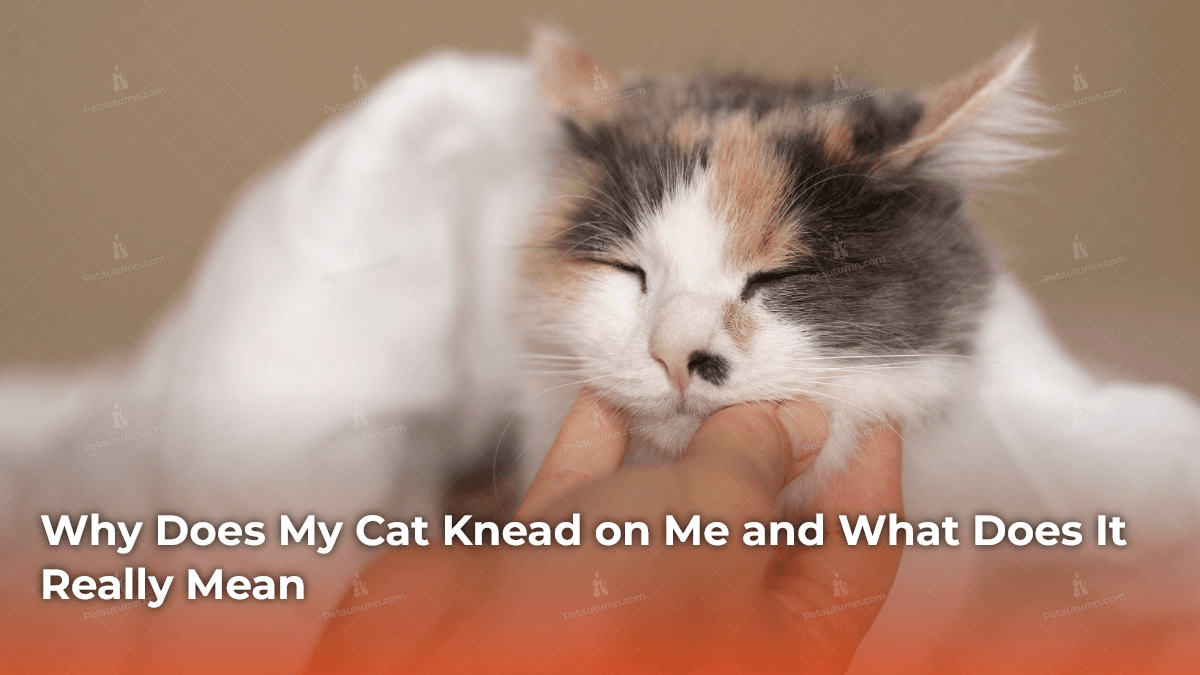
You’re on the couch, halfway through a show, and your cat hops onto your lap. Then it starts — that slow, rhythmic push-pull of paws into your thighs. Cute? Absolutely. A little painful when the claws come out? Also yes.
Cat kneading — or “making biscuits,” as most of us call it — is one of those behaviors that looks adorable but leaves you wondering what’s actually going on inside your cat’s head. If you’ve ever Googled this at 11 PM with a cat on your lap, you’re not alone. It’s one of the most searched cat behavior questions here at Pet Autumn, and for good reason.
The good news? Kneading is almost always a positive sign. But there’s more to it than just “my cat loves me.” There’s instinct, scent chemistry, and even a little neuroscience involved.
Key Takeaways
- Kneading is a normal, instinctive cat behavior rooted in kittenhood nursing — not a sign that something is wrong.
- Cats have scent glands in their paws, so kneading you is partly a way of claiming you as theirs.
- Most cats knead when they feel safe and content, but excessive kneading can sometimes signal stress or discomfort.
- Never punish a cat for kneading — redirect to a thick blanket instead.
- Cats separated from their mothers too early may knead more frequently as adults.
The Short Answer — Your Cat Is Saying “You’re Mine”
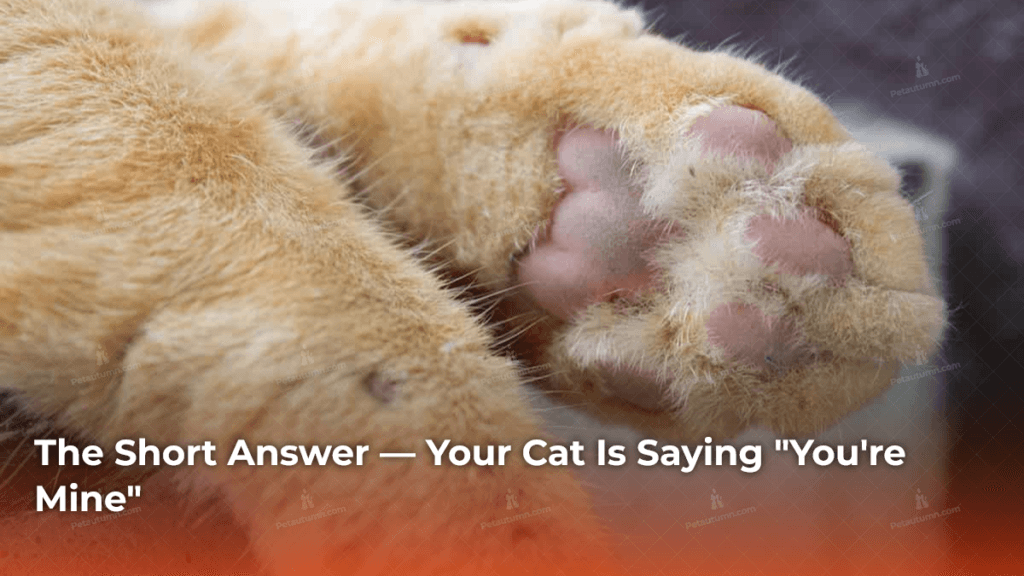
When your cat kneads on you, it’s a mix of affection, comfort, and territory marking all rolled into one rhythmic motion. Those little paws aren’t just pushing into your skin for fun — they’re activating scent glands that deposit your cat’s unique pheromones onto you.
So yes, your cat is literally marking you as their property. Flattering, right?
But scent marking is only part of the story. Kneading is deeply tied to a cat’s earliest memories — nursing from their mother as a kitten. That association between kneading and feeling safe sticks with most cats for life.
Why Cats Knead — 5 Reasons Behind the Biscuit-Making
Not every cat kneads for the same reason. Here are the five most common explanations, backed by veterinary behaviorists and feline research.
It Started at the Milk Bar
This is the big one. Kittens knead their mother’s belly while nursing to stimulate milk flow. That rhythmic push-pull motion helps the milk let down, and the kitten gets fed.
The comfort associated with nursing — warmth, safety, a full belly — creates a strong positive association. According to the Cornell Feline Health Center, many cats retain this behavior into adulthood because kneading triggers a release of dopamine, the brain’s feel-good chemical. So your adult cat is essentially recreating that cozy kitten feeling every time they knead your lap.
Scent Marking With Hidden Paw Glands
Cats have scent glands tucked between their paw pads. When they knead, they’re pressing those glands into whatever surface they’re working on — your lap, a blanket, a pillow.
This deposits pheromones that are undetectable to humans but loud and clear to other cats. It’s your cat’s way of saying, “This human? Mine.” If you live in a multi-pet household, you might notice your cat kneads you more often — especially after the dog has been sitting in your lap.
Stretching and Relieving Muscle Tension
Think of kneading as your cat’s version of a yoga session. The repetitive motion stretches the muscles in their paws, legs, and shoulders.
Cats spend a huge chunk of their day sleeping — up to 16 hours for some breeds. All that stillness means stiff muscles. A good kneading session loosens things up. You’ve probably noticed your cat kneading right after waking up from a long nap. Same idea as you stretching your arms over your head first thing in the morning.
Nesting Instincts From Wild Ancestors
Wild cats — from African wildcats to Scottish wildcats — knead grass, leaves, and soft ground to create a comfortable resting spot before lying down. It’s nesting behavior, and your domestic cat inherited it.
Luna does this every single night. She’ll spend a solid minute kneading the comforter on our bed before she circles twice and drops into position on top of the fridge — her favorite sleeping spot. (Yes, the fridge. We stopped questioning it a long time ago.)
Self-Soothing When Stressed or Anxious
Here’s one that surprises a lot of cat owners. Kneading isn’t always about happiness. Some cats knead more when they’re anxious, stressed, or uncomfortable.
Because kneading triggers dopamine release, it can function as a self-soothing mechanism. A cat dealing with a change in routine — a new home, a new pet, construction noise — might knead more than usual to calm themselves down. The ASPCA notes that repetitive behaviors in cats, including excessive kneading, can sometimes indicate underlying stress that’s worth paying attention to.
Now that you know why cats knead in general, let’s talk about something more specific — why your cat might choose you over everyone else.
Why Does My Cat Knead Me but Not Other People
If your cat only makes biscuits on you and ignores everyone else in the house, take it as a compliment. Seriously.
Cats tend to knead on the person they feel most bonded to — usually the primary caregiver. That’s the person who feeds them, cleans the litter box, and is around the most. Your scent is the most familiar, and your body temperature and the texture of your clothes become associated with comfort.
Lina — our calico — kneads almost exclusively on me. My partner Kadek? She’ll sit on his lap, sure. But the biscuit-making is reserved for my stomach, specifically when I’m trying to read. Every single time. Kadek jokes that Lina has claimed me and he’s just the backup human.
It’s also worth noting that cats are selective about vulnerability. Kneading puts a cat in a relaxed, almost trance-like state. They’ll only do that with someone they deeply trust.
Does Kneading Always Mean a Happy Cat
Most of the time, yes. But not always — and this is where a lot of cat behavior articles get it wrong by oversimplifying.
When Kneading Signals Pain or Discomfort
Cats are masters at hiding pain. A cat with arthritis, joint stiffness, or an injury might knead more than usual because the motion relieves tension in their limbs and triggers pain-relieving dopamine.
Watch for these signs alongside increased kneading:
- Reluctance to jump onto surfaces they used to reach easily
- Changes in appetite or litter box habits
- Vocalizing (meowing or yowling) more than normal
- Limping or favoring one side
If you notice any of these combined with a sudden increase in kneading, it’s time to call your vet. Don’t try to diagnose it yourself — a professional exam can catch things you’d never spot at home.
Excessive Kneading and Compulsive Behavior
There’s a difference between a cat who kneads for five minutes before a nap and a cat who kneads obsessively for 20-30 minutes multiple times a day.
Compulsive kneading — especially when paired with suckling on fabric or excessive drooling — can indicate a behavioral disorder. According to veterinary behaviorists, the dopamine loop that makes kneading feel good can, in rare cases, become a compulsive cycle. If your cat’s kneading seems excessive or disrupts their daily routine, a vet visit is the right call.
Why Some Cats Knead More Than Others
Not every cat is a prolific biscuit-maker. Some knead daily, others rarely, and some never do it at all. Here’s why.
Early Weaning and Kittenhood Experiences
Cats separated from their mothers too early — before 8 weeks — tend to knead more as adults. The behavior becomes a stronger comfort mechanism because the kitten didn’t get enough nursing time.
This is actually really common with rescue cats. Many shelter kittens are separated from their mothers earlier than ideal, and they carry that kneading habit for life. It’s not a problem — just a quirk of their history. If your rescue cat is an aggressive biscuit-maker, now you know why.
Breed and Personality Differences
Some breeds are just more prone to kneading. Ragdolls, Siamese, and Burmese — breeds known for strong human attachment — tend to knead more frequently than more independent breeds like Russian Blues or British Shorthairs.
But honestly? Every cat is an individual. Luna is a tabby with zero Ragdoll DNA, and she kneads almost every evening. Lina, our calico, is pickier about when and where. Same household, same owners, completely different kneading schedules. Personality matters more than breed, in my opinion.
So what do you do when those adorable biscuit sessions come with claws? Let’s get practical.
How to Handle Cat Kneading Without Discouraging It
Kneading is natural. You should never try to stop it entirely. But you can absolutely make it more comfortable for both of you.
Keep Those Claws Trimmed
This is the simplest fix. Regular nail trims — every two to three weeks — keep your cat’s claws blunt enough that kneading doesn’t feel like acupuncture.
If your cat hates nail trims (and many do), try doing one or two nails at a time while they’re sleepy. High-value treats like lickable cat treats can also make the process less dramatic. And no — declawing is never the answer. The AVMA strongly discourages declawing, as it involves amputating the last bone of each toe and can cause chronic pain and behavioral issues.
The Blanket Barrier Trick
Keep a thick, folded blanket on your lap when your cat settles in. This gives their claws something to grip without shredding your skin or your favorite pants.
We keep a designated “biscuit blanket” on the couch at all times. It sounds ridiculous, but it works. Luna and Lina both gravitate toward it, and my legs stay scratch-free.
Redirect — Don’t Punish
Never yell at, spray, or push your cat away for kneading. Punishment doesn’t stop the behavior — it just makes your cat afraid of you. And a fearful cat is a stressed cat, which means more kneading, not less. Ironic, right?
Instead, gently move your cat to a soft blanket or pillow if the kneading gets uncomfortable. Reward them when they knead on appropriate surfaces. Positive reinforcement works — punishment doesn’t. That’s not just my opinion. It’s what every veterinary behaviorist will tell you.
If your cat’s kneading causes unexpected vet visits due to underlying anxiety, those costs can add up quickly — another reason to address the root cause rather than the symptom.
Should You Worry About Your Cat Kneading
For the vast majority of cats? No. Kneading is one of the most normal, healthy behaviors your cat can exhibit. It means they feel safe, comfortable, and bonded to you (or to their favorite blanket — no judgment).
The only time to consult your vet is if:
- Kneading has suddenly increased or decreased in frequency
- Your cat seems agitated or uncomfortable while kneading
- Kneading is paired with excessive suckling, drooling, or vocalization
- You notice any signs of pain, stiffness, or limping
But in most cases, your cat kneading on you is simply one of the best compliments a cat can give. They’re telling you they trust you enough to let their guard down and relive their happiest kitten memories — right there on your lap.
“The information on petautumn.com is for general informational purposes only and does not constitute veterinary advice. Pet health needs vary by breed, age, and individual condition. Always consult a licensed veterinarian before making decisions about your pet’s health, diet, or medical treatment. Pet Autumn is not affiliated with any veterinary organization, pet food manufacturer, or breeder.”
So the next time your cat climbs up, settles in, and starts making biscuits — just let it happen. Grab the blanket, protect your thighs, and enjoy the fact that out of everyone in the house, your cat chose you.
If the kneading gets excessive or seems off, a quick vet check is always a smart move. But for 99% of cats, biscuit-making is just love with claws.
Happy kneading — and keep the blanket close.
Sources:
Frequently Asked Questions

Ayu Pratiwi, S.S is a cat care writer at petautumn.com specializing in cat breeds, feline behavior, nutrition, grooming, and health tips for cat owners across the United States. A graduate of English Literature from Universitas Udayana in Bali, Ayu moved to Austin, Texas in 2019 with her partner Kadek Darma. A year after settling in, she rescued two cats — Luna, a gentle tabby, and Lina, a mischievous calico — both from a local Austin shelter. That experience ignited her passion for feline welfare and responsible cat ownership. Ayu brings warmth and attention to detail to every article, combining firsthand experience as a multi-cat household owner with thorough research from trusted sources including the ASPCA, Cornell University College of Veterinary Medicine, and The International Cat Association (TICA). Her coverage spans breed profiles, cat behavior decoding, feeding guides, grooming routines, and health tips — all written with empathy and honesty.