Last Updated: April 15, 2026
You’ve seen the photos. That enormous, fluffy cat draped across someone’s couch like a small lion who owns the place. Maybe you watched a video of one chirping at its owner, or trotting after them room to room like a golden retriever in a fur coat. And now you’re here, at 11 PM, doing research — because you want one.
Good news: Maine Coons are genuinely wonderful cats. Here at petautumn.com, we’ve covered a lot of breeds, and this one consistently surprises new owners in the best ways. But also a few not-so-best ways. The coat. The vet bills. The sheer physical presence of an 18-pound cat who wants to sit on your laptop while you work.
This guide covers what prospective Maine Coon owners actually need to know — size, personality, health risks, grooming, costs, and whether this breed fits your home and lifestyle. No fluff (well, except for the actual fluff).
Key Takeaways
- Maine Coons are one of the largest domestic cat breeds, with males typically weighing 13–18 lbs and taking up to five years to fully mature
- They’re social, vocal, and unusually trainable for cats — but they don’t like being left alone for long stretches
- Hypertrophic cardiomyopathy (HCM) is a serious genetic health risk in this breed; cardiac screening matters
- That gorgeous coat needs brushing three to four times a week — it won’t maintain itself
- Maine Coons can adapt to apartments, but they need vertical space, enrichment, and daily interaction
The Maine Coon Is Big — Like, Really Big
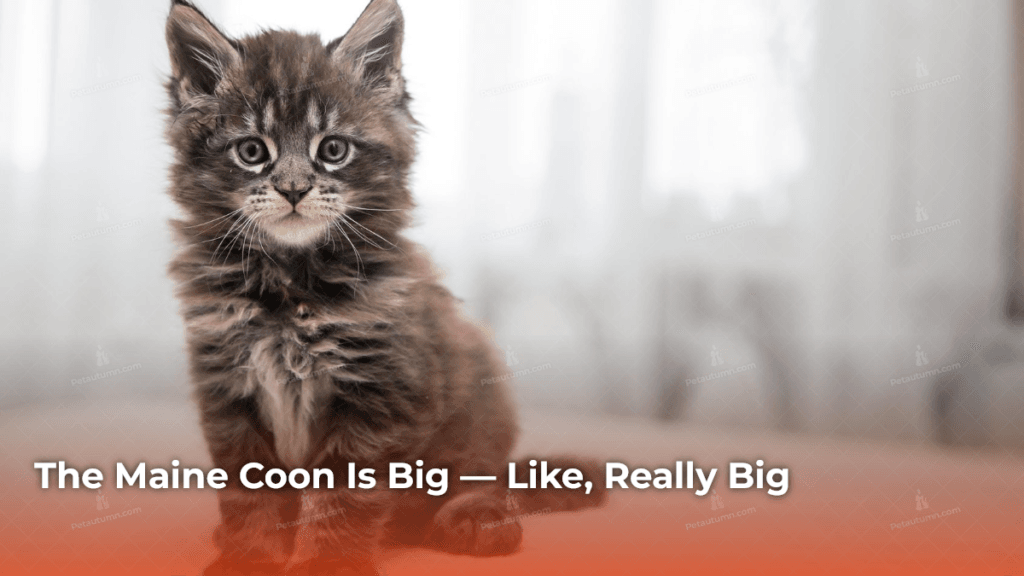
Most people know Maine Coons are large. What they don’t fully grasp until one is standing on their kitchen counter is just how large.
These cats don’t carry their size the way you’d expect. It’s not just weight — it’s length, bone structure, and that thick double coat that adds another two inches of visual volume in every direction. Seeing one in person for the first time tends to produce a very specific reaction: “Wait, is that a cat?”
How Big Do Maine Coons Actually Get?
Adult male Maine Coons typically weigh between 13 and 18 lbs, with some exceptional individuals pushing past 20 lbs. Females are smaller, usually landing between 8 and 12 lbs — which is still noticeably larger than the average domestic cat. In terms of length, Maine Coons typically measure 30 to 40 inches from nose tip to tail tip. The longest Maine Coon on record stretched 48.5 inches — nearly four feet of cat.
| Measurement | Male Maine Coon | Female Maine Coon | Average Domestic Cat |
|---|---|---|---|
| Weight | 13–18 lbs (up to 25 lbs) | 8–12 lbs | 8–10 lbs |
| Length (nose to tail) | 30–40 inches | 28–36 inches | 18–24 inches |
| Full maturity | 3–5 years | 3–4 years | 1–2 years |
| Lifespan | 12–15 years | 12–15 years | |
Figures correct as of April 2026. Source: TICA breed standards.
One thing most people don’t realize: Maine Coons are slow growers. While a typical domestic cat reaches full size around 12 months, a Maine Coon may not hit their full weight and frame until they’re three to five years old. So if you adopt a kitten, brace yourself — what looks like a big kitten will keep getting bigger for years.
Their Personality Is Unlike Any Other Cat
Here’s the thing that surprises people most. It’s not the size. It’s the personality.
Maine Coons don’t behave the way most cats do. They’re not aloof. They don’t disappear when company comes over. They follow you around, check on you when you’re in the bathroom (yes, that too), and seem genuinely interested in whatever you’re doing. The “dog of the cat world” label exists for a reason.
I’ve had Luna and Lina since 2020 — Luna is a tabby who can sleep 20 hours a day and couldn’t care less what I’m doing, and Lina is a calico who’s more interested in knocking things off shelves than in me personally. But from everything I’ve seen and researched, Maine Coons operate on a completely different social frequency than either of them. They want to be with you — not just in the same room. There’s a difference.
Social, Vocal, and Surprisingly Trainable
Maine Coons are vocal in a distinctive way. They don’t meow so much as chirp and trill — a soft, melodic sound that sounds almost like a question. Many owners describe conversations with their Maine Coon as genuinely back-and-forth. It’s a lot.
They’re also one of the few cat breeds that takes well to leash training. According to the International Cat Association (TICA), Maine Coons are highly intelligent and adaptable, which makes them responsive to positive reinforcement training — including learning their names, coming when called, and yes, walking on a leash outdoors. Don’t expect dog-level obedience. But for a cat? They’re genuinely impressive.
Male Maine Coons tend to be more outgoing and attention-seeking. Females are equally affectionate but often take a bit more time to warm up. Both are social animals who do best with regular human interaction — or another pet for company when you’re not home.
The Health Stuff — What to Watch For
Maine Coons are generally a robust breed, but their size and genetics come with specific health vulnerabilities that every prospective owner should understand before committing.
This isn’t meant to scare you. Most Maine Coons live full, healthy lives. But going in informed means you catch problems early — and early detection genuinely saves lives with this breed.
HCM, Hip Dysplasia, and Annual Vet Checks
Hypertrophic cardiomyopathy (HCM) is the big one. It’s the most common cardiac disease in cats overall, and Maine Coons carry a specific genetic mutation — called A31P in the MYBPC3 gene — that’s associated with increased HCM risk. According to research cited by the UC Davis Veterinary Genetics Laboratory, cats with two copies of this mutation are 18 times more likely to develop HCM than cats without it, and severe cardiac disease can lead to sudden death by age four or younger in high-risk individuals.
About one-third of Maine Coons worldwide carry one or two copies of this mutation. The good news? Genetic testing exists ($35–$44 per cat, depending on the lab), and annual echocardiograms are recommended for cats that test positive. If you’re buying from a breeder, ask specifically whether the parents have been HCM-tested. A responsible breeder should have documentation.
| Health Condition | Risk Level | Key Signs | What to Do |
|---|---|---|---|
| Hypertrophic Cardiomyopathy (HCM) | High | Labored breathing, lethargy, sudden collapse | Genetic test + annual echocardiogram |
| Hip Dysplasia | Moderate | Stiffness, reluctance to jump, lameness | Maintain healthy weight; annual vet check |
| Spinal Muscular Atrophy (SMA) | Low–Moderate | Muscle weakness, unsteady gait (often in kittens) | Genetic testing available; no cure but manageable |
| Obesity | Moderate | Difficulty grooming, reduced mobility | Portion control + regular play sessions |
Source: NC State Veterinary Genetics Laboratory; UC Davis VGL. Figures correct as of April 2026.
Hip dysplasia is the second concern. Because Maine Coons carry so much weight on a large frame, the hip joints can develop abnormally — leading to pain and reduced mobility, especially in older cats. Keeping your Maine Coon at a healthy weight is the single most important thing you can do to reduce this risk.
If you notice labored breathing, sudden lethargy, or your cat seems reluctant to move — contact your vet right away.
Grooming and Daily Care Realities
That coat is not self-maintaining. Let’s be honest about that.
Maine Coons have a thick, semi-long double coat that’s designed to handle harsh New England winters. It’s gorgeous. It’s also a commitment. Without regular brushing, it will tangle — especially around the collar area, under the armpits (yes, cats have those), and at the base of the tail.
The realistic grooming schedule looks like this:
- Brushing: Three to four times per week minimum; daily during spring and fall shedding seasons
- Nail trims: Every two to three weeks
- Ear cleaning: Once a week — Maine Coons have tufted ears that trap debris
- Dental care: Weekly brushing (or dental treats/water additives) — dental disease is common in cats and often overlooked
- Bathing: Every four to six weeks if your cat tolerates it; Maine Coons are famously unbothered by water compared to most breeds
The good news? Maine Coon coats are less prone to matting than other long-haired breeds like Persians. A good stainless steel comb and a slicker brush will handle most of it. Start grooming young — a kitten that gets used to being brushed becomes an adult cat that actually enjoys it.
Pair consistent grooming with litter box hygiene (Maine Coons’ long back legs and big paws can track litter more than smaller cats) and you’ve covered the daily care basics. Worth noting — if you’re also managing diet for a large breed, our guide on vet-approved cat food brands covers options that support coat health and weight management.
Grooming and Daily Care Realities
That coat is not self-maintaining. Let’s be honest about that.
Maine Coons have a thick, semi-long double coat that’s designed to handle harsh New England winters. It’s gorgeous. It’s also a commitment. Without regular brushing, it will tangle — especially around the collar area, under the armpits (yes, cats have those), and at the base of the tail.
The realistic grooming schedule looks like this:
- Brushing: Three to four times per week minimum; daily during spring and fall shedding seasons
- Nail trims: Every two to three weeks
- Ear cleaning: Once a week — Maine Coons have tufted ears that trap debris
- Dental care: Weekly brushing (or dental treats/water additives) — dental disease is common in cats and often overlooked
- Bathing: Every four to six weeks if your cat tolerates it; Maine Coons are famously unbothered by water compared to most breeds
The good news? Maine Coon coats are less prone to matting than other long-haired breeds like Persians. A good stainless steel comb and a slicker brush will handle most of it. Start grooming young — a kitten that gets used to being brushed becomes an adult cat that actually enjoys it.
Pair consistent grooming with litter box hygiene (Maine Coons’ long back legs and big paws can track litter more than smaller cats) and you’ve covered the daily care basics. Worth noting — if you’re also managing diet for a large breed, our guide on vet-approved cat food brands covers options that support coat health and weight management.
Breed Profile at a Glance
Here’s everything you need at a glance before going deeper.
| Trait | Maine Coon Profile |
|---|---|
| Origin | Maine, USA (official state cat of Maine) |
| Size | Large — one of the largest domestic cat breeds |
| Weight (male) | 13–18 lbs (up to 25 lbs) |
| Weight (female) | 8–12 lbs |
| Lifespan | 12–15 years |
| Coat | Semi-long, thick double coat; shaggy with ruff |
| Shedding | Medium–High (heavy during seasonal changes) |
| Grooming needs | Medium–High (3–4x brushing per week) |
| Energy level | Medium — playful but not hyperactive |
| Affection level | High |
| Good with kids? | Yes — patient and gentle |
| Good with dogs? | Yes — one of the more dog-tolerant breeds |
| Key health risks | HCM, hip dysplasia, spinal muscular atrophy |
| Apartment-friendly? | Yes, with proper enrichment |
| TICA recognized? | Yes |
| Best for | Families, experienced cat owners, multi-pet homes |
Source: TICA breed standards. Figures correct as of April 2026.
Size and Physical Characteristics
Maine Coons are unmistakable in person. The overall impression is wild — like something that should be hunting in the woods, not asking for dinner.
Weight, Length, and Growth Timeline
Beyond the numbers in the table above, the slow growth curve is the part most first-time owners underestimate. A Maine Coon kitten at six months may already be the size of an average adult cat — and still have four more years of growing ahead of them. Nutrition during this period matters enormously.
Also worth noting: males can vary significantly in final size depending on genetics and diet. Don’t let a breeder sell you a “giant” Maine Coon as something special — size variation within the breed is normal and doesn’t indicate quality.
Coat, Colors, and Patterns
Maine Coon coats come in an impressively wide range. TICA recognizes most colors and patterns — including solid, tabby, bicolor, tortoiseshell, and smoke. Brown tabby is the classic and most recognized look. The two exceptions? Pointed patterns (like Siamese markings) and the colors chocolate and lavender are not accepted in breed standard.
The coat has three functional layers: a soft undercoat, a medium middle layer, and a longer, water-resistant outer coat. Those large, tufted paws were historically useful as natural snowshoes in the harsh Maine winters. Polydactyly — extra toes — is also not uncommon in the breed and is considered a charming quirk rather than a health concern.
Temperament and Behavior
Maine Coons don’t just tolerate their owners — they seek them out. This is a cat that will follow you to the kitchen, sit beside you on the couch (rarely on you, they tend to prefer adjacent rather than lap), and watch whatever you’re doing with genuine curiosity.
How Maine Coons Interact with Families
They’re famously patient with children — more so than most breeds. Their size actually helps here; they’re not easily startled or overwhelmed by a toddler’s enthusiastic affection. That said, teach kids how to interact with cats respectfully regardless of breed (no tail-pulling, no cornering).
With strangers, Maine Coons tend to be curious rather than fearful. They may not immediately run up to greet a guest, but they’re unlikely to hide under the bed for three hours either. That social adaptability makes them a genuinely easy cat to have around — especially in a busy household.
Vocalization — Chirps, Trills, and the Occasional Meow
Real talk: the chirping thing. It’s real, it’s frequent, and it’s either adorable or mildly alarming depending on how much you were expecting it.
Maine Coons communicate through a range of sounds — soft trills, chirps, and chattering (especially when they spot a bird through the window) are more common than the standard “meow.” They’re not silent cats. If you want a low-key, quiet feline presence, this probably isn’t your breed. But if you want a cat who feels like a conversational partner? Maine Coon, every time.
Common Health Concerns
We covered the major ones above, but it’s worth going a little deeper — especially for anyone coming from the perspective of a first-time cat owner.
HCM — The Heart Condition Every Owner Should Know
HCM (hypertrophic cardiomyopathy) causes the walls of the heart muscle to thicken, reducing the heart’s ability to pump blood efficiently. In Maine Coons, the A31P mutation in the MYBPC3 gene is associated with this condition. According to NC State’s Veterinary Genetics Laboratory, cats with two copies of the mutation are at significantly higher cardiac risk and may develop severe disease before age four.
The practical takeaway: if you’re adopting from a breeder, ask for HCM genetic test results for both parents. If you’re adopting a rescue Maine Coon or mix, talk to your vet about cardiac screening. Annual echocardiograms are recommended for HCM-positive cats. It’s not cheap — echocardiograms typically run $300–$600 — but catching HCM early extends and improves quality of life significantly.
Hip Dysplasia and What to Watch For
Unlike in dogs, hip dysplasia in cats is underdiagnosed — partly because cats are excellent at hiding pain. In Maine Coons, watch for subtle signs: hesitation before jumping up to their usual spots, stiffness after rest, or a slight wobble in the back legs. These can all indicate hip joint problems.
Weight management is the most powerful tool you have here. A Maine Coon who stays within a healthy weight range for their frame puts significantly less stress on their hips. Check with your vet if you’re unsure what “healthy weight” looks like for your specific cat — there’s a real range within the breed.
Grooming, Feeding, and Exercise
Now for the practical daily stuff — what actually keeping a Maine Coon looks like week to week.
Brushing Schedule and Coat Care
Three to four times per week is the baseline. During spring and fall shedding seasons, you’ll want to brush daily to manage the volume. The tools that actually work:
- Stainless steel wide-tooth comb — for detangling and working through the undercoat
- Slicker brush — for the outer coat and removing loose fur
- Dematting comb — for any knots that develop around the collar or under the arms
Start at the tail and work toward the head. Go slowly around sensitive spots. If your Maine Coon is a kitten, start brushing from day one — even if they don’t need it yet. The goal is building tolerance, not removing mats.
And yes — Maine Coons tend to be genuinely less bothered by water than most cats. Occasional baths (every four to six weeks, or as needed) are manageable with this breed.
Diet Recommendations for a Large Breed
Maine Coons need a high-protein diet that supports their muscle mass and large frame. Look for a wet or dry food where a named meat protein (chicken, turkey, salmon) is the first ingredient. The ASPCA recommends feeding cats food that meets AAFCO nutritional standards — look for that statement on the label.
For a large Maine Coon male:
- Dry kibble: Approximately ¾ to 1 cup per day, split into two meals
- Wet food: One 3-oz can per 3–3.5 lbs of body weight daily (check with your vet for your specific cat)
- Fresh water: Always available — Maine Coons are often fascinated by running water; a cat fountain helps increase hydration
Watch portion sizes closely. Maine Coons are not self-regulating eaters. Combine consistent feeding with daily play sessions — 20–30 minutes with a wand toy or interactive puzzle — and you’ll keep their weight and energy levels in a healthy range. For more on what to avoid feeding your cat, our article on human foods that are toxic to cats is worth bookmarking.
Maine Coon Cost Breakdown — Kitten to Lifetime Expenses
Maine Coons are not a cheap breed to own — either upfront or over time. Here’s what the real numbers look like.
Maine Coon — Full Cost Overview
| Cost Category | Low Estimate | High Estimate | Notes |
|---|---|---|---|
| Kitten from breeder | $800 | $2,500+ | Show-quality lines can go higher |
| Rescue / shelter adoption | $75 | $250 | Pure Maine Coons rare in shelters; mixes more common |
| First-year vet costs | $300 | $800 | Vaccines, spay/neuter, initial wellness exam |
| HCM genetic test | $35 | $44 | One-time; strongly recommended |
| Annual echocardiogram (if HCM+) | $300 | $600 | Cardiac specialist; annual cost |
| Food (annual) | $400 | $900 | Large breed eats more; wet+dry mix |
| Grooming supplies (annual) | $50 | $150 | Combs, brushes; replace annually |
| Cat tree / enrichment (setup) | $100 | $400 | Must support 20+ lbs — buy sturdy |
| Pet insurance (annual) | $300 | $700 | Strongly recommended given HCM risk |
Figures correct as of April 2026. Costs vary by location and individual provider.
Pet insurance is worth serious consideration with Maine Coons — not optional, in my honest opinion. Given the HCM risk alone, a single cardiac emergency without coverage can run $3,000–$5,000. If you want to understand the full math on skipping insurance, our vet bill breakdown article lays it out clearly.
Best for: Families with children, multi-pet households, owners who want an interactive and trainable cat, experienced cat owners who can commit to regular grooming and vet care.
Consider carefully if: You’re away from home 10+ hours a day with no other pets, you’re not prepared for above-average vet costs, or you want a truly independent, low-maintenance cat.
“The information on petautumn.com is for general informational purposes only and does not constitute veterinary advice. Pet health needs vary by breed, age, and individual condition. Always consult a licensed veterinarian before making decisions about your pet’s health, diet, or medical treatment. Pet Autumn is not affiliated with any veterinary organization, pet food manufacturer, or breeder.”
If you notice signs of labored breathing, sudden lethargy, or difficulty moving in your Maine Coon — contact your vet right away.
The Bottom Line on Maine Coons
Maine Coons are genuinely one of the most rewarding cat breeds out there. They’re social without being needy, playful without being chaotic, and gentle enough to live peacefully with kids, dogs, and other cats.
But they’re not a low-effort cat. The grooming, the vet costs, the HCM screening, the need for enrichment and interaction — it all adds up. The owners who struggle with Maine Coons are almost always the ones who went in expecting a typical cat and got something considerably more demanding (and more rewarding) than they bargained for.
If you’re ready for that — great. Start by finding a TICA-registered breeder who can provide HCM test results for both parents, or reach out to a Maine Coon rescue organization. Either way, set up that first vet appointment early and ask specifically about cardiac screening.
You’re going to end up with a cat that follows you to the bathroom, chirps at you over breakfast, and somehow takes up two-thirds of the couch despite the fact that you bought it. Worth it? Absolutely.
Sources
- The International Cat Association (TICA)
- NC State Veterinary Genetics Laboratory — Maine Coon HCM
- UC Davis Veterinary Genetics Laboratory — HCM in Maine Coons
- ASPCA — Cat Nutrition
Frequently Asked Questions
Have more questions about Maine Coons or cat care? Visit Pet Autumn for more expert guides.

Cat care writer at petautumn.com. English Literature graduate (S.S) from Universitas Udayana. Covers cat breeds, behavior, nutrition, grooming, and health. Cat mom to Luna and Lina. Based in Austin, Texas.